When is tile-effect metal roofing a good choice for a new or existing roof?
Tile-effect metal roofing
Blachodachówka is worth considering when its profile suits the roof pitch, the roof structure and the intended appearance of the house. Before comparing prices, however, check the manufacturer's documentation for the permitted slope, the required batten layout and the fixing method — these determine whether a given model is suitable for your roof at all. For a renovation, also assess the condition of the roof trusses, the old layers and any signs of damp, because a lightweight blachodachówka will not repair a weakened structure. Only then compare complete roofing variants rather than the price of a single sheet.
Where to start when assessing suitability?
First check the roof pitch and the support conditions for the covering. Every tile-effect metal roofing model has its own documentation. The requirements cover, among other things, the pitch, the batten layout and the fixing method. An attractive pattern will not solve the problem of a slope on which the chosen product should not be used.
When renovating, the roof structure, old layers and signs of damp must also be assessed. Lightweight tile-effect metal roofing can be a favourable direction, but it does not exempt you from checking the structure. Do not assume that an element weakened by moisture will regain its strength after the heavier covering is removed.
When to choose sheets cut to size?
Cut-to-size tile-effect metal roofing is well suited to comparing variants on simple roof slopes. The sheet length can be adapted to the roof dimensions within the limits specified for the product. A layout with few transverse joints can be convenient for the installer. The prerequisite is accurate measurement and prepared transport.
A large sheet requires space and adequate support during handling. On slopes with numerous hips and valleys, the offcuts must be calculated precisely. Do not transfer savings from a simple gable roof to a roof with dormers. The actual sheet layout plan determines material utilisation.
What speaks in favour of the modular format?
Smaller elements make delivery organisation and raising the covering onto the roof easier. They also allow work on complex-shaped slopes to be planned differently. This does not automatically mean there is no waste. The laying direction, pattern layout and cutting restrictions still depend on the specific system.
It is worth comparing the modular format with cut-to-size on the same roof plan. Ask for a breakdown of the number of elements, flashings and labour. Some advantages only become apparent during delivery, replacement of a single element or limited access to the plot. The rate per metre alone does not cover these differences.
Does a metal roof have to be loud and hot?
The entire building envelope determines the conditions in the attic. Tile-effect metal roofing is an external covering, not standalone thermal insulation. What matters is the insulation, continuity of layers, airtightness and ventilation of the system. Choosing a more expensive coating will not replace missing insulation in the roof slope.
The sound of rain also depends on the construction and the layers beneath the covering. Comfort in a bedroom cannot be assessed solely by tapping a loose sheet. For a demanding attic, it is worth discussing the entire cross-section with a designer. PIR insulation boards can reduce the required insulation thickness, and acoustic requirements must be checked separately.

How to compare coatings sensibly?
Colour and gloss are immediately visible, but they do not describe the full protection of the steel. The specification must state the type of coating, the material thickness and the conditions of use. A quiet residential setting may impose different requirements from proximity to industrial activity or a highly corrosive environment.
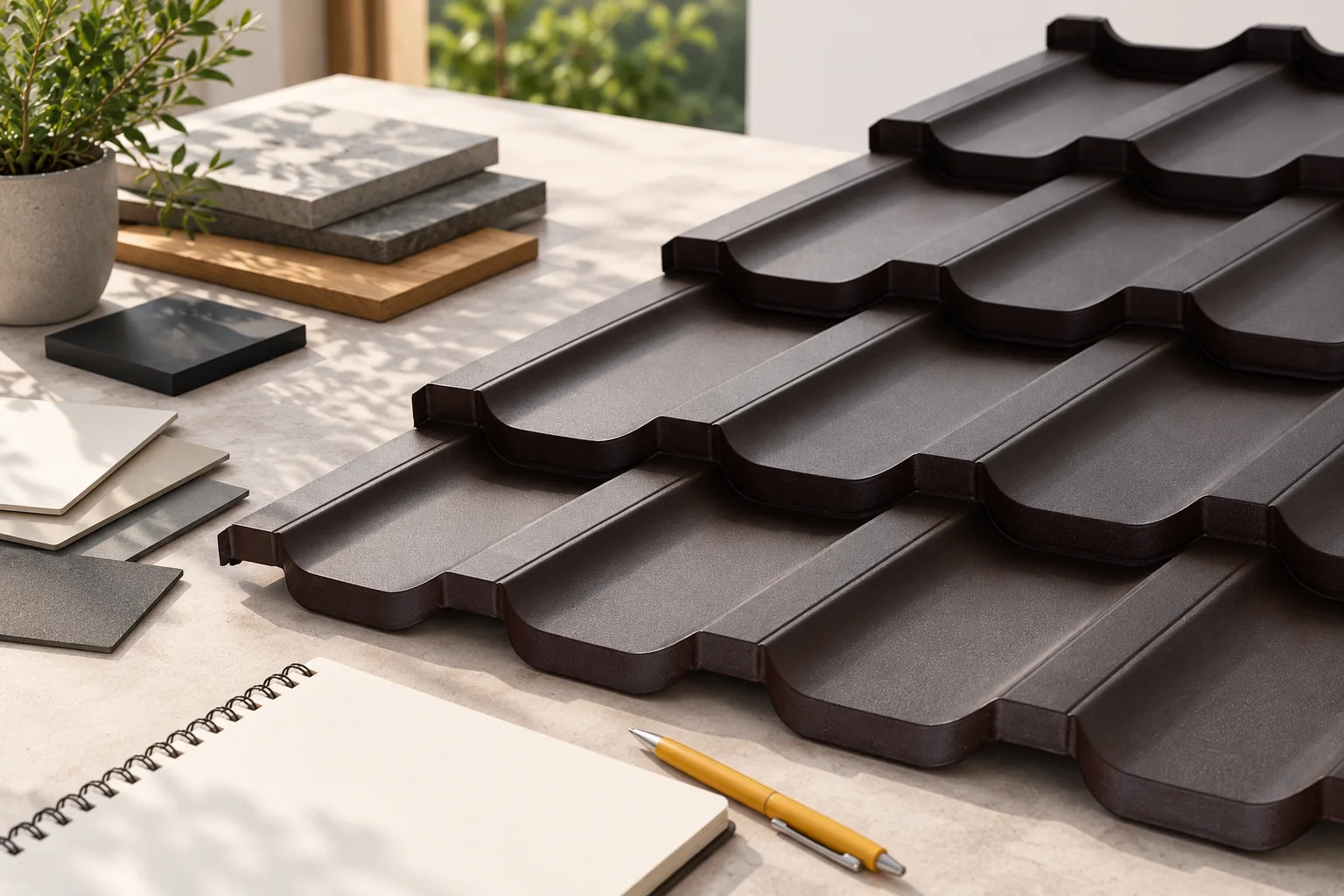
Compare the scope of the warranty and the owner’s obligations. The protection period may depend on the type of damage, the surroundings and compliance with maintenance rules. A long number in an advertisement does not by itself determine the durability of the roof. Assess matt and gloss finishes on a real sample in natural light as well.
How to calculate a cost that tells you something?
The comparison should include sheets, flashings, fasteners, ventilation components and drainage. Add transport, lifting of material and labour. A renovation may also involve demolition and repair of the substrate. Omitting these items distorts the comparison of two different coverings.
Also establish how the surface area is calculated. A full sheet metre and a covered metre are not the same purchasing unit. In the labour price, check the rules for pricing roof valleys, chimneys and other difficult details. A quote with a lower base rate may cover significantly less work. In the comparison, note which items are already included in the price and which the contractor will add after measurement. This breakdown reduces the risk of comparing quotes with entirely different scopes.
When should a purchase be postponed until clarifications are made?
Do not order the covering without a reliable measurement or an established roof cross-section. Any discrepancy between the design and the selected model also needs clarification. This applies in particular to low pitch, unusual openings and planned photovoltaics. Later changes can be difficult with sheets already cut.
Tile-effect metal roofing makes sense when it results from a considered choice of material and workmanship. Before deciding, gather the documentation, a colour sample and a full cost breakdown. The final question then becomes specific: which format and coating variant best suit this roof, its surroundings and the budget?
7 branches. Materials closer to your project.