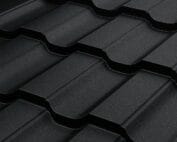
What distinguishes modern modular tile-effect metal roofing?
Tile-effect metal roofing
The choice of modular metal roofing tile depends above all on how its geometry fits the roof form, not on the pattern alone. Check how the waves, flat fields and transverse pressings read across a large roof area, and whether the profile proportions suit the eaves and façade. Assess a sample made up of several modules, not a single swatch. Also verify that the accessories and flashings match the chosen model, and that the documentation clearly describes the first row and the ridge termination. Only then compare the coating and technical parameters.
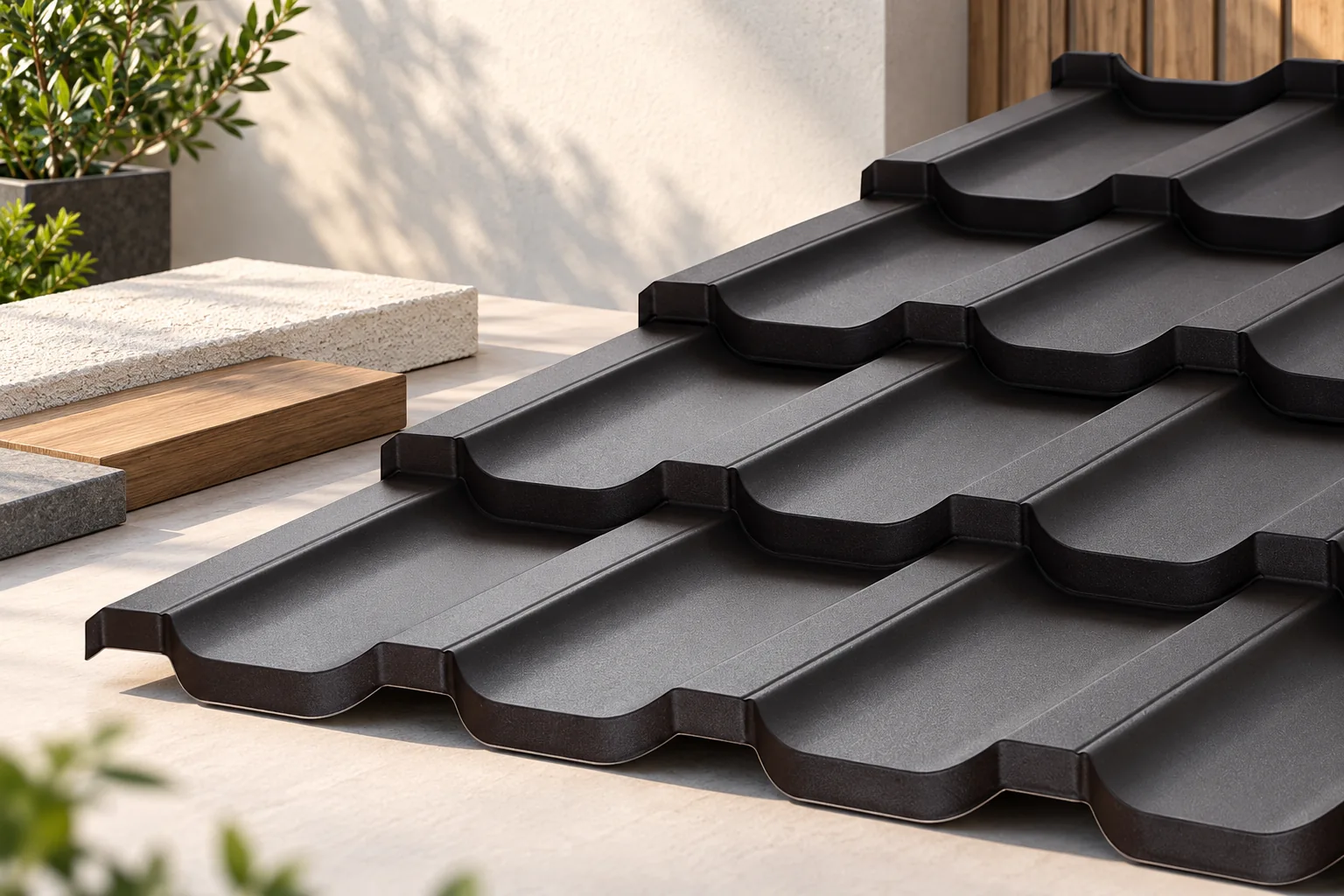
What does the surface geometry change?
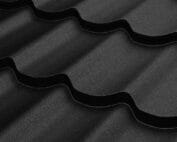
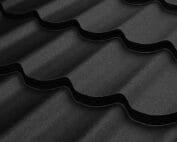
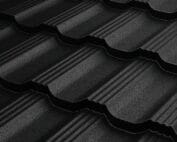
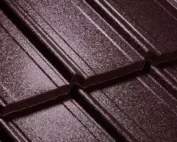
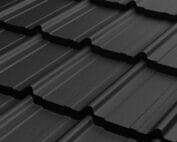
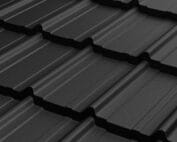
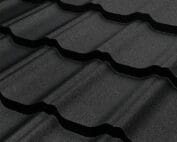
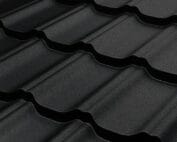
The tile-effect metal roofing pattern is formed by waves, flat fields and transverse pressings. Their proportions influence how light falls on the roof. A low, calm profile gives a different effect from a strongly pronounced wave. The choice should be related to the building’s form, the size of the roof slopes and the shape of the eaves.
Do not assess the geometry only on a small sample. Up close, a single element can look completely different from several dozen repeating rows. A sample made up of several modules or a view of a similar completed project is useful. What matters is the rhythm of the entire roof slope, not just an attractive fragment of a product photo.
Why does a repeating format help organise the work?
The modules have specified dimensions and usable area. This makes it easier to prepare a schedule and plan the successive rows. Small sheets are easier to install in places with limited access. However, cuts, the laying direction and the geometry of the overlaps must still be taken into account.
Repeatability does not mean that different products are interchangeable. Two similar tile-effect metal roofing products can have different widths and edges. Accessories should also match the selected model. Mixing elements based only on a similar colour can make it difficult to achieve a correct connection.
What should you look at in the sheet joints?
Check how the elements overlap and where fasteners are provided. The shape of the edges helps to align the modules but requires the correct installation sequence. The joint should be made without excessively bending the sheet. If force has to be used, the cause may lie in the positioning or preparation of the substructure.
In the documentation, also look for the solution for the first row and the finish at the ridge. These are places where the repeating module alone is not enough. Suitable flashings and ventilation are needed. A well-developed system shows these details clearly instead of leaving them solely to improvisation on site.
Does a matt coating always mean higher quality?
Matt and gloss describe the appearance of the surface. Durability depends on the type of organic and metallic protection and on the intended use of the product. Coating thickness is one piece of information, but not the only one. Resistance appropriate to the environment in which the roof is to perform must also be checked.
View the sample outdoors, in direct and diffused light. The colour on screen may differ from the actual one. Establish the compatibility of flashings and gutters, especially when they come from different materials. The same colour code does not guarantee an identical shade and texture for all elements.

Which parameters should be separated from the pattern description?
Check the steel thickness, the coverage area and the permitted pitch range. Requirements for the substructure and fixings are also needed. A decorative pressing may affect the rigidity of the sheet, but it does not replace the design of the batten grid. The profile height should not be treated as a universal measure of the quality of the entire covering.
The documents should allow the ordered variant to be identified unambiguously. Keep the data sheet, the instructions and the delivery markings. They will be useful at acceptance and for later repair. Full technical information is more practical than a general assurance that a new technology has been used.
Does the new appearance change the installation requirements?
The covering still needs an even plane and correctly spaced battens. The setting-out should correspond to the instructions for the specific module. Particular attention is required at the edges and at the areas around windows. A simple drawing of the roof slope can strongly expose slight deviations in the lines or unevenness of the substrate.
The coating must also be protected during cutting and handling. An unsuitable tool can damage the material regardless of its design. After making the holes, remove the swarf, and protect minor damage according to the instructions. The aesthetic result comes from the compatibility of the product, the substrate and the method of execution.
How do you choose the variant that will suit the house?
Compare the drawing of the sheet with the line of the façade, the joinery and the surroundings. On an extensive roof, a large number of details may have a greater influence on the appearance than the pattern itself. Determine the form of the flashings and the ridge already when selecting the material. This way, the different parts will not appear to have been chosen at random.
Base the final decision on the sample, the cutting layout and a complete quote. Check the cost of the accessories and the maintenance requirements. A modern product is useful when its features match the building and can be correctly executed. The launch of a new pattern alone is not a sufficient argument for changing a well-chosen solution.
7 branches. Materials closer to your project.