When do 40 mm second-grade roof panels offer a saving?
Insulated panels
A 40 mm second-grade insulated roof panel can be economical only if it meets the project requirements and has a known condition. Check the core, sheets, profile, locks and batch documents, and confirm the load capacity for the actual support spacing and the slope conditions. A thickness of 40 mm alone does not guarantee insulation performance or universal application. Add waste, repairs and installation to the price; the saving disappears when the covering has to be rebuilt.
What does 40 mm mean in a roof panel?
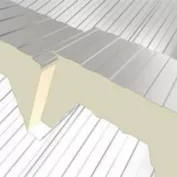
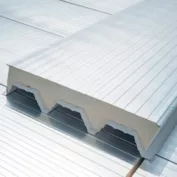
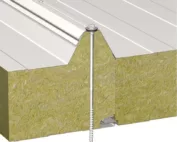
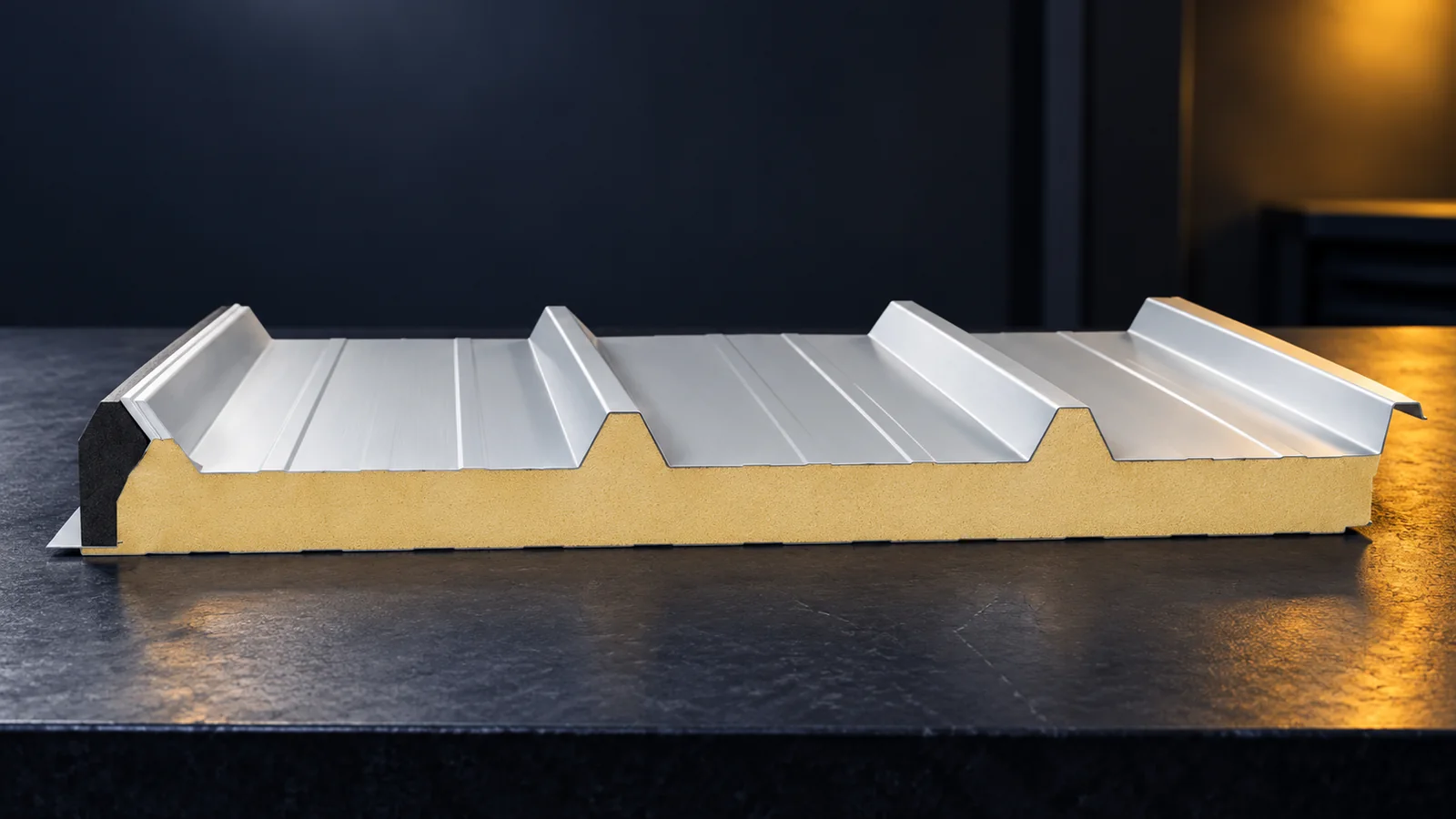
Check the cross-section drawing and the entry in the data sheet. In a roof profile, the height above the rib may be greater than the core thickness in the flat part. An example designation 40/85 distinguishes these two dimensions. It does not mean a uniform insulation layer 85 mm thick. In the listing, it is therefore worth looking for the full designation, not just a photo of the face.
Also confirm that it is a roof product. A wall panel of the same thickness is not automatically a substitute. The roof profile, side lap and installation instructions serve different operating conditions. With a second-grade panel, the condition of these details matters. Damage to the edge that drains water is more significant than a minor difference in shade on a barely visible section.
Is a thin panel sufficient for a heated building?
The project requirements and the actual thermal transmittance decide. For one documented PIR variant 40/85 mm, Uc is 0.60 W/(m²·K). This is an example of a specific system, not the value of every 40 mm panel. It does show, however, that the mere presence of PIR does not mean high insulation at any thickness. Compare the data with the requirement for the planned building.
In an unheated building, the assessment may look different than in a workshop working in winter. Also consider humidity and the risk of condensation at the joints. If you plan permanent heating in the future, analyse this variant now. Later adding random insulation changes the layer build-up and requires a new assessment of moisture, fixing and fire safety. It is not automatically a cheap correction.
How to check load-bearing capacity and permissible deflection?
Accurate sheet thicknesses, the support scheme and the loads are needed for the calculations. Snow, wind, deflection and fixings are checked. The load table for a 40 mm panel with different sheets need not correspond to a discounted batch. The availability of a long element does not mean it can be supported only at the ends. The load-bearing capacity must be confirmed for the actual structure.
The minimum pitch depends on the system and the roof layout. Transverse joints and rooflights may tighten the conditions. Do not assume one pitch for all panels and do not confuse degrees with percentages. A thin panel will not remedy too small a pitch or incorrect drainage. If the purchase requires joining short sections, first check the permitted lap detail and the required support.

Which defects can cancel out the saving?
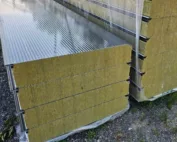
Inspect the profile valleys, ribs and locks. Check for dents, punctures, delamination and exposed steel. Pay attention to the locations of planned fixings. A deformed surface may prevent the washer and seal from seating properly. The problem cannot always be solved by tightening the screw harder. Doing so may further damage the sheet or the core.
Establish the reason for the markdown and the scope of documents covering the given batch. Do not assume that second grade always means nothing more than scratches. Unknown origin, dampness or the inability to close the seam tightly make assessment difficult. Defects should be described before purchase. If a necessary repair changes the construction of the joint, the whole detail must be checked instead of assuming that the parameters of the factory panel are retained.
How do you calculate the cost after cuts and offcuts?
Prepare the roof slope layout and assign each strip a length from the available batch. Allow for overlaps, cut-outs and sections with defects. The price per purchased metre is not the same as the price per metre of the finished roof. Short sections may require more joints, flashings and additional work. Not every remaining section can be used safely.
Compare the complete variant with second grade and with made-to-measure material. Add transport, lifting, fasteners and sealants to both. In the cheaper batch, also include sorting and repairs permitted for the given coating. If the final difference is small, it is worth assessing ease of installation and dimensional reliability. The saving should result from the whole calculation, not just from the discount percentage in the listing.
When is such a purchase justified?
When you know the purpose of the roof, the requirements and the condition of each group of panels. The confirmed parameters must correspond to the design, and defects must not prevent proper installation. A batch with lengths close to those needed and an acceptable appearance can be advantageous. However, there is no general list of buildings in which every 40 mm roof panel will be suitable.
Before acceptance, record the identification of the goods, the dimensions and the agreed damage. Determine the method of transport and unloading. On site, ensure proper support and protection against water. If load-bearing capacity, tightness or the required thermal properties cannot be confirmed, choose another solution. A low price does not compensate for missing data on which the performance of the entire covering depends.
7 branches. Materials closer to your project.