What does a laminate facing do in a sandwich panel for agricultural buildings?
Insulated panels
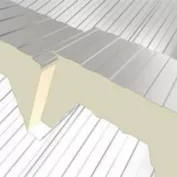
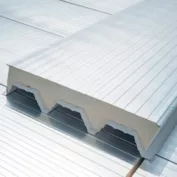
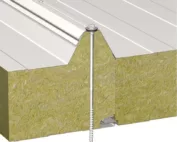
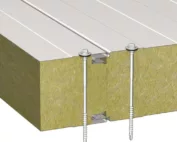
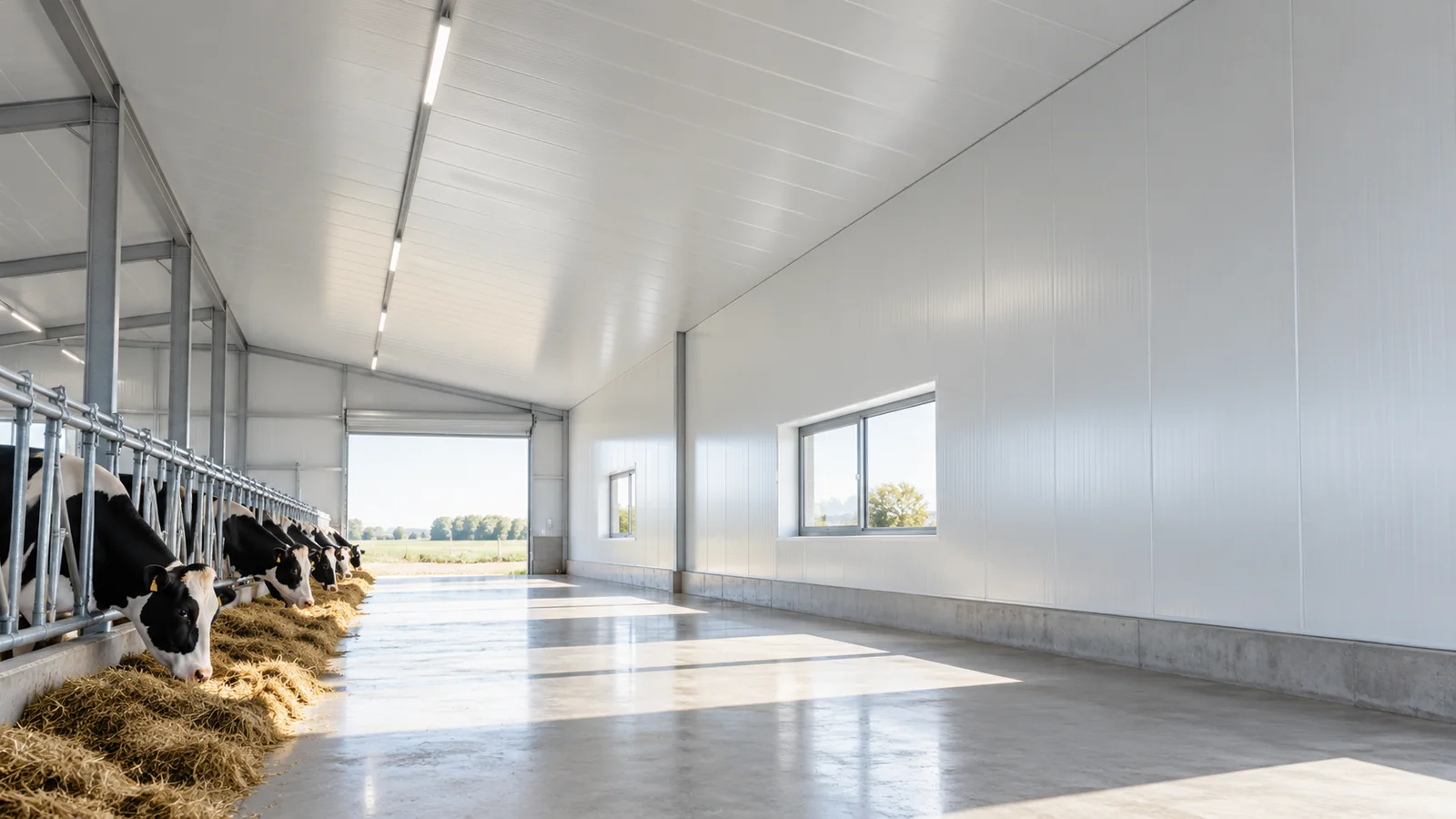
Glass-fibre-reinforced laminate can replace the internal steel sheet in selected roof panels for agriculture. It primarily changes the surface exposed to moisture and the building environment. It is not an additional type of wool nor a replacement for the PIR core. When selecting, the resistance of the specific facing, the documents for the entire panel and the cleaning rules must be checked. The name laminate alone does not confirm suitability for every cowshed or piggery. In such a solution, the external roof facing may be profiled steel, the middle is the insulating core, and laminate is present on the inside. The composite contains glass fibres embedded in plastic. This is a different construction from a typical steel–core–steel panel.
How is a panel with laminate constructed?
In this solution, the outer roof cladding can be profiled steel, the centre is an insulating core, and the interior face is laminate. The composite contains glass fibres embedded in plastic. This is a different construction from a typical steel–core–steel panel. Laminate should not be confused with the thin aluminium foil used in other insulating materials.
The PIR core accounts for a significant part of the thermal insulation, while the facings contribute to the properties of the element. Changing one of them can affect the behaviour of the panel. Therefore, load-bearing capacity, U-value or fire classification must not be transferred from a similar product with two steel sheets. To make a selection, documentation is needed for exactly the version that the supplier offers for order.
What does a non-metallic surface on the inside offer?
Laminate does not have the same corrosion mechanism as a steel facing. It can be a good direction in an environment where the durability of a standard sheet coating is a problem. However, this does not mean resistance to all substances and cleaning methods. The composite also has a defined range of temperatures, chemical contact and mechanical influences.
In a livestock building, you should ask about confirmed use under moisture and ammonia. The conditions specified in the documentation are important, not a general claim of “chemical resistance”. Cleaning with a strong agent or hot water may differ from ordinary exposure during use. The choice of facing should take both stages into account: the daily operation of the building and periodic cleaning.
Does laminate improve thermal insulation?
Changing only the inner facing should not be treated as a guarantee of a lower U-value. The result depends on the whole panel, above all the core, thickness and joints. The parameter must be read from the data sheet for the specific product. You cannot use the table for a similar steel panel and assume that it remains unchanged.
Good insulation helps limit cooling of the internal surface. However, humidity control and ventilation are still needed. A laminate facing does not remove water vapour from the cowshed nor eliminate condensation at every detail. When choosing the thickness, take into account the operating temperature, climate and husbandry method. A suitable material should work with the whole building solution.

Why must load-bearing capacity and fire be checked separately?
The facings are part of the construction of the composite element. Replacing steel sheet with laminate is not merely a change of appearance. Data on permissible support, fixings and loads are needed. The purlin spacing from a roof made with a different panel should not be copied, even if the core and thickness appear similar.
Fire classification is equally important. The roof’s resistance to external fire, reaction to fire and fire resistance of the system answer different questions. One favourable result does not replace the others. The documents must cover the product with the laminate. It is also worth checking the basis for the product’s approval for the intended use. Not every variant of the panel has an identical set of documents as the standard panel with full metal facings.
Which details determine durability?
Even a resistant facing does not automatically protect all accessories. Screws, flashings, supports and seals must be suited to the environment. Particular attention is required at ventilation penetrations and at locations where water collects. Proper drainage reduces the time of moisture exposure. A damaged joint should not be left unrepaired simply because the surface is non-metallic.
The core must be covered at cut edges. Details at the eaves, ridge and gables must be executed in accordance with the system. The laminate should not be pressed down with random elements, nor should the fixing position be changed independently. Different panel variants may require different solutions. The completeness of the enclosure is more important than the declared resistance of its largest surface alone.
What should you ask before buying?
Provide the supplier with the building type, humidity conditions, planned cleaning and the agents used. Request the data sheet for the panel currently offered, the documents and the installation instructions. Confirm the availability of lengths, accessories and the method for repairing the facing. An older product description or a photo of a completed project does not prove that an identical variant is currently supplied.
Also compare the panel with steel facings and a suitably selected coating. In some applications it will be the right solution. In others, the laminate may provide the expected surface durability. The decision should be based on confirmed operating conditions and the full cost of the enclosure. This way you choose a material for your own building, not for the general category of “agriculture”.
7 branches. Materials closer to your project.