

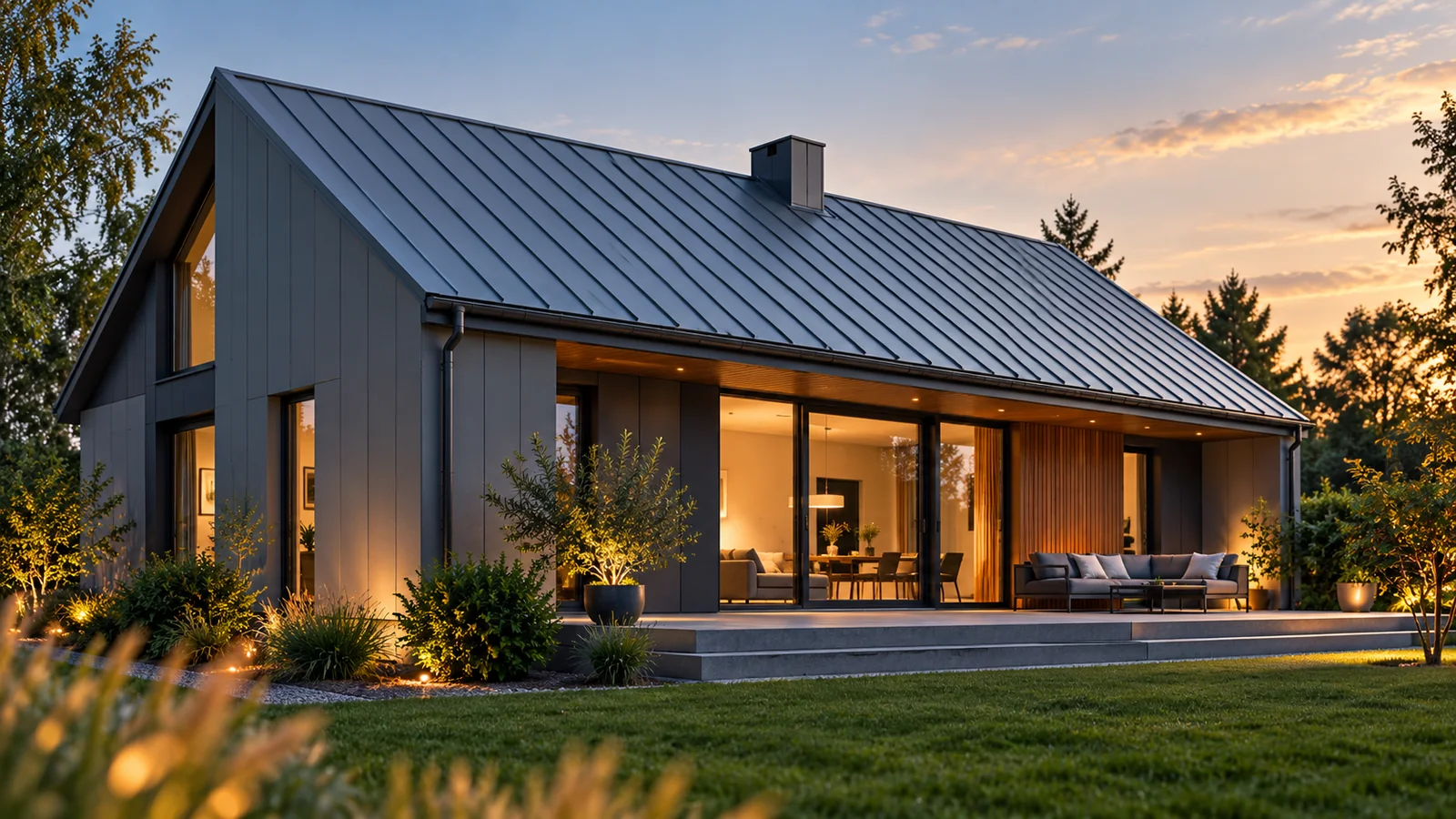
How do single, double and snap-lock standing seams differ?

Single and double standing seams are formed by folding the edges of the sheet metal. A snap-lock panel has a factory-formed lock and joins without such closing on the roof. From the outside, the solutions can look similar, but they differ in fixing technique, substrate requirements and details. They should not be assigned a single minimum pitch or a common water resistance. First the complete system is selected, only then is the appearance compared. The edges of adjacent metal strips are profiled and folded to form a joint above the main plane of the covering. The installer closes the lock with hand tools or by machine. The shape of the fold, the method of closing it and the choice of metal belong to one technical solution.
2026-11-14T09:53:44+01:00

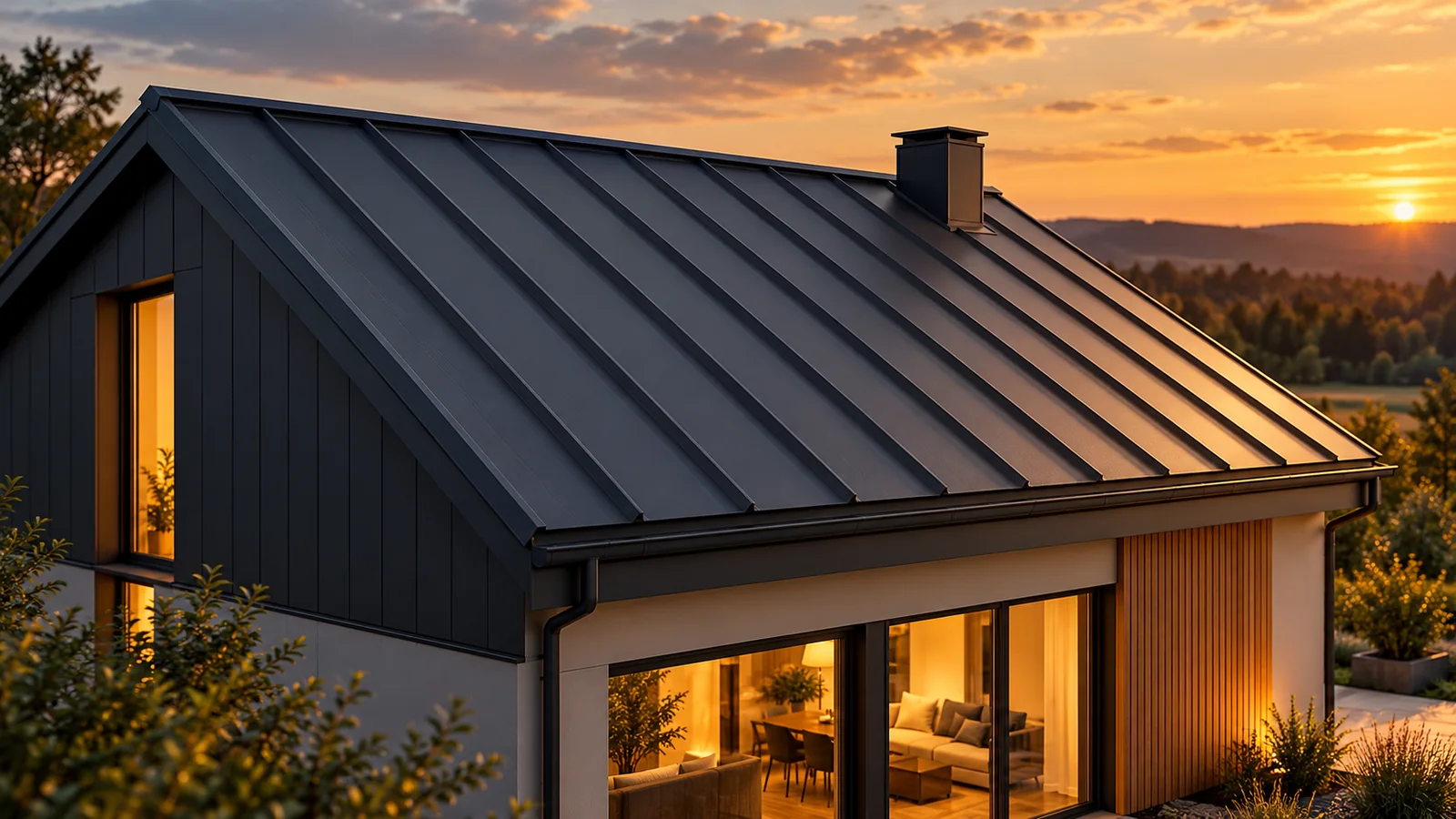
How does standing seam roofing work and what determines its weathertightness?

Standing seam joins adjacent metal sheets with edges raised above the main roof surface. It can be closed traditionally or form a factory-made snap lock. This arrangement reduces the number of visible fastenings on the roof field, but does not in itself guarantee weathertightness. The outcome depends on the pitch, the substrate, thermal movement and the details at the eaves, ridge and penetrations. Each of these elements must be matched to the given system. Rainwater flows mainly over the fields between the seams. Raising the joint limits its direct exposure to the flowing stream. This does not mean the seam is completely isolated from water. During wind-driven rain, snow accumulation or ponding against an obstacle, conditions are more demanding than on a freely draining slope.

2026-11-14T09:54:02+01:00
Back to top