T18 and T35 trapezoidal roofing: price, sheet thickness and anti-condensation fleece
Metal sheets and roofs
A T18 or T35 roof must be selected as a complete system. First, loads, supports and pitch are checked, then thickness, coating and sheet format. The anti-condensation layer can reduce dripping of condensate, but it does not replace insulation or ventilation. The price should include material after cutting as well as flashings, fixings and delivery. The following order helps prepare comparable quotes instead of choosing only the lowest rate. Determine the building’s purpose and internal conditions. An open garage, a heated workshop and a hall with high moisture emission do not require an identical roof. Dimensions of the roof slopes, pitch, support spacing and location are needed. Snow, wind and the weight of planned layers and installations must be included in the design.
What data should you start the selection with?
Establish the building’s purpose and internal conditions. An open garage, a heated workshop and a hall with high moisture emission do not require an identical roof. You need the roof slope dimensions, pitch, support spacing and location. The design must account for snow, wind and the weight of the planned layers and installations.
For an existing building, check the condition of the structure. A new sheet will not repair deflected purlins or weakened connections. If the roof is to be insulated later, it is worth allowing for this from the outset. Adding insulation at random to an unsuitable system can hinder moisture drainage. Choosing the profile itself is only the next step.
Also note the planned date and scope of works. For a renovation, you can first request a photo of a section of the old covering to assess the substrate. An uncertain structural condition should be clarified before confirming new lengths. If some data still needs to be confirmed by the contractor, mark this in the enquiry. This will allow you to distinguish a preliminary calculation from an order ready for production and avoid unnecessary corrections.
When should T18 be considered and when T35?
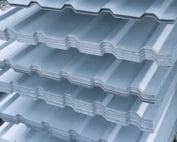
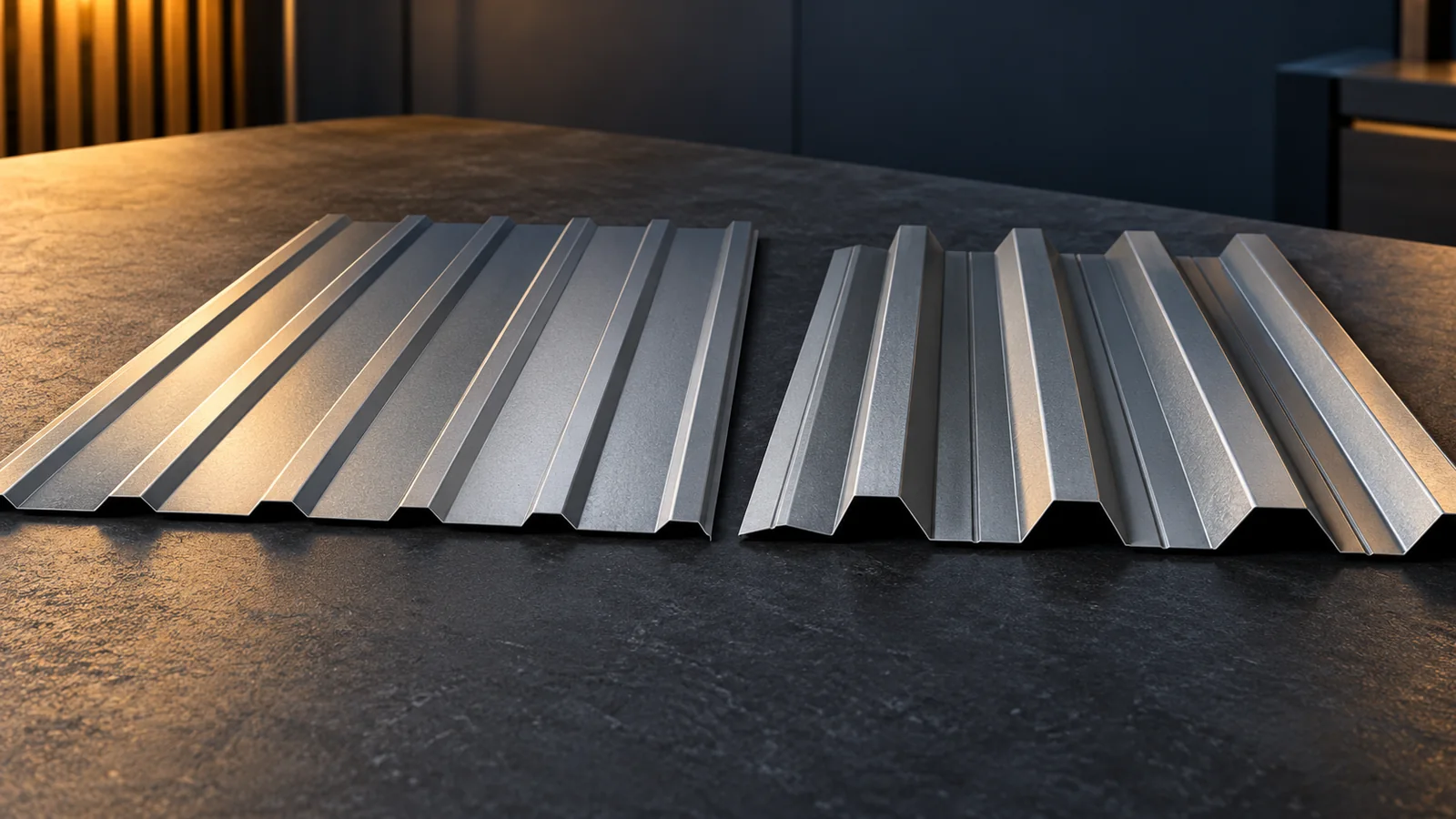
T18 has a shallower profile and a finer surface pattern. T35 has higher ribs, which with a properly selected geometry can provide more favourable stiffness parameters. This does not mean a fixed support spacing for either of them. The tables for the specific model and thickness must be compared.
The cover widths may also differ. The example T18 and T35 sheets have cover widths of 1100 and 1035 mm respectively, but with another supplier these values will be different. A greater width is not better in itself. It simply means a different number of strips and joints on the same roof slope. Before purchase, ask for the full drawing and laying plan.
How to choose thickness and coating?
The steel thickness is selected according to the structural requirements. In the documentation for some cover sheets, variants of 0.50, 0.60 and 0.70 mm appear. They are not interchangeable without verification. A thicker sheet has a greater dead weight, and differences in load-bearing capacity result from the entire cross-section and the steel. It is not selected solely on the basis of the expected service life.
The coating is responsible for surface protection and appearance. An industrial environment, salinity or an aggressive interior may require a different solution than a typical residential building. Check the finish on both sides. The warranty and maintenance conditions should be known before purchase. A matt colour or a greater number of years in an advertisement do not replace this information.

Is an anti-condensation layer needed?
Under uninsulated steel sheet, water vapour can condense. The fleece bonded to the underside retains some of the condensate and releases it when conditions allow drying. Suitability therefore depends on the amount of moisture and ventilation. If the layer remains permanently wet, its ability to limit dripping is insufficient.
It is not thermal insulation or a repair for leaking laps. It should not replace the membrane in any project. The eaves and lap zones are important so that the material does not draw in rain. The way these edges are prepared is specified in the product instructions. Before ordering, it must be established whether the manufacturer carries this out or whether it falls within the scope of installation work.
What does a sample price difference look like?
For the two models in the price list of 28 October 2026, the gross prices per m² of covering are:
| Variant | T18 | T35 |
|---|---|---|
| Steel 0.50 mm, polyester 25 µm | €10.34 | €11.31 |
| Steel 0.50 mm, matt polyester 35 µm | €11.82 | €12.80 |
| Steel 0.50 mm, polyurethane 55 µm | €16.25 | €17.26 |
These are catalogue examples, not a shop offer. They show that the choice of coating can change the cost more than moving between these profiles. They do not determine which variant will meet the structural requirements or what the final price will be after discounts and delivery.
What should the final quote include?
The lengths and number of sheets are needed, along with the material parameters and the basis for calculating the square metreage. List flashings, sealants, fasteners and any fleece separately. Establish transport and unloading. Long sheets can reduce the number of transverse joints but require good handling conditions on site.
The contractor should receive the installation documentation and the fixing plan. On acceptance, the conformity of profile, coating and batch is checked. After laying, swarf must be removed and drainage inspected. This order allows structural, material and organisational decisions to be separated. A roof is well chosen when all these parts fit together, not only when the sheets have an attractive price.
7 branches. Materials closer to your project.