XPS freeze-thaw resistance: how to check the declared performance
XPS insulation
On a terrace or at the outer part of a foundation, the insulation may be exposed to moisture and temperature changes. Contact with cold air alone does not yet describe the whole problem. XPS is also selected with regard to its behaviour under freezing and thawing if the application requires it. Extruded polystyrene with suitable properties is useful in such assemblies. The condition for a reliable choice is checking the documentation, not just a general claim of frost resistance. Freezing the material in a dry state and cycles after exposure to water describe different conditions. In an external building element, both factors may occur together. XPS has low water absorption, which is a significant advantage in such applications.
In this article
Why water changes the significance of frost
However, this does not mean that the assessment of a specific product can be omitted. Data are needed that correspond to the anticipated conditions and the layer build-up.
Extruded polystyrene owes part of its water-related properties to its cellular structure. As a result, it is considered for below-ground applications and inverted roofs. XPS continues to function as a component of the building envelope in which joints, drainage paths and protective layers may occur. Correct selection combines the material parameters with control of the water path. Limiting ponding is beneficial regardless of the level of resistance declared for the boards.
What the FTCD designation means
FTCD refers to freeze-thaw resistance after testing water absorption by diffusion. The symbol therefore also indicates how the assessment conditions are prepared. For XPS it is worth checking the full designation and the explanation of the level in the document. The number next to the designation is not simply the number of cycles that the board can survive on site. It is read in accordance with the relevant method.
Extruded polystyrene may have a parameter declared only for specific thicknesses or variants. The table then requires an exact match to the order. XPS from the same family but in a different version does not automatically have to inherit all the data. It is worth reviewing the notes below the table. Often these are precisely what explain which boards a particular property applies to and where additional confirmation is needed.
FTCI points to a different pathway of impact
In the documentation one may also encounter FTCI, which is associated with assessment after prolonged immersion. It should not be confused with FTCD without explanation. Both designations relate to freeze-thaw, but they refer to different conditions of prior water exposure. XPS should be compared on the same basis. The mere presence of one symbol does not explain all possible design requirements.
Extruded polystyrene does not acquire universal resistance to every form of moisture exposure through a single declaration. The intended use of the product is what matters. If XPS is to perform in a system for which a specific characteristic is required, that characteristic must have an appropriate basis in the documents. A lack of data should not be turned into an assumption of full resistance. It is better to confirm the requirement before ordering the material.
On a roof, the entire water flow matters
In an inverted roof, XPS is located above the waterproofing. Its water-related properties and its behaviour under varying temperatures are therefore particularly important. A suitably selected material can form the thermal layer in such an environment while at the same time protecting the waterproofing from above. However, correct falls, clear outlets and the other layers provided for in the roof system are required.
Extruded polystyrene does not remove water from a blocked outlet. XPS with confirmed characteristics does not exempt you from checking loads and contact pressure either. On a terrace, the surfacing, the supports and the areas next to walls are additional factors. The service conditions of the insulation are the result of all these elements. Regular inspection of the outlets helps to maintain the design assumptions instead of exposing the material to unforeseen effects.
At ground level, two issues must be separated
The resistance of XPS to freeze-thaw cycles is not the same as protecting the substrate from frost penetration. The second issue depends on the ground, water, geometry and the course of temperatures. The board can be part of an insulation solution, but its effectiveness requires a design. It is not enough to know that the material itself retains its properties in a specific test. These are different levels of assessing the structure and the insulation.
The low weight and ease of cutting of XPS help to install insulation on a complex foundation outline. Equally important is its connection to the plinth and protection against damage during backfilling. Water should be controlled by appropriate safeguards. A well-designed system uses the material’s properties rather than trying to replace waterproofing, drainage and ground condition assessment with them.
How to incorporate the requirement into the order
XPS is produced by, among others, HOCH, Austrotherm and Synthos. In the specification, it is worth stating the property required for the given application, together with the thickness and other parameters. The colloquial term Styrodur does not explain behaviour during freezing. The documentation must be matched to the variant actually delivered to the construction site. This makes it possible to avoid comparing different methods or incompatible board variants.
Extruded polystyrene can meet the requirements of a damp external zone well if the correct product has been properly selected. XPS must then be laid in a compatible system and protected in accordance with the instructions. FTCD or FTCI parameters are useful data when their meaning is understood. The most practical decision combines them with water absorption, load and the way water is drained in the finished building element.
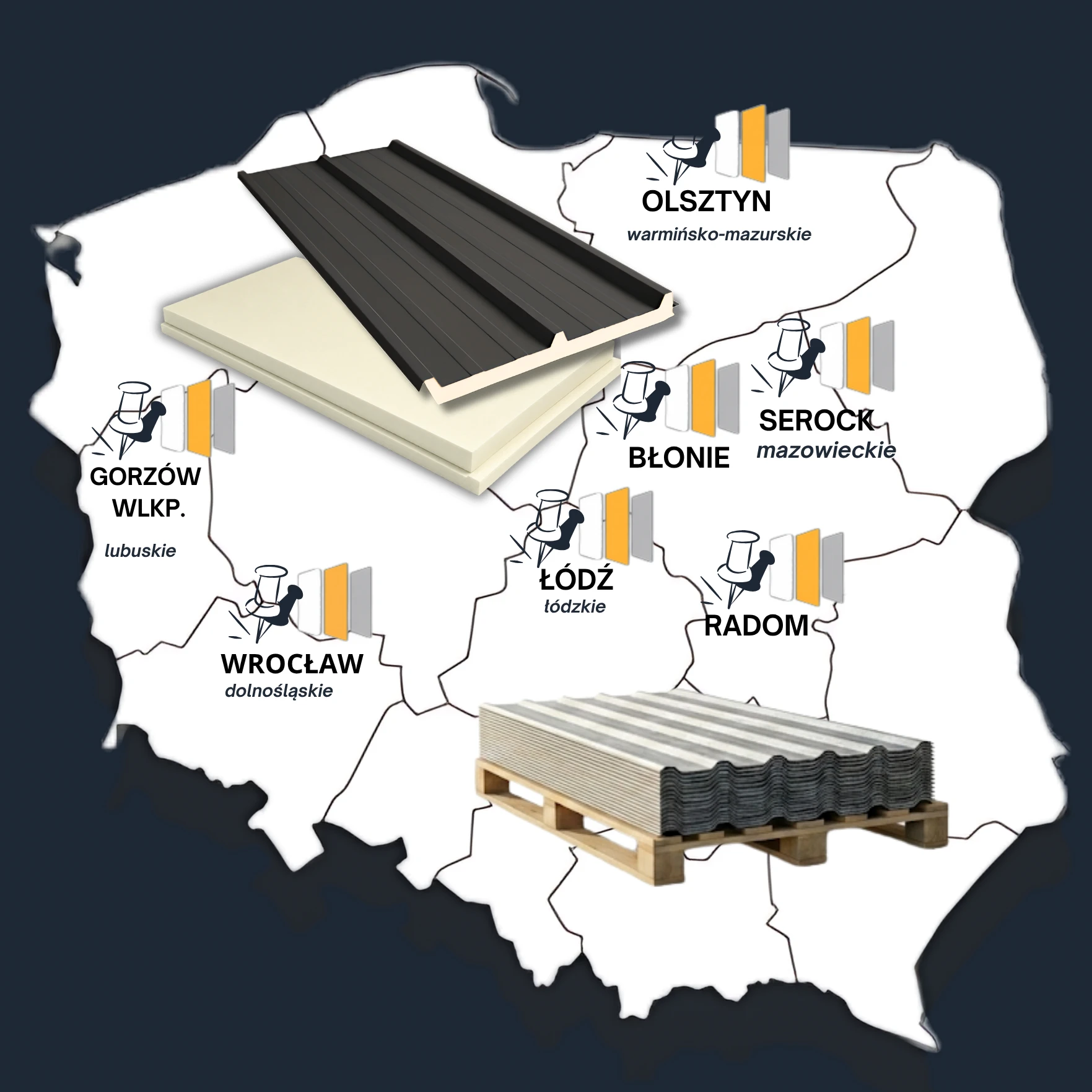
7 branches. Materials closer to your project.