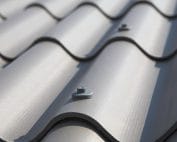
Light or dark fibre cement roofing? Why colour matters
Fibre cement roof coverings
The roof colour is usually chosen from a photo of the house or to match the façade. That is a good starting point, but it is also worth checking the sunlight conditions and the later maintenance. Fibre cement sheets can have a natural grey tone or a factory-applied coating in specific colours. Asbestos-free fibre cement in a light and a dark variant does not have to behave identically in the sun. However, no colour replaces proper insulation or ventilation of the entire roof. A small fragment under a shop lamp may look different from a large roof surface in daylight. It is worth assessing a sample in the morning, in the afternoon and in the shade. The neighbouring walls, timber, trees and other roofs matter.
In this article
View the sample at the future construction site
The colour on screen depends on the photograph and the device settings. It should not be the sole basis for ordering. It is also worth comparing samples of the shaped components and flashings, because elements made from other materials may have a different gloss. Even a similar shade does not always give an identical effect. On a simple, large roof the difference becomes more visible than on a small model or visualisation.
A dark surface can absorb more energy
In general terms, darker finishes often absorb solar radiation more strongly. The final result, however, depends on the properties of the specific coating. Corrugated fibre cement sheets should therefore be compared on the basis of declared data, if available. The colour name alone does not determine the surface temperature. It says even less about the room temperature. Between them there may be insulation layers and a ventilation gap. It is therefore not worth promising a specific difference in comfort merely by changing from graphite to grey. In a building with large glazing, the most important source of summer gains may be outside the roof.
Natural grey and a coating are different finishes
An uncoated material shows its mineral character and may have natural variations in appearance. The factory coating gives the colour and the properties specified for the given product. Corrugated fibre cement sheets in both versions require checking the documentation. One fire reaction declaration must not automatically be transferred to all finishes. The warranty conditions may also distinguish between the durability of the board and of the coating. At the time of purchase, it is worth establishing which scope applies to the chosen variant. There is no need to expect identical ageing of every surface. What matters more is an informed understanding of the changes and matching the appearance to the character of the building and the user’s expectations.
The corrugated profile creates light and shadow
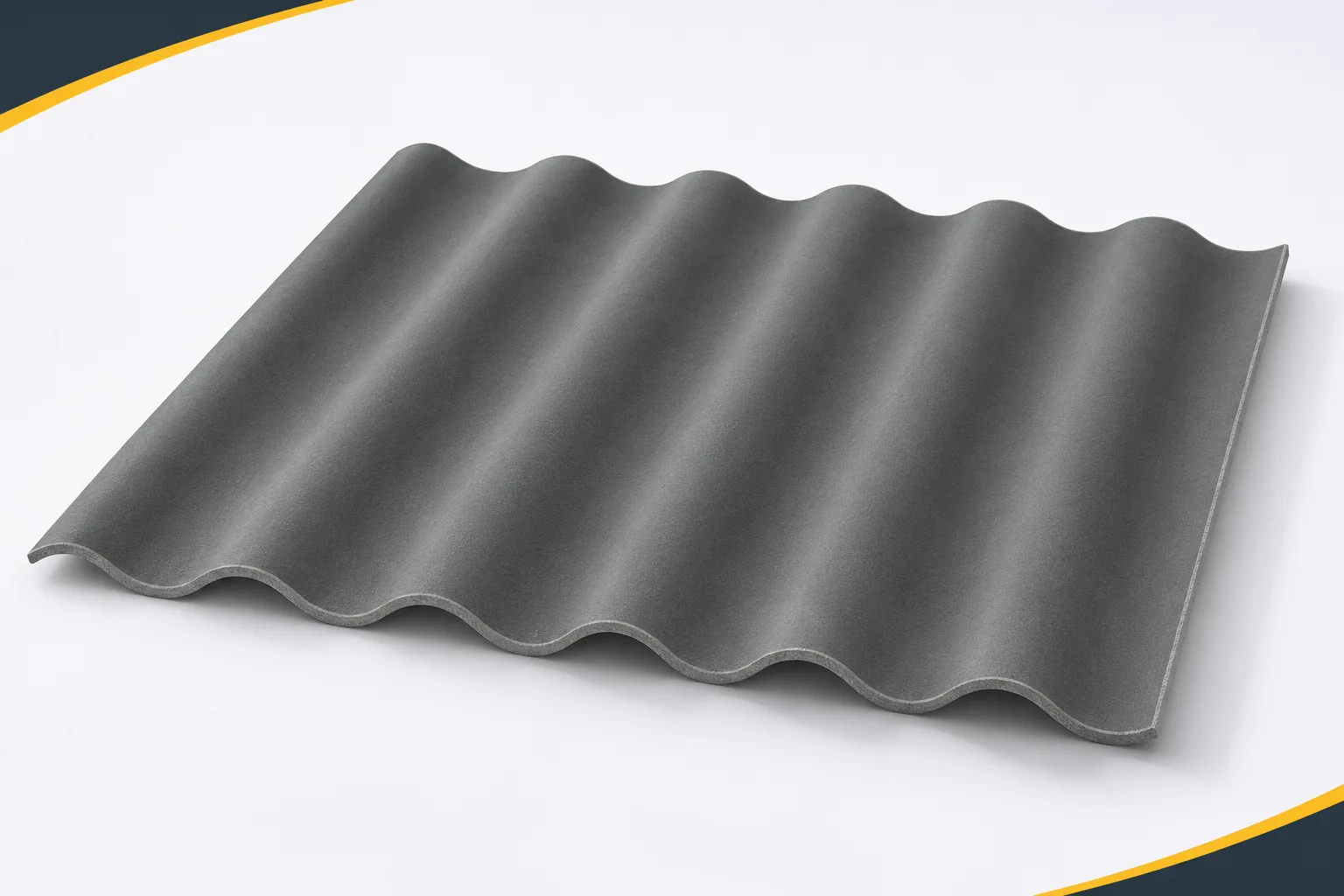
The same colour looks different on a flat sample and on a sheet with pronounced ridges. Shadows in the recesses emphasise the rhythm of the roof slope. Asbestos-free fibre cement with a larger corrugation may have a stronger pattern than a variant with a finer profile, even in a similar colour. The viewing direction and the angle of the sun matter. It is therefore worth looking at a sample of the entire cross-section, not just a flat piece of the coating. However, the profile should not be chosen solely by appearance. It must fit the roof geometry, the supports and the accessories. Aesthetics are assessed within the bounds of solutions that are technically appropriate for the building.
Soiling is visible in different ways
On a dark surface, light deposits may stand out more strongly, and on a light surface, some dark soiling may. The building’s surroundings influence the type and rate at which they form. Fibre cement sheets under trees may require different attention than those on an open plot. However, the colour should not be chosen in the belief that it will allow inspections to be dispensed with entirely. The condition of gutters, joints and ventilation remains important regardless of the shade. Cleaning should comply with the recommendations for the surface. Aggressive methods may impair the appearance. Before using a product, it is worth checking its suitability and carrying out a test in a less visible place.
Do not assume that later repainting is unrestricted
Changing the colour after a few years may seem a simple solution, but its permissibility must be checked. Fibre cement sheets and their coatings have specific care rules. Not every paint will be suitable, and not every system permits independent renovation. The condition of the substrate, the preparation and the execution conditions are important. An attempt should not be made to hide cracks with a new layer of colour. First the cause of the damage is removed and the material assessed. On an old roof of unknown composition, sanding or mechanical cleaning must not be started merely because painting is planned. Identification of the product must precede any intervention.
Choose the colour after checking the roof’s functions
First the correct profile, formats and detail solutions are determined. Then the available finishing variants are compared. Fibre cement sheets should be ordered to one agreed specification, including the shaped pieces. When works are staged, it is good to check availability and the possibility of differences between batches in advance. The shade should harmonise with the façade but also meet expectations regarding maintenance. If summer comfort is key, the whole building and the coating parameters should be assessed instead of relying on the general division into light and dark. A decision made in this way combines appearance with actual conditions of use.
Compare samples of asbestos-free fibre cement together with the planned flashings. Choose the final colour after checking availability, surface parameters and the layout of the entire roof.
7 branches. Materials closer to your project.