How to judge the quality and suitability of tile-effect roof sheets
Tile-effect metal roofing sheets
The quality of a roofing tile sheet is determined by how well its documented parameters match the project, not by the coating name or warranty length alone. Check that the description clearly identifies the profile, format, sheet thickness and both overall and usable dimensions, and that the documents relate to the chosen variant. On delivery, the condition of edges, batch markings and storage conditions also matter. A product suited to the roof pitch, support and surroundings reduces the risk of later problems. Choosing a thicker sheet, however, does not replace an analysis of geometry and installation requirements.
What data should you look for in the specification?
The description should clearly identify the profile, format, steel sheet thickness and type of coating. Overall and effective dimensions are also required. For cut sheets, lengths are specified, while for modules the number and coverage area of the element are given. An imprecise description makes it difficult to check the delivery later.
Ask for the technical data sheet, the relevant product declaration and the installation instructions. The documents must relate exactly to the selected variant. A similar name of another model is not a sufficient reference. A well-prepared specification makes it possible to distinguish a real difference in quality from a difference in how the offer is presented.
What does the geometry and precision of manufacture tell you?
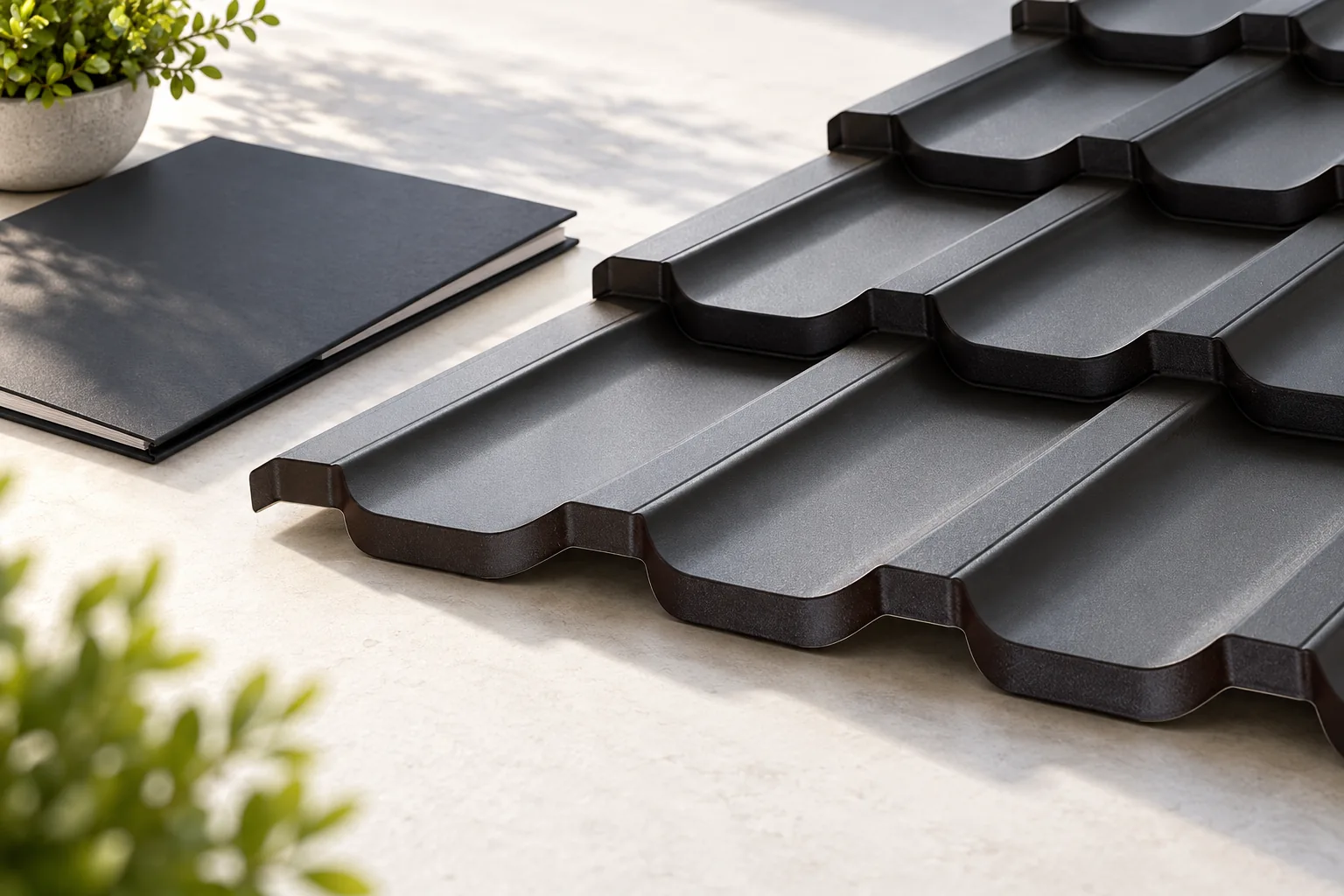
The profile should correspond to the technical drawing, and the edges should allow the intended overlaps to be made. The regularity of the embossments matters for aligning the sheets. However, it is not assessed by randomly matching products from different families. Each system has its own connection solution.
On receipt, pay attention to permanent deformation and damaged edges. Waviness of a loose sheet alone does not always give a complete picture of how it will perform once fixed. If doubts arise, compare the condition of the material with the documentation and report them before installation. Forced straightening should not replace an assessment of the cause.
How should you assess the coating rather than just the colour?
The coating protects the steel under specific conditions, so its type and scope of application must be known. Matt or gloss primarily describe the appearance. They do not constitute an independent durability ranking. The environment, material protection and maintenance requirements are what matter.
View the sample in daylight. On delivery, check for visible scuffing, soiling and conformity of colour markings. When combining different batches, differences in shade may be noticeable. If the covering is to be created in stages, it is worth discussing this before ordering. A uniform code does not replace agreement on the entire scope of delivery.
Does greater thickness always mean a better purchase?
Thickness is an important parameter, but it works together with geometry and material grade. It should not be chosen in isolation from the product. The documentation specifies the conditions for support and installation. Purchasing a thicker variant alone does not entitle you to arbitrarily increase the batten spacing or omit fixings.
Similarly, it is not worth assessing quality solely by the weight of the sheet in your hands. Different formats and overlaps make such a comparison difficult. A better basis is the specified parameters and conformity with the design. A high-quality product should fulfil its defined function well, not merely feel solid.

How to read a warranty without false expectations?
Check what the warranty covers and what conditions must be met. Protection of aesthetics and of specific material damage may have a different scope. The environment, installation, maintenance and the manner of reporting are significant. The number of years alone does not describe all these issues.
Do not equate the warranty with a guaranteed service life of the entire roof. The covering works together with flashings, fixings and other layers. A defect in one of them may have a separate cause. Keeping purchase and installation documents helps establish responsibility if a problem appears over time.
What to check on delivery and during storage?
Compare the markings, number of items and lengths with the order. Inspect the packaging and accessible surfaces in a way that does not damage the material. Visible damage should be documented before work begins. Laying the sheets on the roof may later make it difficult to determine when the defect arose.
Storage must comply with the product instructions. Moisture trapped between sheets is undesirable, and transport packaging is not always suitable for long outdoor storage. Plan the delivery date together with the installation. A good-quality material requires proper handling even before use.
How to combine a good product with good workmanship?
The installer should know the specific model and prepare the substrate according to its requirements. Ventilation, the arrangement of overlaps, fixings and flashings are important. Tools that overheat the coating are not used for cutting. Swarf must be removed, and any damage noticed should be assessed in accordance with the instructions.
At acceptance, look at the roof as a whole. Check the details, documentation and maintenance approach. A well-chosen tile-effect metal roofing has clear parameters, fits the design and arrives on the roof in good condition. Its quality does not end with the purchase of the sheet, because the result also depends on the accuracy of the subsequent work.
7 branches. Materials closer to your project.