Which practical skills should a roofing course teach?
Construction and installation
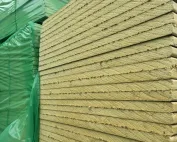
A roofing course delivers most value when it lets participants practise installation details themselves rather than merely view a finished roof. Before enrolling, check the list of tasks you perform day to day and compare it with the programme: someone starting with modular metal tiles needs grounding in geometry and the sequence of laying modules, while a contractor working on large roofs with sandwich panels needs exercises in lifting elements, support tolerances and sealing joints. Matching the programme this way is a better indicator than a general slogan about modern roofing.

How do you choose a topic that matches your own practice?
A person starting work with tile-effect metal roofing needs different exercises from a contractor installing large roofs with insulated sandwich panels. In the first case, the basics of geometry and the sequence of laying modules are important. In the second, lifting elements, support tolerances and sealing of connections play a greater role.
Before registering, check the list of tasks covered. A general slogan about modern roofing does not say whether the participant will practise the required detail. It is good if the programme includes solutions encountered on real construction sites. The most benefit comes from practising a problem that later has to be solved independently on the roof.
Why is it worth learning to read instructions?
The instruction specifies the support spacing, the laying sequence and the method of fixing a specific covering. Similar sheets do not necessarily have the same connections. The ability to find the correct drawing prevents carrying over habits from another product. This applies both to modular tile-effect metal roofing and to T18 or T35 profiles.
During training, it is worth practising reading sections, overlap directions and eaves details. It is also necessary to distinguish product requirements from an example design solution. A drawing from the instruction does not replace structural calculations. The contractor should know when they can work according to the documentation and when the designer’s clarification is needed.
What is the importance of measurement and substrate preparation?
Good installation begins with checking the diagonals, the eaves level and the plane of the substructure. It is worth practising setting out reference lines and measuring the first rows. A small error at the beginning can grow with each subsequent module. Repair after the entire roof slope has been screwed down is much more difficult.
With sheets cut to size, you need to be able to prepare a length schedule. With modules, planning the covering and cut-offs is important. For trapezoidal steel sheet, the overlap side and the support method must be correctly identified. Practising these activities on a model helps to spot errors without the risk of damaging material on site.
What should sheet metal working and fixing teach?
The participant should select a cutting tool that does not damage the coatings through high temperature. Practising with snips and a nibbler on different profiles is useful. Protecting the edges in accordance with the instructions and thoroughly removing swarf remain important. An even cut line alone does not yet mean the correct technology.
It is also worth distinguishing between fastening screws for the substructure and connectors that join the sheets. The exercises should cover setting the screwdriver and assessing the gasket compression. A connection that is too loose and one that is excessively compressed are two different errors. A demonstration of the correct setting is more useful than memorising a single number of screws per metre.

Which details are best practised independently?
The eaves, ridge, roof valley and the connection at the chimney require particular attention. These are places where the geometry of the covering and the path of water runoff meet. Good practice also shows how the flashing connects to the underlay. The participant should understand the task of each part, not merely reproduce its shape.
Ventilation is a separate issue. It is worth checking on a model where air enters under the covering and where it leaves. Gaps at windows or chimneys require a solution in accordance with the design. Not every empty space should be filled tightly. Some of them are needed for the roof to work correctly.
How can you combine learning installation with fault diagnosis?
A useful training course shows not only the correct example but also the consequences of incorrect execution. Poorly measured battens, an overloaded overlap or a gasket damaged by compression can be compared. Such analysis teaches how to look for the cause. On site, the symptom of a leak may be visible far from the place where water enters under the covering.
It is worth practising assessing whether the problem concerns external tightness or condensation from below. The method of repair will then be different. Documenting defects with photographs and preparing a description for the designer is also useful. Clear information about the location and the conditions in which the problem occurs helps to choose the right correction.
How can you check whether the knowledge will be applied?
After the training, the contractor should be able to indicate which activities they will change in their work. A good test is independently preparing a section of the roof slope and discussing the connections. Rules for organising the workplace and safe access are also needed. Learning the detail does not replace preparation for working at height.
Keep the current instructions and your own notes from the exercises. For a new product, check its requirements again. Technology can change, and a similar name does not guarantee an identical construction. The value of the training is best seen when the contractor makes more accurate decisions and can explain them calmly to the client.
7 branches. Materials closer to your project.