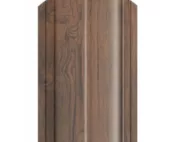
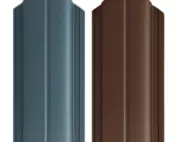
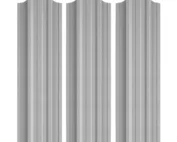
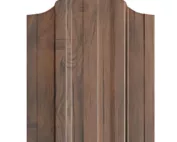
Metal fence pickets for a modern home: a simple, carefully detailed design
Metal fence pickets and fences
A simple house clearly reveals the quality of the details around it. Against a calm background, uneven gaps, a random colour of fasteners or a poorly finished bay are easy to spot. Metal fence pickets can form an orderly fence if their selection does not end with a dark coating. The proportions of the profile, the rhythm and a clear structure are what matter. A modern effect does not require many decorative solutions. Repetitive pickets allow the chosen motif to be carried over a longer section and adapted to fields of different widths. This flexibility is worth using to organise the front instead of adding yet another different material. More often it results from limiting random differences and carefully combining a few simple elements.
In this article
Choose one dominant rhythm
The fence can emphasise either the vertical or the horizontal. There is no need to mix both directions just to make the front look more interesting. It is worth first checking the relationship to the building’s form and the entrance zone. If the façade already has many divisions, a calm infill can bring them into order. With a very restrained wall, a more pronounced picket profile can become a deliberate accent.
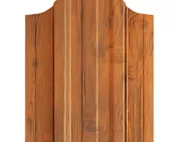
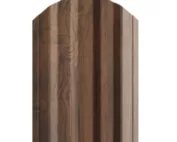
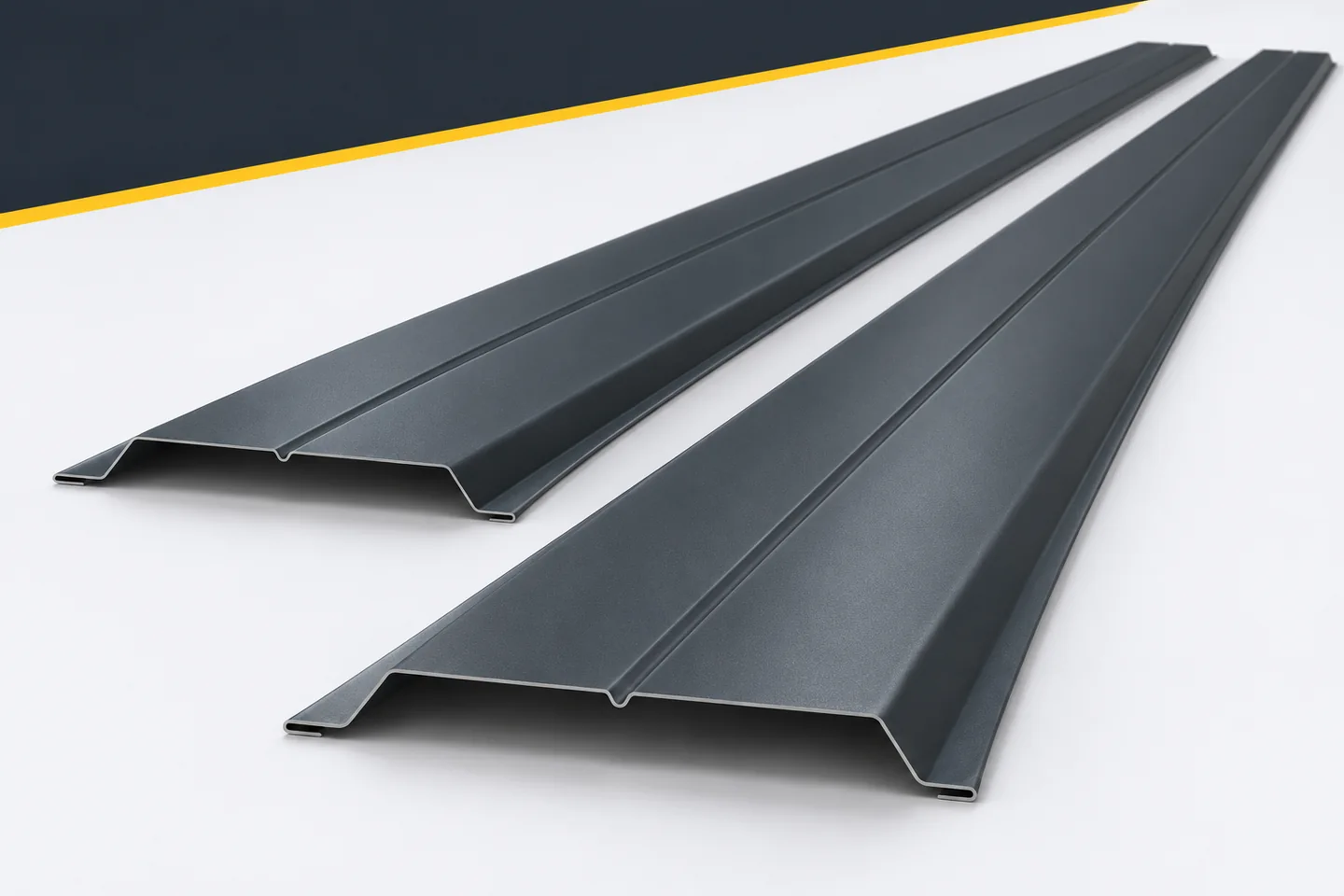
Sheet metal pickets should be shown on the drawing at true scale. Visually overly wide elements can change the character of a light fence. When comparing proposals, check the actual width and depth of the section. The perspective of a photograph can change the impression of massiveness. The real shape has its own bends and depth. These should guide the choice and the subsequent execution.
Organise large fields before the details
First plan the gate, the pedestrian gate and the posts. Only then adjust the number of pickets in the bays. Otherwise it is easy to end up with a random, very narrow fragment at the entrance. Large divisions matter more for the whole front than a fine groove on a single element. They should be assessed from the distance from which the house is usually viewed.
If the field widths differ, choose a consistent way of distributing the gaps. It is not always necessary to keep an identical gap to the millimetre. A calm distribution of the edge spacings may be more important. Metal fence pickets should not be deformed to hide a planning error. Good proportions are created at the stage of laying out the arrangement, not by squeezing the profile during installation.
Decide what role colour plays
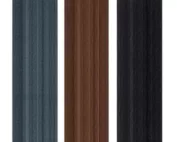
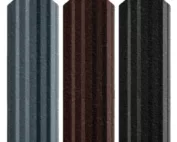
A dark infill can reference the window frames or flashings. A light variant can create a different kind of relationship with the façade, if it is available in the given product. However, it is not worth starting from the assumption that one colour is obligatory. The choice should correspond to the specific house. Samples must be compared with its actual materials, not only with a visualisation.
Gloss and texture can change the perception of the same colour. With large smooth gate surfaces, the difference relative to profiled pickets can be distinct. It is worth assessing this before ordering. If the match is not complete, a deliberate contrast can be chosen. An accidental pairing of two almost identical shades does not always look as calm as assumed.

Refine the garden side
A modern front should not end on the representative side. From the house, the crossbars, fixings and the back of the profile are visible. It is worth agreeing their colour and how they are to be organised. Sheet metal pickets with decorative finishing on both sides can help, but they will not remove the view of the structure. It must be planned as part of the fence.
Supports should not be removed to achieve a more open appearance. Their number and arrangement result from the system and dimensions. A horizontal layout may require an additional bracket and different rails than a vertical one. Aesthetics should make use of these solutions, not bypass them. Correct connections can be visually refined through consistency of detail.
Leave room for light and background
A picket fence does not have to imitate a solid wall. Gaps allow the garden to be seen and change the perception of the surface. It is worth adapting them to privacy needs on specific sections. An open entrance and a more heavily screened section by the terrace can belong to one composition. However, the change should occur in a clearly legible place.
With a denser layout or two rows, the structure must be checked again. A higher degree of enclosure has technical consequences. It also does not automatically provide full screening from every angle. Metal fence pickets are worth viewing in a sample against a real background. Such a section will show whether the intended lightness and visibility suit the use of the house.
Focus on precise execution of ordinary details
Even ends, repeatable gaps and a consistent surface give a stronger effect than random additions. At acceptance, check the vertical alignment and the condition of the edges. After installation, remove filings and dirt in accordance with the instructions. Keep the documentation for the coating and accessories. In a simple fence, the quality of workmanship remains visible without many decorations.
Well-chosen metal fence pickets suit a modern house through order and proportion. They do not need many ornaments to create an orderly, clearly legible rhythm of infill. The actual profile, the right structure and a consistent composition are enough. This effect can be assessed both from the street and from the garden. Carefully selected details remain important in everyday use of the entrance, driveway and garden.
7 branches. Materials closer to your project.