How to coordinate the roof colour with the façade, windows and doors
Choosing the covering
First establish which elements of the building will remain unchanged, and only then choose the colour scheme around them. This guide shows how to reconcile the roof colour with the façade, joinery and guttering without losing the coherence of the whole composition. Check whether the chosen palette is permitted for your plot, how different materials display the same shade, and why samples should be viewed outdoors. Also consider matt versus gloss, surface texture and the working conditions of dark sandwich panels. This information will help you narrow the choice deliberately and avoid an accidental mixture.
Start with the elements you cannot change
If the roof is already ordered, treat it as the starting point. Existing brick, stone or joinery can work the same way. Selecting each element separately easily leads to an accidental mix. It is worth first establishing two or three main colours for the whole building.
Before choosing, check the appearance requirements for buildings on the plot. Not every preferred colour has to be permitted in a given location. Then assess the surroundings and the scale of the roof slopes. An extensive roof will influence the perception of the house more strongly than a small section visible above the façade.
How do I combine light and dark surfaces?
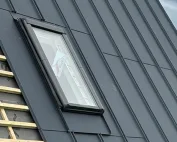
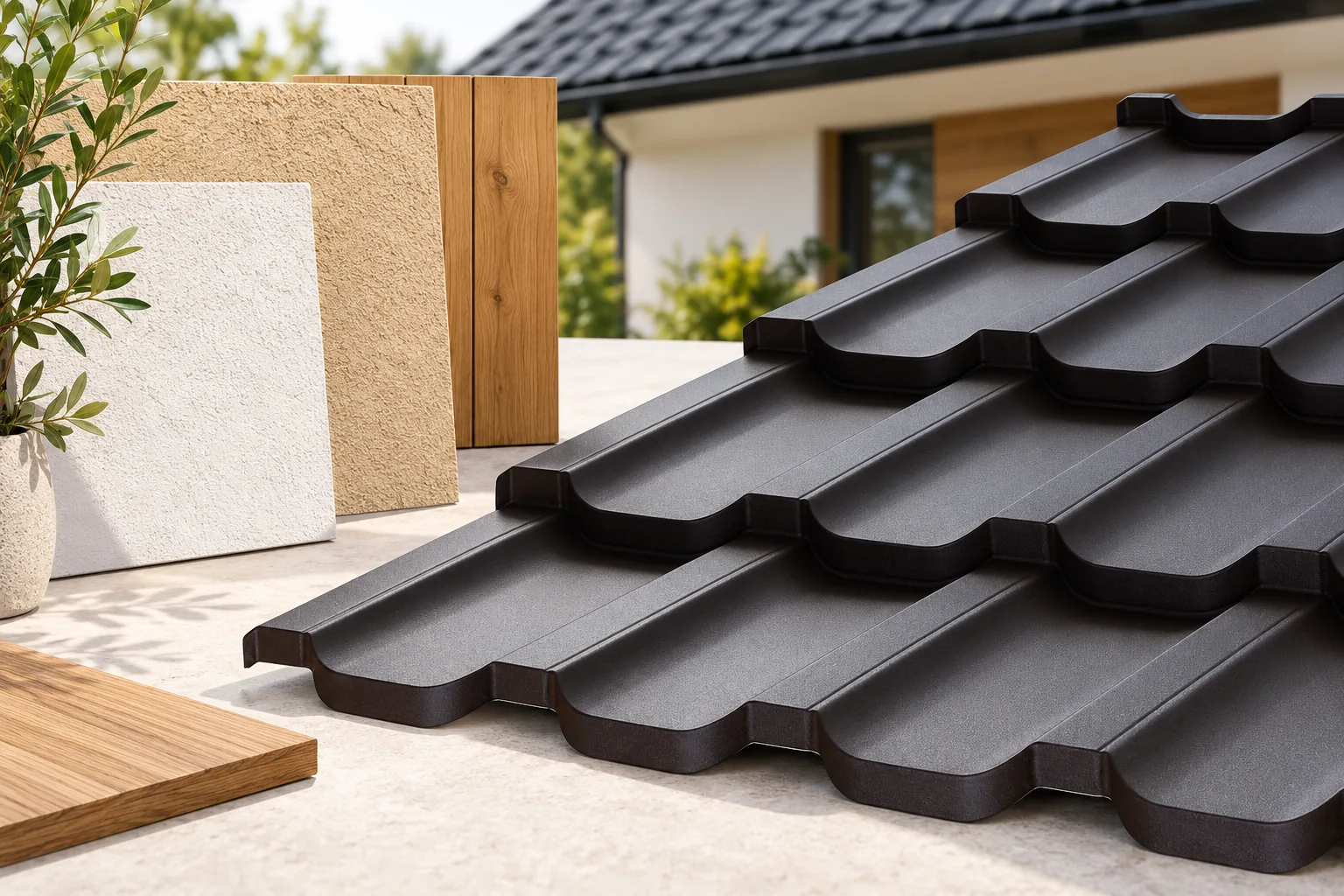
A dark roof with a light façade creates a clear contrast. It can emphasise a simple form and the order of the windows. With many changes of plane, take care that additional dark accents do not break up the composition. Gutters and flashings can blend into the covering or form a separate, deliberately chosen line.
Similar shades for the roof and façade give a calmer effect, but require control of textures. Two surfaces in almost the same colour can look accidentally mismatched. Sometimes a clear difference is better than attempting to achieve identity on metal and render.
These are suggestions for comparison, not rigid design rules. The effect must be checked on the actual building and with samples of the chosen finish.
| Example starting point | What to combine on a sample |
|---|---|
| Graphite roof | Light render, cool grey or natural wood |
| Brown roof | Warm white, beige and muted mineral cladding |
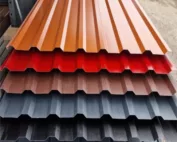
| Roof in red tones | A calm light façade and a limited number of additional colours |
| Dark-coloured metal façade | Light-coloured joinery or a deliberate contrast, with control of the panel parameters |
Why is a colour code not enough?
The same colour name or number does not guarantee an identical appearance across different materials. The type of coating, texture and gloss all affect it. A window with foil, matt sheet metal and a smooth gutter may reflect light differently. Small differences are often particularly visible side by side.
For a larger order, check batch consistency and the rules for any subsequent reordering. A covering that has been exposed to the weather for years may differ from a new sheet. Colour documentation is useful, but it does not replace comparing a sample before repair or extension.

How should samples be viewed?
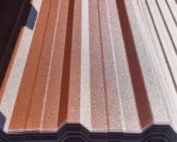
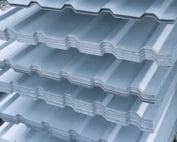
Lay out pieces of the covering, flashings and façade outside. Look at them in sunlight and in diffused light. Change the viewing angle, because the pressings create shadows. A small flat sample will not show the full effect of tile-effect metal roofing or a taller trapezoidal sheet.
It is worth creating a trial section of the façade next to the planned materials. A photograph can help compare variants, but the camera also changes how colours are perceived. Base your decision on real surfaces. This is particularly important with shades of warm grey, brown and off-white.
What difference does matt versus gloss make?
A matt coating limits intense reflections, while gloss shows light more strongly on the profiles. The choice affects the character of the roof slope, but does not by itself determine durability. Not every matt surface can be regarded as better protected against corrosion. The parameters must be checked in the specification.
The texture may also show dirt and signs of use differently. Assess the surrounding conditions, especially the proximity of trees and sources of dust. A good colour choice does not remove the need for maintenance. The coating should suit both the visual design and the intended environment.
Does a dark insulated panel require extra attention?
A dark cladding may heat up more strongly in the sun. In a sandwich panel, the temperature difference between the two sides affects its behaviour. The choice of length, span and fixing should take the colour group into account in accordance with the documentation. This is not solely a decision about the appearance of the hall.
These same restrictions should not be transferred automatically to every product and material. The data sheet of the specific panel defines the conditions of use. If the planned façade is to be dark and long, disclose this before ordering. A later change of shade may require the solution to be checked again.
How do you finalise the choice of the whole palette?
Record the selected materials, colour designations and types of finish. Include the gutters, gate, window sills and fence. Not all of them need to have the same colour, but their roles should be clear. With metal fence bars, it is also worth looking at the garden side.
Before the final purchase, order a complete sample set together with the façade design. Limit the number of accents if the building form already has many divisions. Consistency usually comes from repeatable decisions, not from a sophisticated colour name. A well-chosen roof should work with the building even in ordinary, cloudy light.
7 branches. Materials closer to your project.