Winter roof preparation and what to do when snow builds up
Repair and maintenance
Before winter, decide who will assess the roof after heavy snowfall and by what criteria. Measuring snow depth alone is not enough, because weight, distribution and the load capacity of the structure all matter. The building owner should also check that drainage is clear, that snow guards are sound and that any elements which have already worked loose are inspected. Repairs must suit the type of covering and the conditions in which materials are applied, and checks should be planned well ahead so that parts can be ordered. Below we discuss these choices and the trade-offs involved.
Fix defects before difficult conditions arrive
A loose flashing, a damaged seal and a small leak can become harder to repair in frost. Inspection should be planned with enough time to order parts. Do not wait for snow to check an element that has already been moving in the wind.
The repair should match the type of coating and the conditions for using the materials. Paints and adhesives require a specific substrate and temperature. A temporary patch on a wet surface may not be durable. The scope of temporary protection is best determined with the contractor.
Ensure water drainage is unobstructed
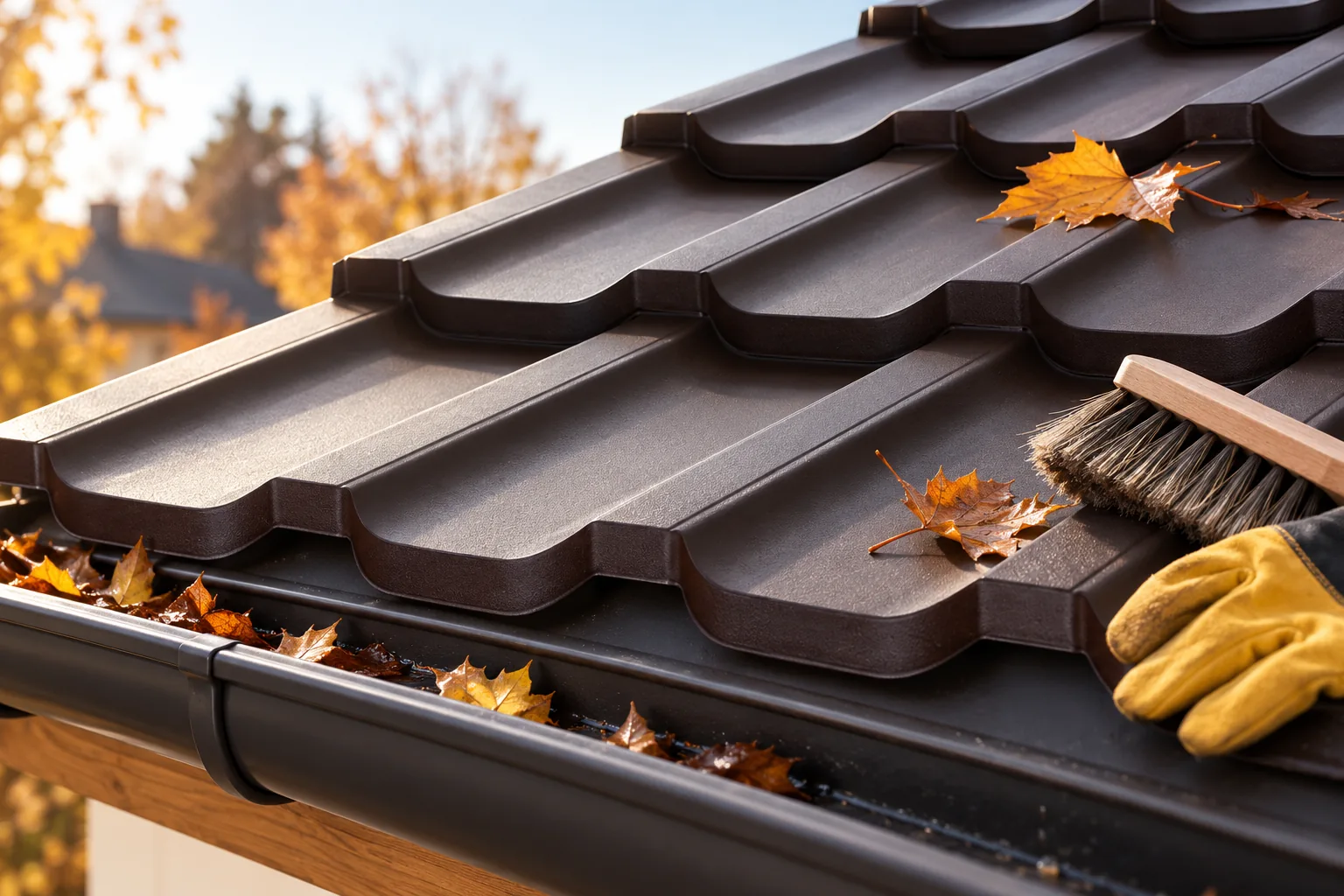
Gutters, outlets, downpipes and drains must be cleaned of debris. A thaw can deliver a lot of water, even when the roof has previously remained under snow for a long time. The further drainage path is also important. Water should not accumulate at the building due to a blockage.
For a flat roof, the designated emergency drains must also be checked. They must not be obstructed during cleaning or later alterations. Standing water before winter requires the cause to be determined. It may result from dirt, deflection or an incorrectly formed slope.
Check barriers and areas under the eaves
Snow fences and snow guards must remain stable and consistent with the designed layout. Brackets, connections and any deformation are assessed. A damaged element should not be left simply because it still worked last winter. The mounting substrate also requires inspection.
It is worth reviewing the layout of entrances, walkways and parking areas. A change in how the land is used may create a new hazard zone beneath the roof slope. A gutter is not a snow guard. Nor does the presence of a small fence mean the condition of the snow cover can be ignored.
Why is measuring snow depth not enough?
The weight depends on the type and moisture content of the snow. The same depth of fresh and of wet, compacted snow does not mean the same load. On the roof, the distribution of drifts also matters. Wind, parapets and differences in height can cause local accumulation.
The need for inspection and snow removal must be related to the building documentation and the assessment of a competent person. A threshold in centimetres found for another building should not be adopted. Light trapezoidal steel sheet or a strong insulated sandwich panel also has defined operating conditions together with its supports.

Snow removal requires a plan, equipment and preparation
Removing snow from the roof is work at height and can change the load distribution on the structure. Access, safeguards, the sequence and the place where snow is deposited must be planned. An accidental heavy pile must not be created on an adjacent section of the roof slope.
The scope of work should take into account skylights, openings and equipment hidden under the snow. Invisible elements should not be walked on, nor should barriers be relied upon without appropriate approval. Such work requires a prepared team and the ability to respond safely in an emergency.
Protect the covering from tools and ice
Sharp tool edges can cut the coating or the waterproofing. The method of snow removal should be matched to the type of roof. Ice should not be chipped away with a random metal tool. Damage is often invisible until the first thaw.
Salt or random preparations should not be used without confirmation of compatibility with the covering and the drainage. A frozen outlet requires an assessment of the cause and a safe method of clearing. Hot water and an open flame are not a universal way to repair a roof.
Icicles and recurring icing are a signal to assess
Before removing icicles, the area below must be secured. It is not worth standing directly beneath an iced edge. Returning ice may be linked to drainage, weather conditions or uneven snow melting. Knocking down the symptom alone does not explain the cause.
With a heated attic, it is also worth checking the continuity of the insulation and the airtightness. Heat escaping through local gaps can affect melting. Not every such situation, however, results from a single cause. An assessment of the roof and the conditions of use is needed.
Prepare a simple winter servicing plan
Record the contact details of the contractor and of a person able to assess the structure. Establish who monitors the roof after heavy precipitation and how they document any worrying signs. Information about the covering and the locations of skylights should be available. Such a plan makes it easier to act when weather limits the time available.
After the season, it is worth checking the condition of the coating, the fixings and the drainage. Deformations and traces of leaks should be compared with earlier photographs. Winter does not end roof maintenance. Its effects are often visible only after the snow has melted and the surface has been thoroughly cleaned.
7 branches. Materials closer to your project.