Sigma section load capacity: why catalogue dimensions are not a structural calculation
Steel profiles and structures
A profile catalogue may list mass, cross-sectional area and moments of inertia. This is valuable information, but it is not the complete answer to the question of load-bearing capacity in a specific hall. Sigma profiles belong to the group of thin-walled sections. Their webs and bends interact under specific conditions. To select an element, geometric data must be combined with loads, support conditions and material properties. Gross values refer to the geometry of the entire cross-section. They help compare the distribution of material and prepare a model. However, they do not automatically account for all phenomena that limit load-bearing capacity. Therefore, they should not be converted into the permissible load of any beam without further assumptions.
In this article
The gross cross-section describes the shape
In thin-walled elements, the stability of individual compressed parts is important. Depending on the stress state, effective cross-section properties may be required. This does not mean physically removing the sheet. It is a way of accounting for its behaviour within the appropriate calculation method.
Bends change how the web works
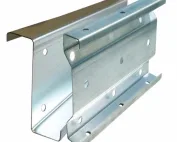
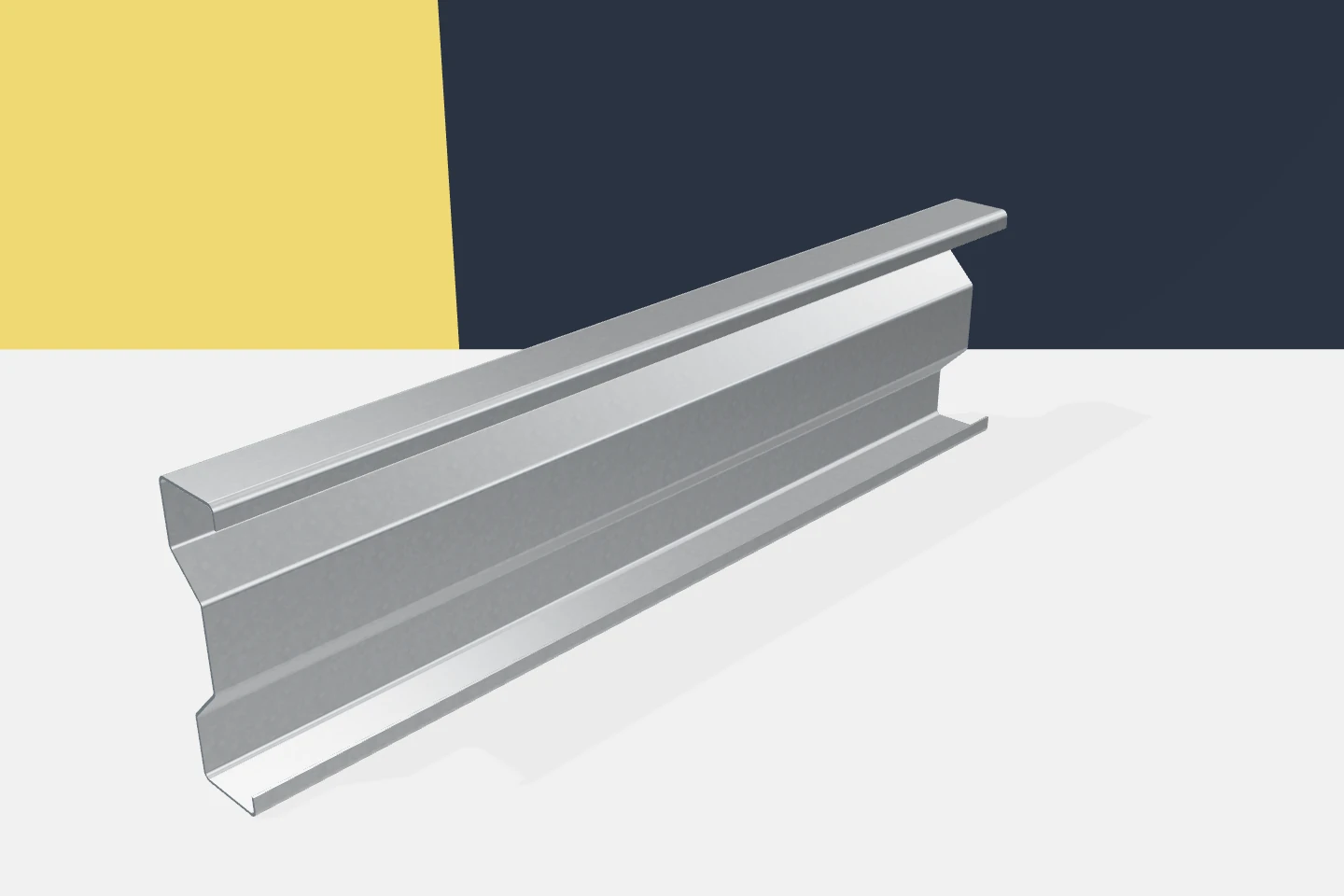
The sigma profile has additional bends in the central part. They divide the flat segments and affect their susceptibility to local buckling. Their proportions are part of the structural geometry. They should not be altered to make the element fit an arbitrary node more easily.
Edge stiffeners can be equally significant. The lips are not merely a finish to a sharp edge. Damage to or cutting of such a part requires assessment. The complex shape offers optimisation potential, but at the same time requires preserving the details on which the selection was based.
Higher steel strength alone does not solve the task
The material grade affects the load-bearing capacity parameters. However, it does not eliminate the problem of deflection, inadequate support or loss of stability. In some situations, a criterion other than reaching the yield point may govern the selection. Therefore, changing the grade should not be treated as a universal way of reducing thickness.
Similarly, mass per metre does not create a ranking of quality. Two cross-sections of similar mass may use material differently. Their comparison requires the same scheme and requirements. Cold-formed profiles are selected for a specific function, not for a single impressive parameter.
Supports affect the result
Span, type of connections and the possibility of rotation or displacement at the nodes are significant. A single-span system is not the same as a continuous system. In solutions with splice plates, the properties of these connections must be taken into account. Continuity must not be assumed where the detail does not provide it.
Force introduction zones should also be checked. Near supports, requirements may differ from those at mid-span. Openings, local bearing pressure and the geometry of the supporting element all matter. Correct selection covers the entire beam including its characteristic locations.

The sheathing does not always provide the same support
If stabilisation from the covering was assumed in the calculations, it must be demonstrated in the actual arrangement. The type of cladding, the connections and the spacing of fasteners all count. An insulated sandwich panel is not automatically equivalent to every other covering. The difference may alter the working conditions of the purlin.
Installation when the cladding is not yet in place must be considered separately. Galvanised sigma profiles may then require specific bracing and a particular sequence of works. A model of the completed building does not describe every stage of its construction. This scope should be agreed before work begins.
The load-bearing capacity table requires reading the assumptions
Before using the values, check the units, the structural system and the support conditions. The assumed loads and service restrictions are important. Figures from different tables should not be compared without aligning these assumptions. A higher value may simply relate to a different arrangement.
It is also worth verifying the full profile designation. Within the sigma family there are various heights, thicknesses and wall variants. The data for one section does not describe all similar parts. If a substitute appears in the order, its parameters and the fit of connections must be checked.
A short description of the assumed arrangement is a good complement to the table. It should indicate the number of spans, the stabilisation points and the manner of support of the cladding. This allows the person using the result to see which conditions must not be omitted. The number in the load column alone does not convey this information.
The result should lead to a clear specification
After selection, the geometry, steel, coating and required hole pattern must be recorded. The drawings should show all supports and accessories. This allows the contractor to reproduce the solution assumed in the calculations. The name sigma and the length of the section alone are insufficient.
C-sections, Z-sections and omegas also require selection suited to their function. There is no need to attribute a universal advantage to sigma over the entire group. Its benefit appears where the shape of the section helps to meet requirements with reasonable use of material. A proper assessment shows these benefits without promising load capacity independent of conditions.
It is worth keeping the documentation for future changes as well. Additional equipment or a new opening may affect a significant zone of the profile. Knowledge of the original assumptions makes it easier to check such an intervention. It also avoids guessing the parameters of an element already built in.
7 branches. Materials closer to your project.