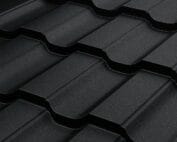
Keeping tile-effect roofing sheets dry and undamaged before installation
Renovation and maintenance
The best approach is to schedule the delivery of the metal roofing sheets as close as possible to the installation date and to inspect the material on receipt. This shortens storage time and helps you spot any damage sooner. When taking delivery, compare the markings, lengths, coating and colour with your order, and check the condition of the packaging and accessible edges. A crushed corner or a wet pack should be documented and clarified before installation. Also bear in mind that a spot on an open building plot is rarely a full substitute for the storage conditions recommended by the manufacturer.
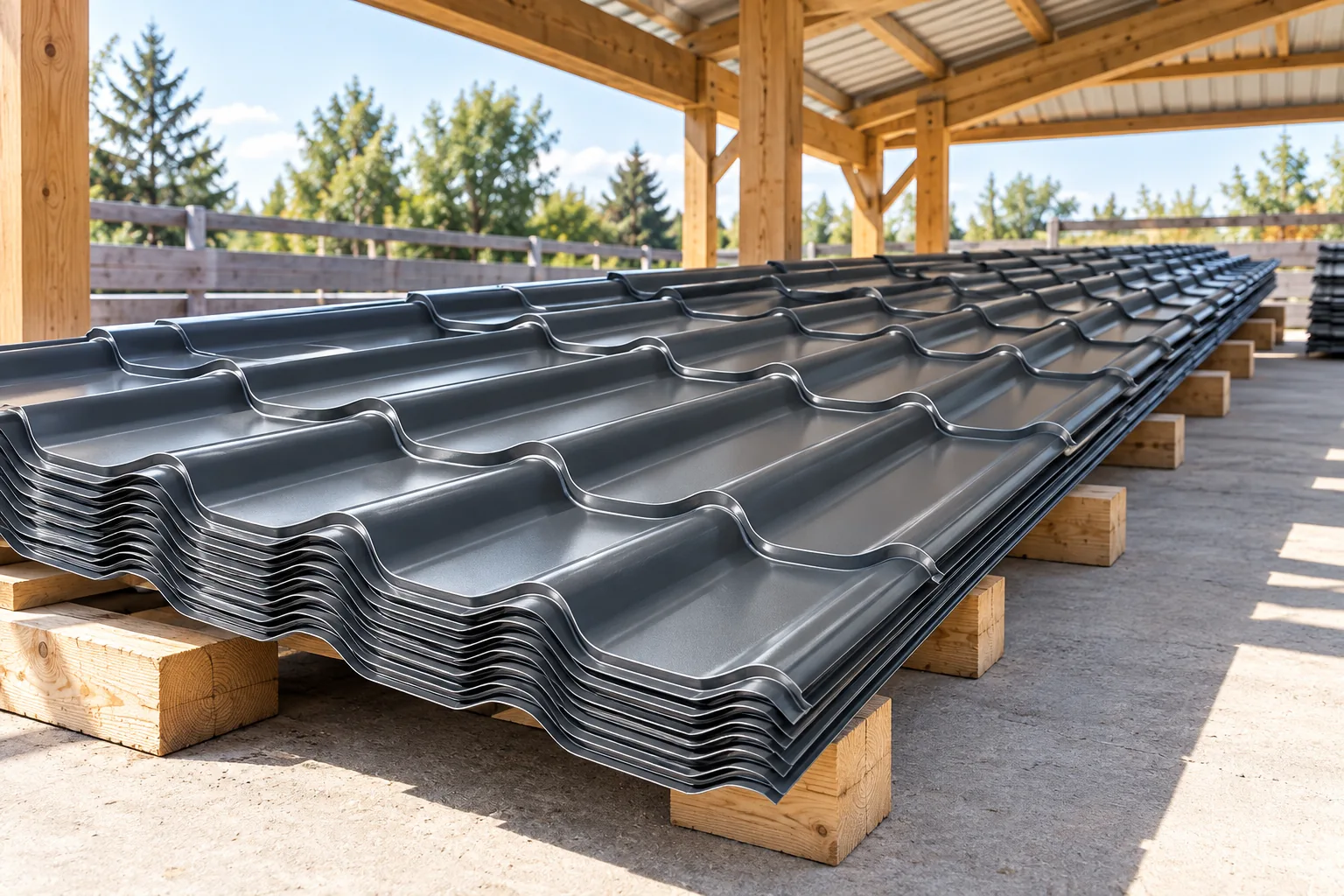
Plan the storage area before the transport arrives
Choose a level, stable location with access for unloading. The pack should not lie directly on the ground or in a hollow that collects water. Prepare supports and a cover in accordance with the manufacturer’s recommendations. Placing it accidentally on a few stones can deform long sheets.
Take the order in which the elements will be used into account. Access to the first lengths needed should not require repeatedly moving the entire delivery. With different roof slopes, labelling the packs makes work easier. Less handling also means fewer opportunities to scratch the coating.
What should be checked on receipt?
Compare the material markings, lengths, coating and colour with the order. Inspect the packaging and the accessible edges. A crushed corner or a wet pack requires documentation and assessment. Do not assume that damage to the outer protection has not affected the sheets inside.
If a discrepancy or defect is visible, clarify it before installation. Keep the labels and photos of the delivery. Laying the material despite a noticed problem can make it more difficult to establish the cause later. The inspection should also cover possible shade differences between batches.
Why is tight packaging not always helpful?
Water vapour can condense between the sheets. Temperature and humidity changes favour this, for example after bringing a cold delivery into a warm room. Moisture trapped in a tight pack has limited opportunity to dry out. A cover against rain does not solve this problem automatically.
The method of opening or ventilating the packaging follows from the storage instructions. A wet pack should not be tightly wrapped in another layer of film. Longer storage may require a dry, well-ventilated room and a different arrangement of the material. The conditions must be checked for the specific type of packaging.
How should long sheets be stored?
Tile-effect metal roofing cut to size requires support that limits deflection. The support points and the inclination of the pack should correspond to the manufacturer’s recommendations. It must not be loaded with other materials at will. Bricks, tools and sharp items can deform or scratch the surface.
When carrying, the sheet should be supported in a way that protects it from buckling. The number of people or the equipment depends on the length. Do not drag one element over another. A scratch can occur even on a seemingly clean surface if a grain of sand gets between the sheets.

Can the modules be stored in any position?
Small elements on a pallet are convenient logistically but still require proper securing. Separators and packaging have a specific function. The permissible number of stacked pallets depends on the product. It must not be assumed on the basis of another type of tile-effect metal roofing.
When carrying by hand, do not grip the module by the delicate parts of the interlock. A damaged edge can make later joining more difficult. Place the material on a clean surface, without throwing it abruptly. The small format makes work easier but does not make the sheet resistant to every way of handling it.
When should the protective film be removed?
The film used on some elements is intended to protect the surface for a specified time. It is not a permanent layer of the product. Under the influence of temperature and sun, its removal may become difficult. The removal deadline must be read from the instructions, also for flashings supplied separately.
Do not leave fragments of film in the interlocks or under details that will later be inaccessible. Nor should it be torn off by a method that could damage the coating. If the material has been stored for a long time, check the condition of the protection before installation. Adhesive residues require agents approved for the given surface.
What should be done after moisture exposure or scratching?
A wet pack requires a quick assessment and handling in accordance with the instructions. Do not simply wait for its outer film to dry. Moisture may still remain between the sheets. The method of separating and drying the material must be adapted to the profile and the options for safe support.
Minor coating damage is assessed in terms of the required repair, and larger damage is reported before installation. Touch-up paint does not remedy a buckled sheet or a destroyed interlock. Do not paint over large areas without need. The difference in shade may become more visible later.
How can the risk be reduced through scheduling?
Coordinate delivery with the preparation of the substructure and the availability of the crew. Ordering the covering many months in advance requires suitable storage conditions. A space on an open plot is rarely a full substitute for them. The lead time should result from the organisation of the construction site, not from an accidental transport date.
Before handing the material onto the roof, carry out a final check of cleanliness, shade and the condition of the edges. Remove dirt that could scratch the adjacent element. Correct storage ends only with the safe transfer of the sheet to installation. This way the factory protection is not lost before use.
7 branches. Materials closer to your project.