What are the benefits of single-module tile-effect roofing sheets?
Tile-effect metal roofing
A single-module metal roof tile has one row of repeating pattern along the roof slope, which makes sheets easier to carry and lay, especially on slopes with numerous cuts. However, it does not automatically mean lower cost or less waste. Before choosing, compare the coverage area, connections and installation requirements, and check the dimensions in the specific product data sheet. The key decision variable is the cutting plan for your roof, not the number of sheets alone.
What does one module in a sheet mean?
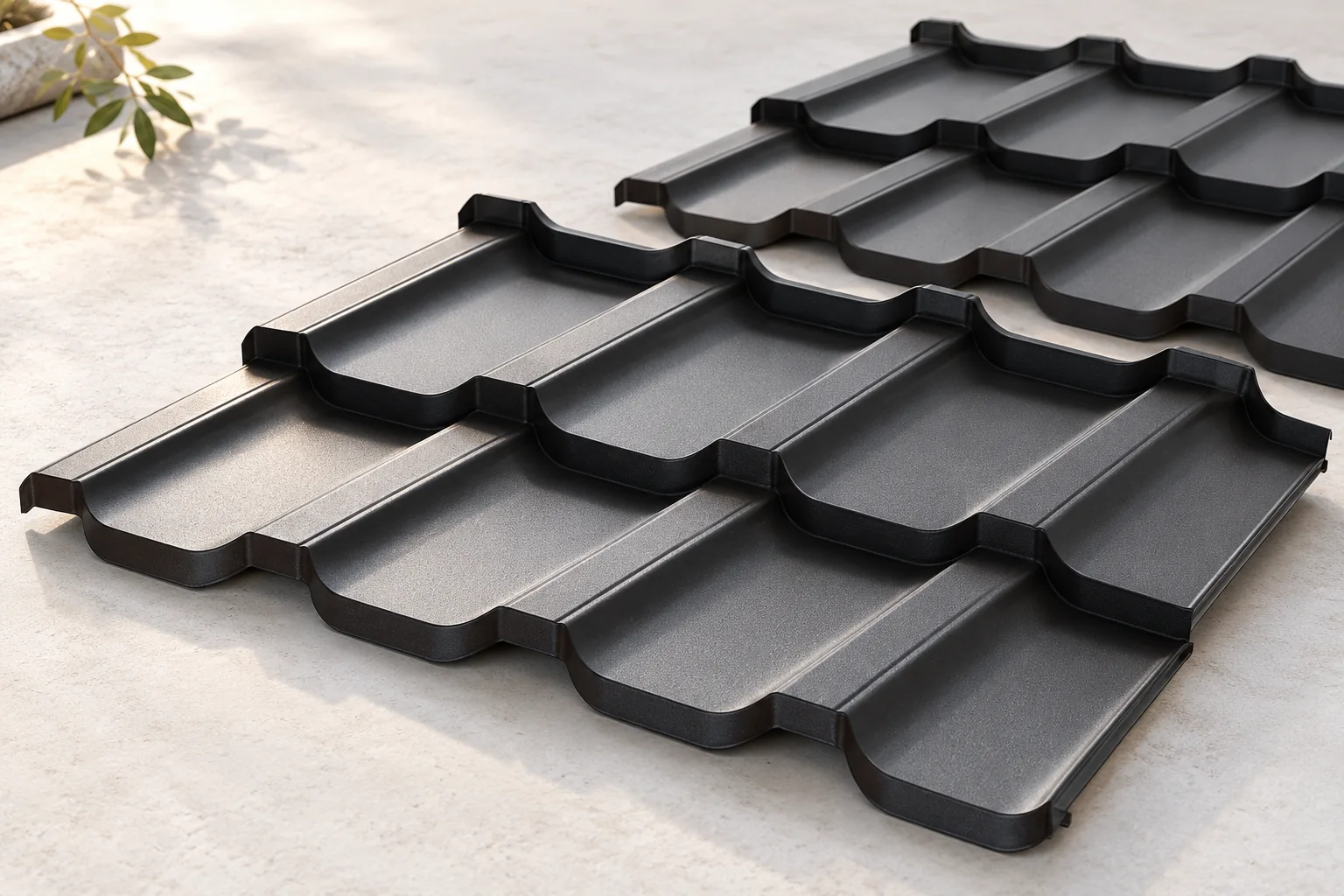
A module is a repeating section of the tile-effect metal roofing pattern. A single-module sheet covers one such row along the roof slope, and a two-module sheet covers two. The width may still span several waves or flat fields. The term single-module therefore does not mean a single small clay roof tile made of steel.
The dimensions must be checked in the data sheet of the specific product. The overall length also includes the part needed for the joint with the next sheet. The effective area is often noticeably smaller than the product of the external dimensions. It is this area that allows you to calculate the number of elements that will actually cover the planned section of roof.
What does the small format change during transport?
Shorter sheets are easier to pass up onto the roof and to distribute near the installation point. Smaller dimensions can make work easier where access to the building is limited. They do not, however, relieve you of the need to organise the workplace safely. Steel elements still have sharp edges and a surface prone to scratching.
Before unloading, plan a dry storage location. The packs must be protected in accordance with the instructions, and the sheets must not be dragged over one another. If the material is to wait for installation, the permitted storage method must be taken into account. The benefit of the handy format is easily lost through damage to the coating before work even begins.
When is it easier to use the material on the roof surface?
Small elements allow the successive rows to be planned more precisely at roof valleys, dormers and short sections. You can assess in advance where cuts will be made and which of them can be used. The final result, however, depends on the geometry of the pattern and the direction of laying. Not every cut piece fits in another place.
Therefore, do not assume a fixed percentage of savings. Compare the cutting layout for the specific roof and the two formats under consideration. On a wide, straight roof slope, a larger sheet may require fewer individual operations. With a complex geometry, the small format may prove more convenient despite the greater number of elements.

What is the importance of the accuracy of the first rows?
A small module will not fix a badly measured batten grid. The batten spacing should match the instructions, and the eaves line must be set out correctly. Laying the first elements affects how the pattern continues. A slight deviation can accumulate with each row, especially on a long roof slope.
It is worth checking the fit of several sheets before fixing a larger area. The joints should sit naturally, without stretching or bending the sheet. If resistance occurs, the cause must be established. Tightening the screw harder may only mask the error and deform the joint edge.
Does more joints mean a greater risk of leaks?
The number of sheets alone does not determine tightness. The geometry of the laps, the permitted pitch and the execution of the fixings are what matter. A joint designed for a specific module can perform well if it is assembled correctly. The problem is deviation from the instructions, not the small format itself.
Do not replace fasteners or their positions at your own discretion. In addition to the screws fixing the covering, there are connections between the sheets. Some eaves and ridge flashings are also handled differently. Before purchase, check the availability of the correct accessories and how these details are executed.
What do repairs and later repeat orders look like?
A small element can make it easier to replace a damaged section, but the extent of dismantling depends on the joint layout. It is not always possible simply to remove a middle sheet without disturbing the adjacent ones. It is worth understanding this procedure before choosing the covering. Safe access to the roof slope is still required for the repair.
Also check the compatibility of elements ordered later. The same colour from the palette does not guarantee an identical shade and texture across different batches. The geometry and product version must also match. A sensibly chosen reserve can be stored according to the instructions, instead of assuming unlimited availability of every variant in the future.
How do you compare cost and make a decision?
Calculate the cost per usable square metre, taking into account the price per sheet and its coverage area. Add the result of the cutting plan, the required flashings and the fixings. Then compare the labour for the same roof scope. A lower price per individual sheet is not enough if correspondingly more sheets must be bought.
Choose the single-module format when its geometry and installation organisation suit the project. Check a larger sample of the pattern, because the outline of a single sheet does not show the effect of the whole roof slope. A good choice combines appearance with calculated material and clear instructions for executing every important joint.
7 branches. Materials closer to your project.