Galvanised steel sections: durability starts with the connection details
Profiles and steel structures
The choice of coating is important, but it is not the end of the corrosion protection story. Durability is also determined by where the profile is built in, whether it can dry out, and how connections are made. Galvanised profiles can have a correct specification and still end up in unforeseen permanent dampness. The design should therefore cover the operating conditions of each characteristic detail. This applies both to a large purlin and to a small omega profile behind the cladding. It is necessary to establish what will actually happen in the building. Technological processes, humidity, the method of cleaning and ventilation all matter. A heated room is not always dry, and a sheltered zone does not always stay free of condensation. A general building name does not replace an assessment of the environment.
In this article
Start with the operating conditions
It is also worth asking the investor about planned changes of use. A dry warehouse may later be given a function requiring frequent washing. This does not mean automatically designing for every possible scenario. It does, however, allow assumptions to be defined and recorded as to when a reassessment of protection will be needed.
Distinguish between the construction material and the coating
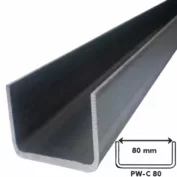
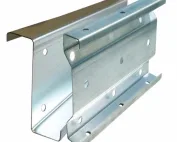
The steel grade is responsible for specific substrate properties. The coating serves a protective function. Both parameters must be stated in the specification. Z-sections, C-sections, sigma and omega profiles can be made in various material variants. Their type should not be equated with one unchanging form of protection.
The designation Z275 refers to the zinc coating and its required mass for both sides of the sheet combined. It is not a thickness dimension in micrometres. Zinc-aluminium-magnesium coatings form a different group. Their selection requires assessment for the specific exposure, rather than a simple comparison of the numbers in the symbols.
Look for places where water is retained
A horizontal ledge, a gap between components and an unforeseen recess can create locally difficult conditions. It is worth reviewing the details from precisely this perspective. The aim is not to add drainage at an arbitrary location, but to achieve a consistent solution of geometry and flashings. Every intervention in the profile must remain consistent with its function.
For the façade, water that can penetrate behind the outer layer must be taken into account. For the roof, connections and service penetrations are important. The enclosure should drain water in the intended manner. Zinc protection supports durability, but does not replace a tight and correctly shaped detail.
Connections are where materials meet
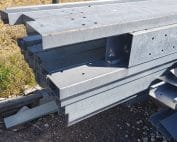
Screws, self-drilling screws, washers and the substrate should be compatible with the selected protective solution. Selecting their diameter is not enough. The contact conditions and exposure must be identified. The fastener documentation should correspond to the application, and not merely to the general description “for steel”.
If the design specifies additional coatings, the method of surface preparation must be established. Incidental painting does not automatically create a correct system. It is also worth clarifying which surfaces will remain accessible after installation. A concealed joint may require inspection at an earlier stage of the works.

On-site fabrication must be planned for
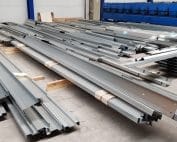
Ready-made lengths and pre-drilled holes reduce the number of operations carried out on site. If cutting or drilling is necessary, the correct procedure must be specified. This covers cleaning, assessment of the edges and any repairs. Swarf should not remain on the surfaces.
Welding galvanised profiles requires an appropriate technological solution. It should not be an improvised substitute for a designed bolted connection. Both the properties of the joint and the condition of the protection after execution must be taken into account. This scope should be agreed before work begins.
Plan inspections of concealed components
Once the enclosure is closed, some parts will be difficult to access. It is worth planning an inspection of their condition before they are covered. This should cover material conformity, cleanliness, damage and completed repairs. Photographs with location identification help to retain the information for later operation.
Access for inspection in the completed building also requires consideration. If the detail is exposed to moisture, it is worth knowing how it can be examined. Additional access elements are not always necessary, but this issue should not be left to chance. Durability also depends on the ability to notice a problem.
Record assumptions without promising unconditional durability
The documentation should specify the environment, the material and the execution requirements. The coating symbol should not be translated into an arbitrary number of years without appropriate data. Actual exposure and local conditions can be of great importance. Fire protection requirements must also be considered separately from galvanizing.
Cold-formed profiles allow durable solutions to be prepared if protection and detail are consistent with each other. Channels, Z-sections, sigmas and omegas do not require marketing assurances of complete resistance. They require correct application, careful execution and inspection adapted to the conditions of the building.
In the schedule, it is worth distinguishing zones with different requirements. Not every element in a building has to perform under the same exposure. Clear assignment of coatings to items prevents parts from being mixed up during delivery. It also makes later ordering of supplementary elements easier.
7 branches. Materials closer to your project.