Which specifications should you compare when buying tile-effect metal roofing?
Tile-effect metal roofing
Before buying a metal roofing tile, compare the technical data of the specific variant, not just the profile name and price per metre. Check whether the offer describes the same product, how gross and effective metres are calculated, and what the steel and coating specifications say. Ask for documents confirming the application and establish whether the set includes roof details. Review the delivery, storage and warranty terms. This way, before accepting the material, you will know what is actually arriving on site and how to compare offers on a common basis.
Do both variants describe the same product?
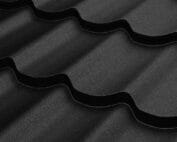
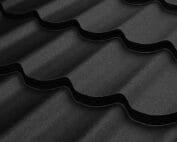
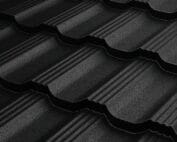
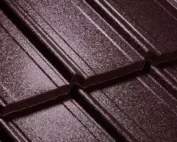
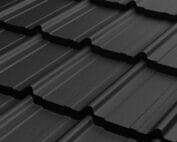
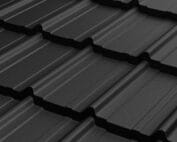
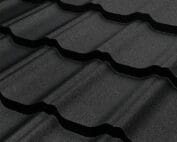
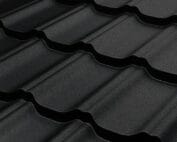
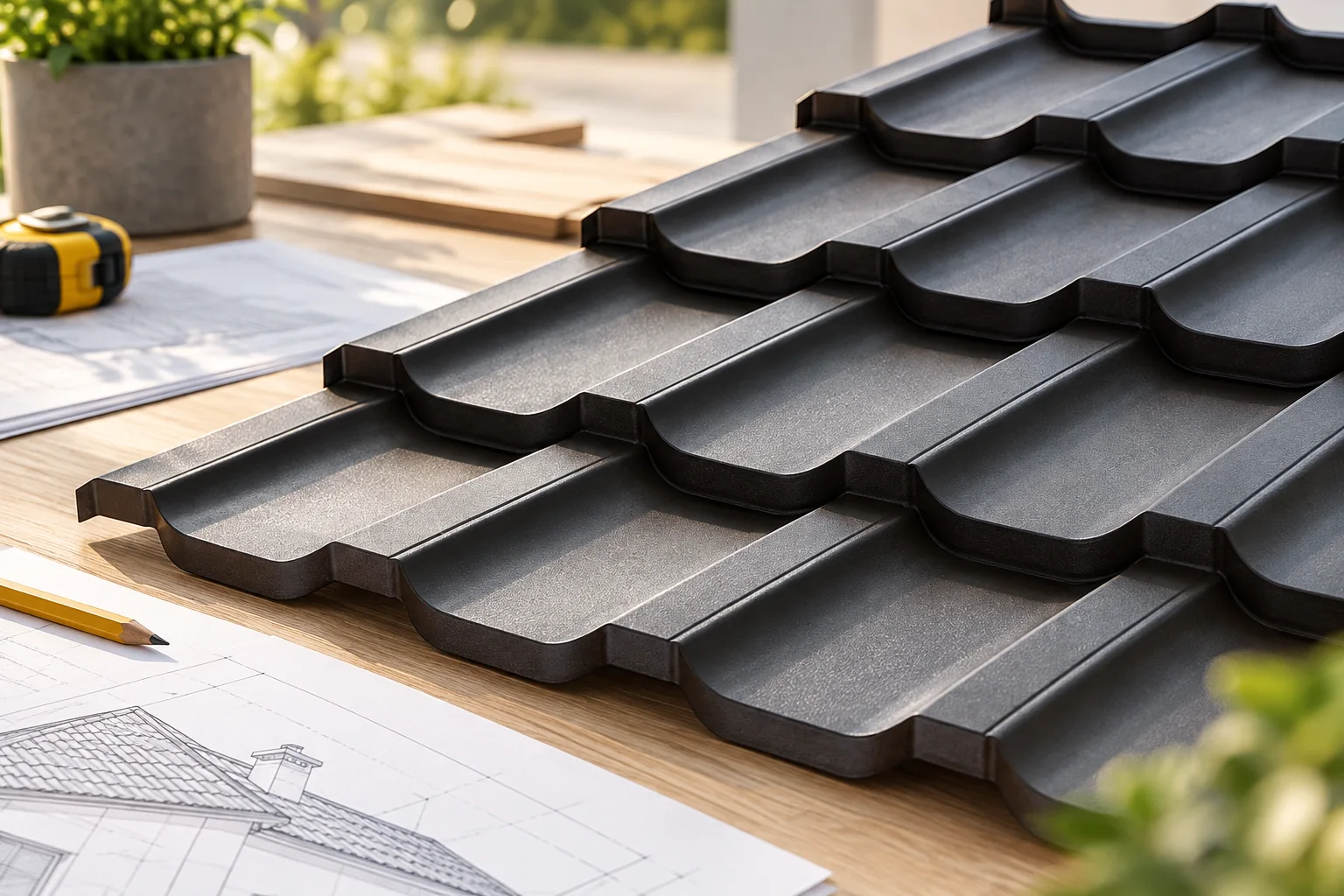
A similar corrugation pattern does not mean an identical product. Check the name of the technical variant, the delivery format and the exact pressings. Modules and cut sheets may differ in dimensions and in the way they are joined. One roof slope should not be assembled from randomly similar elements.
The offer should include the profile, core thickness, steel grade, coating and colour. It is worth distinguishing the parameters of the whole family from those of the selected version. A catalogue showing many possibilities does not yet confirm which of them is included in the price.
How should you understand total and usable metre?
The total area also includes the parts intended for overlaps. The usable area describes the effective coverage according to the geometry of the product. The price per m² of each of these areas may look different. Comparison requires conversion to a common basis.
For a module billed per piece, check how much effective area one element provides. For sheets cut to size, a list of lengths and the coverage width is needed. The roof slope area is not the same as the quantity of sheet metal ordered. The difference is also made up by cuts and waste.
What does the steel and coating specification say?
The thickness of the steel core should be read in accordance with the documentation and the applicable tolerances. Values given by different methods should not be compared. The metallic layer and the paint are separate parts of the protection. Data on both are needed, not merely the term “coated sheet”.
The outer coating should match the service environment. Corrosion resistance and UV radiation describe different properties. Also check the protection on the underside. In some buildings, internal conditions have a major influence on durability.
Which documents help confirm the application?
The technical data sheet organises dimensions, materials and available variants. Declaration of performance documents describe the declared characteristics within a specified scope. The installation instructions show the conditions for correct use. It is worth requesting current documents for the specific product being ordered.
Not every declaration contains all the parameters the designer needs. If information on a particular application is missing, it should be obtained from the supplier. A promotional brochure does not replace a ruling on the minimum angle, support or special environment.

Does the complete set include roof details?
The covering requires suitable flashings at the eaves, gables, ridge and chimneys. Compatible fasteners and seals are also needed. Check whether the offer includes these elements and in what quantities. A list without flashings may look cheaper, but it does not represent a complete roof.
With accessories, compatibility with the profile is essential. Supports for walkways and snow barriers have a specified method of attachment. It is worth establishing the required supports in advance. Buying a random element after the covering is finished may mean interfering with the completed roof surface again.
How should delivery and storage conditions be read?
The list of lengths must match the transport and unloading capabilities. A long sheet requires suitable support during handling. It is worth establishing who organises the equipment and the storage location. Mechanical damage can occur before the sheet even comes into contact with the roof.
The instructions specify the permitted method and duration of storage. Moisture trapped between sheets can damage the surface. Do not assume that the factory pack can stand outside indefinitely. If the installation date is far off, agree on delivery and storage conditions.
What does the warranty actually cover?
It is worth checking separately the scope covering technical durability and appearance, if the document distinguishes between them. The definitions of defects, exclusions and user obligations are important. Two warranties with a similar period may describe different events. They also do not replace an assessment of the roof’s workmanship quality.
Pay attention to the permitted environment, inspections and the rules for reporting damage. Keep the purchase documents and the delivery markings. Before renovating the surface, it is worth checking the required consultation procedure. Covering up a defect may make it harder to determine its origin.
How to close the comparison and take delivery of the material?
Prepare a single comparison with the same price unit, tax and scope. Record the ordered area, the full cost of accessories and transport. Missing data should be completed before selection. The answer ‘standard version’ does not explain thickness or coating.
On delivery, compare labels, quantities and dimensions with the specification. Inspect visible surfaces and packaging, and document any discrepancies. After delivery there should be no doubt about what material was received. This is the basis for correct installation and subsequent roof maintenance.
7 branches. Materials closer to your project.