Thermal movement and joints in long parapet copings
Sheet metal flashings
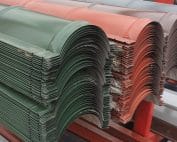
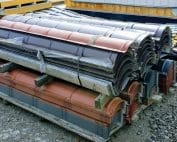
A long parapet cover changes dimensions with temperature. As it heats up, the steel expands; as it cools, it contracts. The detail should account for this process in how sections are divided and fixed. Choosing an attractive coating is not enough. The substrate, shape and connections must also be addressed. The flashing can then perform its function without unintentionally stressing the entire strip. Thermal expansion is a property of the material. With a small element the change may be slight, but over a long run it becomes more noticeable. As a guide, a steel element three metres long can change length by about 1.8 millimetres with a temperature change of fifty degrees.
In this article
A temperature change means a change in dimension
This is an example showing the scale of the phenomenon, not a ready-made dimension for the installation gap. The connection must be matched to the whole detail and the operating conditions. The arrangement of fixings and the actual length of the cooperating parts also matter. The result of a simple calculation should not be transferred directly to any parapet.
Colour and exposure affect surface conditions
The temperature of the sheet does not have to be the same as the air temperature. Sunlight, colour and the way heat is released to the surroundings matter. That is why coverings in different parts of the building may work under different conditions. This cannot be assessed on the basis of a single measurement in the shade alone.
Coated sheets are also selected for the durability of their appearance. The type of finish is more important than the colour designation alone. On a long, visible parapet line, differences in gloss can be distinct. It is worth comparing samples and keeping information about the material used on the project.
The section length must be matched to the solution
Fewer connections can be advantageous organisationally, but does not automatically mean the best detail. A long element is more difficult to transport and may require a different method of fixing. The division of the covering should be agreed together with the arrangement of joints. It should not result solely from the maximum length of the machine.
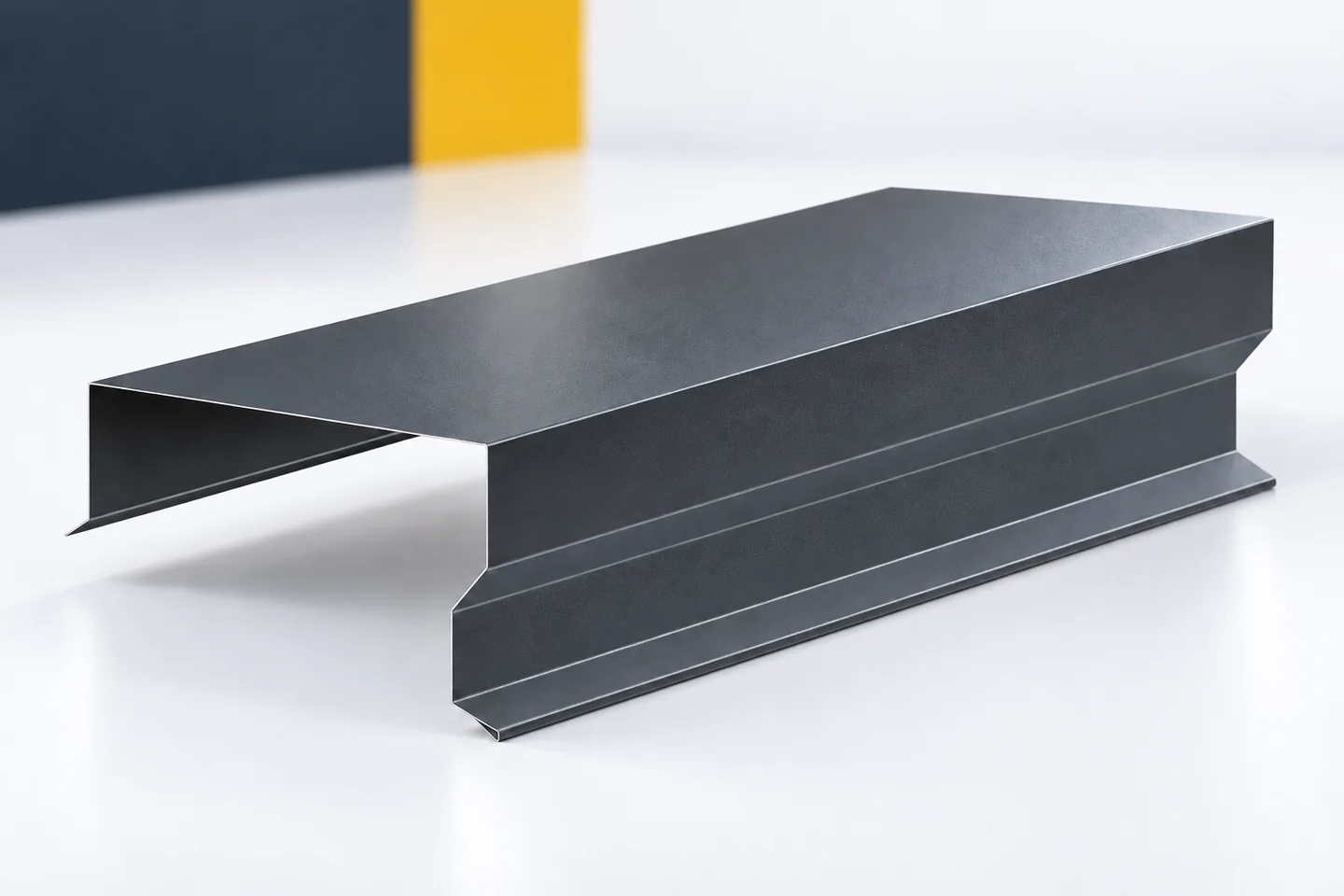
Non-standard flashings must also be checked with regard to installation on the finished wall. There may be insufficient space to slide in the wide part or to access the fixing. A suitable division allows these limitations to be resolved. However, it must not lead to random connections unrelated to the design.
Fixing is not about locking every part
The flashing should be securely fixed in accordance with the adopted solution. This does not mean arbitrarily tying all layers together with additional screws. The detail may require a specific interaction of components. A random change to the fixing may hinder this.
Nor should the number of fasteners be reduced independently under the heading of free movement of the sheet. Both issues must be considered together. The correct solution takes into account the effects on the flashing and dimensional changes. At acceptance, it is worth checking the conformity of the fixings rather than assessing only their even spacing.

Substrate and geometry affect appearance
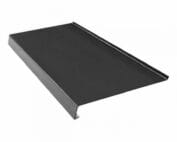
The cover should have provision for support and inclination. If it is pressed against an uneven substrate, it may reveal deformation. Not every wave indicates solely a material problem. It is necessary to check how the element has been supported and whether the cross-section corresponds to the actual width of the parapet.
The edges of the flashing must retain the method of water drainage. When improving the appearance, this function must not be lost. Bending a wide strip on site can change both the slope and the fixing line. First, the cause of the non-conformity should be established, and only then the method of correction.
The coating cannot withstand unlimited working
Galvanised, aluzinc and coloured sheets must be formed within the limits appropriate to the material. Repeated bending and straightening of the same spot is not neutral. When fitting, it is worth protecting the surface from friction and sharp tools. A long element is easily damaged during handling.
If the coating has been breached, the repair method should be matched to the type of damage. It is not enough to paint over the visible line with random paint. In the case of extensive deformation, the possibility of replacing a section must be assessed. Well-kept documentation facilitates making a new part with the correct cross-section.
Assess the parapet as part of the whole envelope
Ridge caps and verge flashings also move with temperature changes, but have different shapes and positions. Gutter aprons are associated with the eaves, and starter profiles with the lower part of the wall. There is no single method of connection suitable for all these elements. Each detail requires its own solution.
Chimney flashings and parapet corners are worth including during inspection. Surfaces, connections and signs of forced deformation are assessed. A safely conducted inspection helps to identify change early. Material, shape and installation should be considered together, because only together do they form a functioning flashing.
Questions and answers
Is a longer parapet cover always more advantageous?
No. Thermal movement, the method of connection, transport and installation must all be taken into account. The maximum production length is not automatically the best length on site.
Does the expansion example determine the required installation clearance?
No. It only shows the scale of the change in the steel dimension. The required connection results from the entire detail, the arrangement of the fixings and the expected operating conditions.
7 branches. Materials closer to your project.