Smooth or rough XPS? Matching the surface to its application
XPS insulation
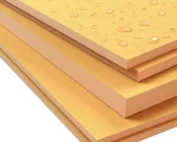
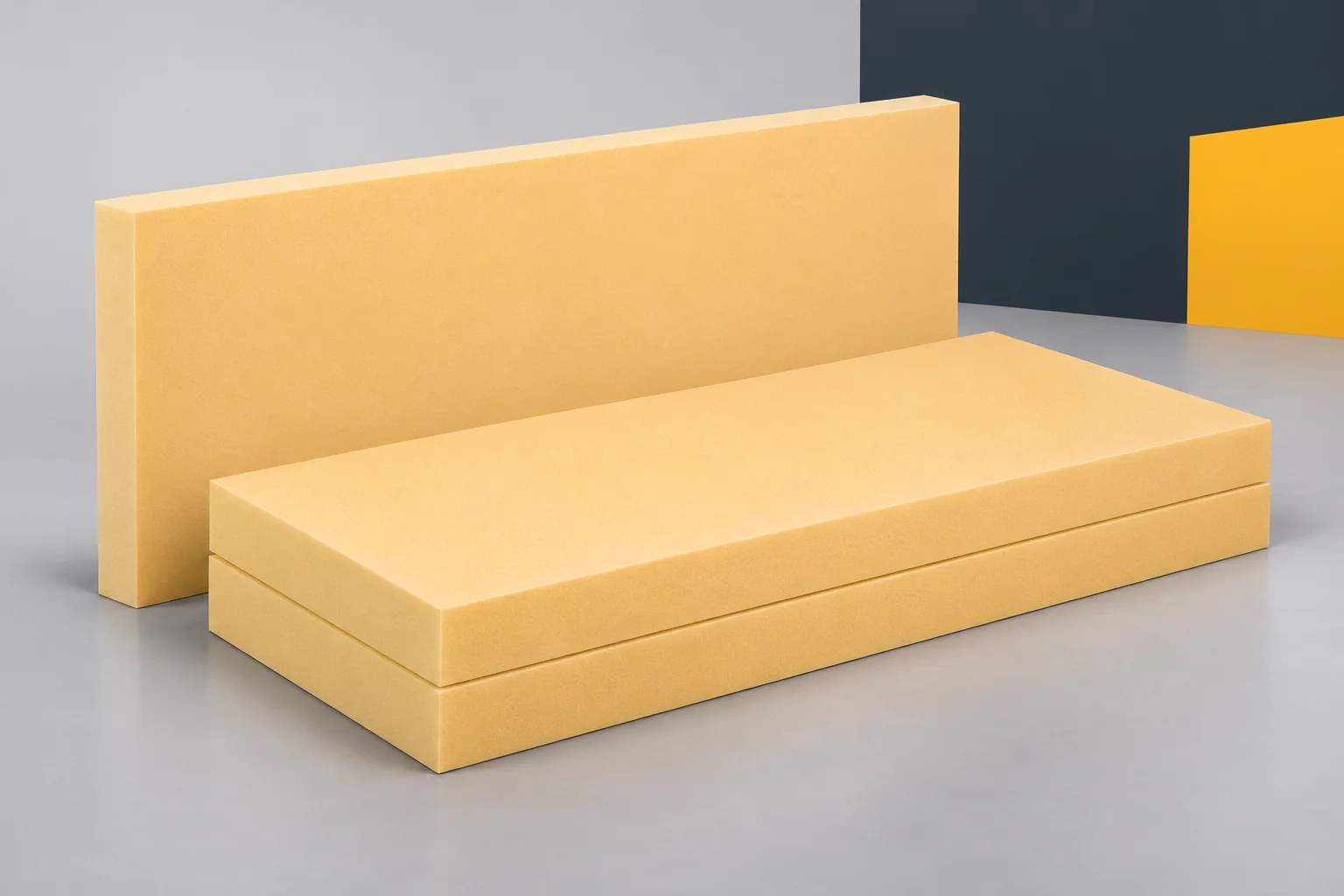
XPS boards can have a similar thickness and colour and yet differ in their surface. Some are smooth, others rough or factory-structured. This is a feature linked to the intended application. Extruded polystyrene under a loosely laid floor finish has a different task from a board to which mortar is to adhere. The choice of surface should therefore be combined with the design of the entire building element. The shape of the edges and the texture of the face are separate elements of the product description. A smooth XPS surface is found in boards intended for many thermal applications. Rigid elements make it easier to create an even floor layer, foundation or a suitable roof arrangement.
In this article
Smooth board in the insulation layer
The selection depends on the product documentation. Smoothness alone does not mean that all boards have identical parameters. You still need to check the lambda value, the water-related characteristics and the mechanical properties required at the given location.
Extruded polystyrene with a smooth face can be laid in such a way that the surface does not form the direct substrate for plaster. In that case, support, matching of the edges and interaction of the layers become important. XPS must be kept within the geometry envisaged by the design. This form of the material is convenient for larger areas, because it allows the continuity and uniform thickness of the thermal insulation to be checked quickly.
Roughness helps in bonding with mortar
When an adhesive layer or finishing layer is to be applied to XPS, suitable adhesion is required. A factory-prepared surface can make it easier to achieve such a bond. Its type must be matched to the system. It is not enough to state that any insulation board is suitable for plaster. The appropriate application should follow from the documents and instructions of the selected solution.
Extruded polystyrene is sometimes processed in various ways, which is why the appearance of the texture is not always the same. XPS with the correct surface should work together with the mortar intended for it. The result is also affected by cleanliness, moisture and the condition of the substrate. Dust or a damaged surface layer can hinder correct installation. Preparation must therefore also be assessed immediately before the next layer is applied.
Surface and edge do not mean the same thing
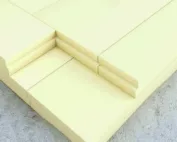
An XPS board may have a straight edge or a profiled end, irrespective of the texture of the face. The edge helps to lay the joint between adjacent elements, while the surface affects contact with the material laid on it. When ordering, it is worth specifying both features separately. This makes it possible to avoid a situation in which the correct dimension and rebated edge were supplied, but the wrong face for the planned finish.
Extruded polystyrene with a rebated edge does not thereby automatically become a suitable plastering substrate. Likewise, a rough board with a square edge can be appropriate in a specific wall assembly. XPS should be selected according to the task. If part of the material is to go under the floor and part onto the plinth, the specification should clearly distinguish between these locations. A single name for the whole order may be too imprecise.
On-site processing requires instructions
Some solutions require the XPS surface to be prepared before adhesive bonding or applying the reinforced layer. The method of treatment should follow the instructions, and residues must be removed after the work. It is not worth improvising deep cuts in the belief that a greater number of grooves will always improve adhesion. Changing the surface must preserve the properties required for the given application.
Extruded polystyrene is easy to work, which is a practical advantage when fitting elements. However, a distinction must be made between precise cutting to size and arbitrary alteration of the face. After preparation, XPS should form a stable substrate for the next layer. In case of doubt, a product factory-designed for the given task may be more advantageous. It facilitates repeatable execution and reduces the scope of work on site.
Adhesive and finish form a combined system
Selecting the mortar does not end with adhesion to XPS. Compatibility with the second substrate and the working conditions must also be checked. At the plinth this may be a waterproofing layer, while at another detail it may be concrete or suitably prepared masonry. The product must not damage the polystyrene. Temperature requirements and setting time must be observed in accordance with the technology so that the bond has the conditions for correct execution.
Under plaster, XPS works together with the reinforcing layer and the finish. The right texture is important, but it does not replace the entire system. Its performance is also determined by corners, joints and protection against water. It is worth checking the board surface before applying mortar. A later adhesion problem is harder to identify because the substrate itself remains hidden beneath the subsequent layers.
A precise description makes purchasing easier
Among XPS manufacturers are Synthos, HOCH and Austrotherm. When choosing, the surface description for the specific variant should be read. The word styrodur used colloquially does not distinguish between smooth boards and boards prepared for mortar. In the order, it is worth specifying the thickness, edge, texture and place of application. The contractor then receives a material that can easily be assigned to the correct stage of work.
Extruded polystyrene offers the convenience of matching the board form to the task. XPS with a smooth surface and a product with a rough surface do not have to compete for the title of the better material. Each can be right in the appropriate assembly. A reliable choice consists in combining the texture with the installation method and the adjacent layers. This ensures that the material’s advantages are used where they really matter.
7 branches. Materials closer to your project.