XPS dimensional stability and temperature: understanding the figures
XPS insulation
XPS boards make it easier to install insulation of a specified thickness with straight edges. However, this convenience does not mean that the material does not react to temperature and moisture. Extruded polystyrene has declared characteristics regarding dimensional stability and behaviour under specified conditions. It is worth distinguishing these from compressive strength. This makes it possible to select the material for the application and to protect it during storage, installation and subsequent use. In XPS documentation, the designation DS can be found, relating to the assessment of dimensional changes under specified conditions. Alongside the symbol, information appears about the test conditions or the level of the declared characteristic. The entire designation should be read, together with the explanation in the table.
In this article
What dimensional stability describes
The mere presence of a marking does not yet indicate what effect was tested and what result was assigned to a specific board.
Extruded polystyrene should retain properties corresponding to the intended application. Stability data help to assess this suitability, but they do not mean a complete absence of dimensional change. XPS reacts to physical conditions like other materials. The design and installation instructions therefore also define the laying method, the joints and the conditions in which the layer is to perform. The parameter is part of this assessment, not a substitute for it.
DLT combines load and temperature
The DLT designation relates to deformation under specified compressive load and temperature conditions. It describes a different issue from simply checking the dimensions of a board without such loading. XPS is selected according to the properties required in a given system. In a loaded floor or a particular technical zone, the combination of several factors may matter rather than a single parameter.
Extruded polystyrene with a high short-term compression result does not thereby acquire unlimited heat resistance. XPS should be assessed on the basis of the relevant documentation. If the design requires data for particular conditions, these must be obtained or a product described accordingly must be used. Transferring a property from one grade to another merely because of similar hardness does not give a reliable result.
The test temperature is not the service range
The data sheet may state the conditions under which the stability test was carried out and, separately, the maximum operating temperature. These are different pieces of information. XPS tested at a specified temperature during the procedure is not automatically approved for contact with that temperature in a building for an arbitrarily long time. The service requirements must be read from the relevant description of the application and the manufacturer’s recommendations.
Extruded polystyrene is not a high-temperature insulation. With hot installations, the temperature of the board itself and the duration of exposure must be established. The air temperature in the room may be considerably lower than the local temperature at the pipe. XPS should remain within the range intended for the product. Where conditions differ, the solution requires a change of material, a shield or a detail designed for that zone.
Sunlight affects the material before it is covered
XPS boards can heat up on site, especially in an unfavourable covering arrangement. A dark layer lying on the insulation is sometimes a source of a considerable temperature rise. For this reason, the rules for storing and covering the material must be observed. The protection should shield against solar radiation without creating conditions that lead to overheating. The details depend on the instructions for the specific product.
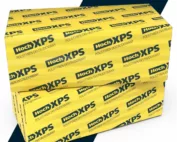
Extruded polystyrene is light, so packs can easily be moved to the prepared location and the exposure time reduced. This is a simple organisational benefit. XPS should be delivered in a quantity matching the progress of the works, rather than storing uncovered boards on the roof slope for a long time. They should also be protected against wind and mechanical damage. Good organisation helps preserve the geometry needed for accurate installation.
It is worth checking flatness and edges at acceptance
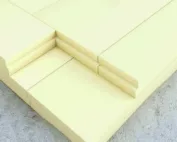
Before laying, XPS is inspected for deformation, cracks and damaged ends. The board should be capable of being laid in accordance with the intended geometry. If it clearly does not sit flush on an even substrate, the cause must be established. Pressing it down with the weight of the next layer is not a universal repair. The assessment is carried out with reference to the material requirements and the planned application.
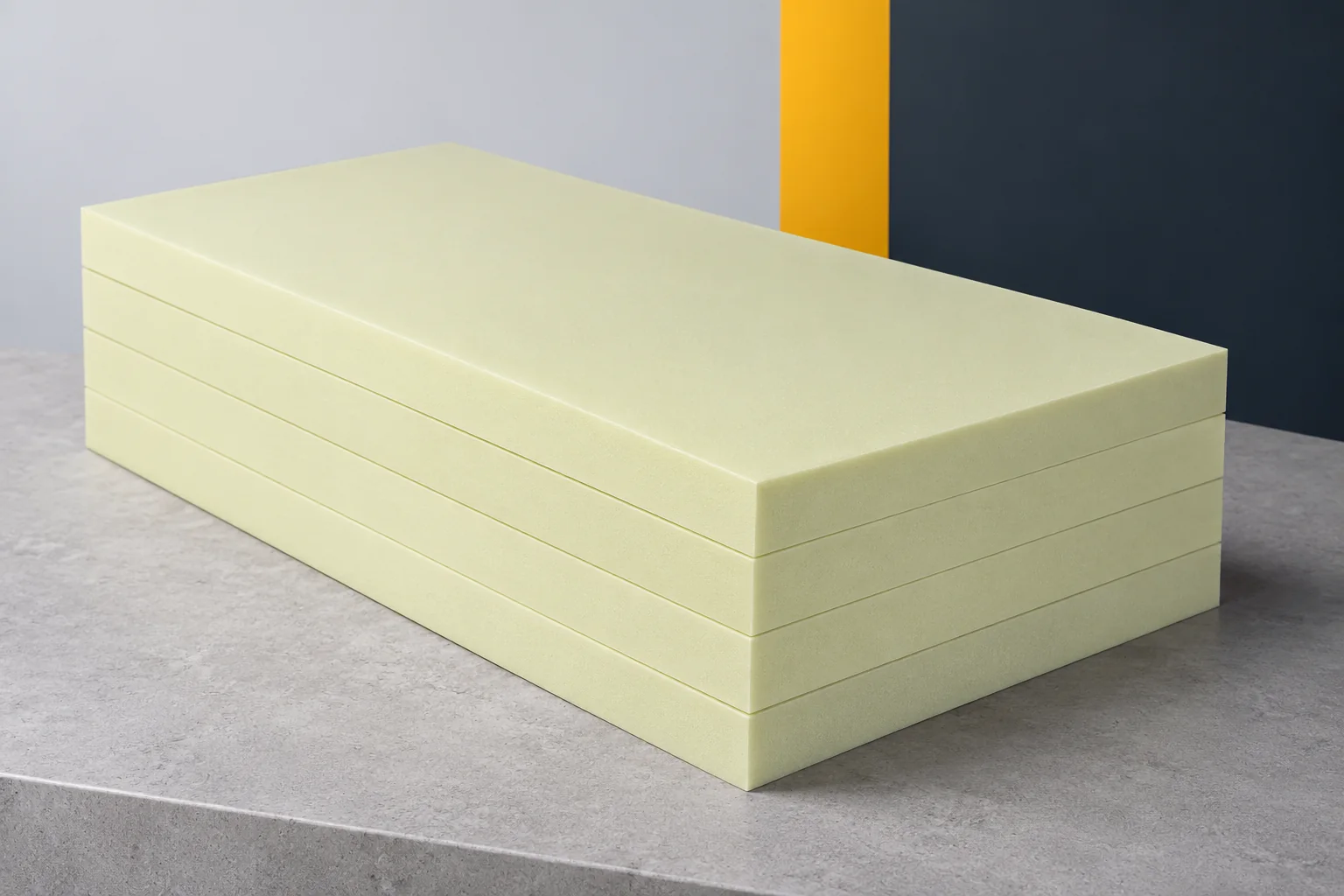
Uniform XPS components help to limit gaps and maintain a consistent insulation thickness. This is particularly convenient on larger surfaces and with multiple joints. The benefit also depends on the preparation of the substrate. Even a correct board will not level out a random hump or a loose substructure. The condition of the material and the condition of the installation site must therefore be checked separately, and their interaction then assessed.
Documentation provides a common point of reference
XPS is offered by Austrotherm, HOCH and Synthos, among others. When comparing products, the full designations and conditions of use must be checked. The colloquial name Styrodur does not provide information about dimensional stability. It is worth keeping the technical data sheet for the ordered variant. It allows requirements to be agreed with the contractor and to establish whether the delivery corresponds to the specification and the planned installation location.
Extruded polystyrene helps to create light and precise insulation layers if its properties match the operating conditions. XPS must be protected against influences beyond this scope. Reading DS, DLT and the temperature recommendations as separate pieces of information helps to avoid incorrect conclusions. The lasting effect is determined jointly by the correct selection, the handling of the material before installation and the correct execution of the entire building component.
7 branches. Materials closer to your project.