Cold-formed steel sections: why the lightest option may cost more overall
Steel profiles and structures
The mass of the structure matters, but it does not show all the costs. A lighter profile may require more components, different connections or additional work. Conversely, a small increase in mass can simplify installation. Optimising cold-formed profiles should therefore cover the entire system. Comparing kilograms alone or the price per metre sometimes leads to a decision that looks good in only one table. Variants should be compared under the same loads and service conditions. Permissible deflections, durability and the geometry of the enclosure are important. A solution cannot be considered cheaper if it omits some of the requirements. First, it is necessary to establish what each variant is to provide.
In this article
Start with the fixed requirements
A good starting point is complete information on span, supports and connections. Selected parameters can then be varied. This approach shows the effect of a specific decision. Changing several assumptions at once makes it difficult to assess where the saving actually comes from.
Spacing affects more than the number of purlins
Reducing the support spacing can relieve the individual profile, but increases the number of parts and fastenings. A larger spacing can in turn change the requirements for the cladding. Steel and panels must therefore be considered together. A saving on one side does not always remain once costs are added up.
Similarly, the frame spacing affects the lengths of the elements and the logistics. It is not solely a parameter for selecting purlins. The variant must be assessed at the scale of the entire hall. Only then can material consumption, the number of nodes and the organisation of assembly be compared.
The cross-section shape is a selection tool
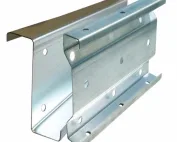
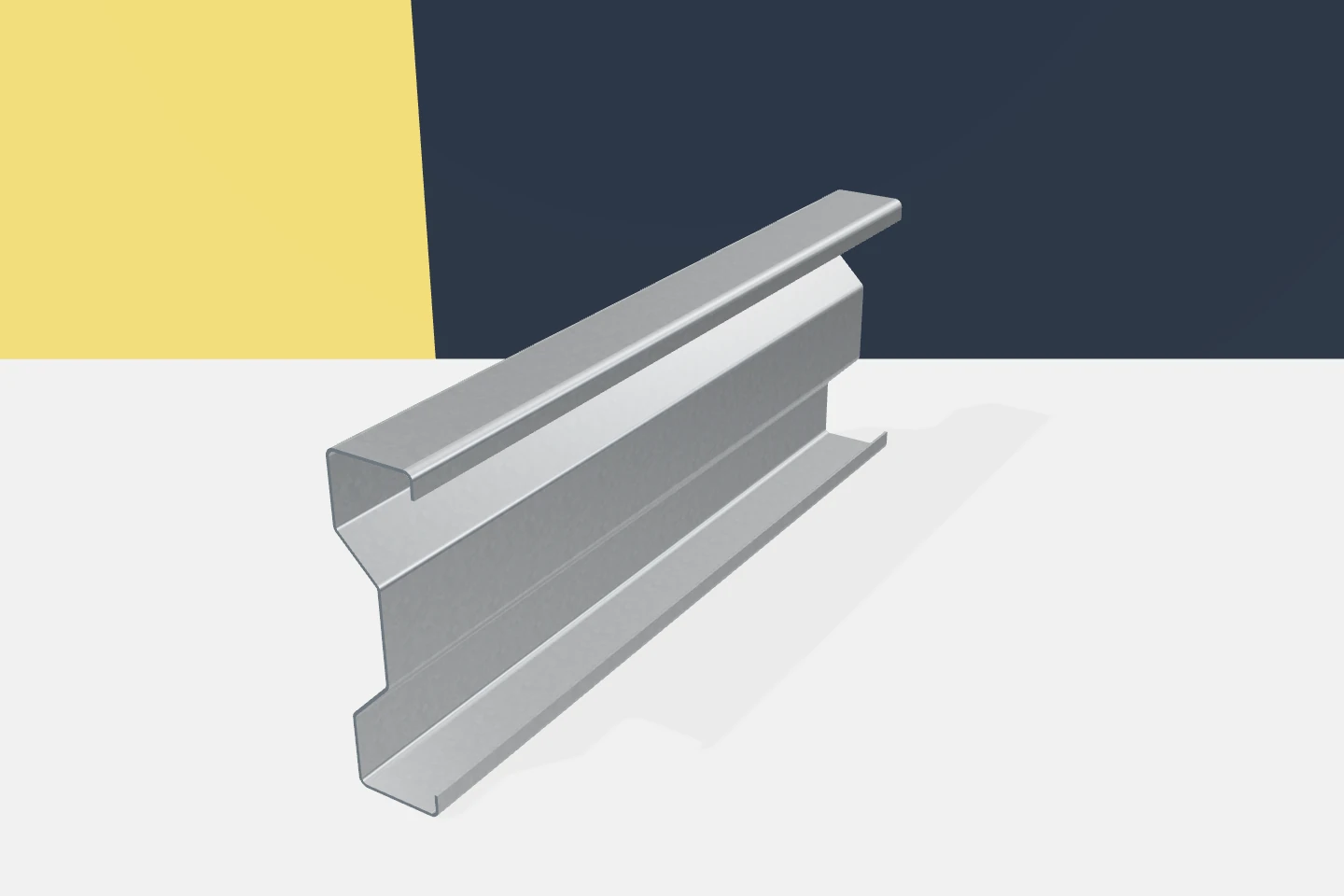
Z-sections, C-sections and sigma profiles distribute material differently. They can lead to different solutions for the same task. However, there is no single winner for all schemes. Calculations are required for specific geometries, materials and supports.
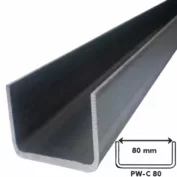
Omegas usually appear in separate roles within the substructure. Comparing them with a larger profile only makes sense for a defined function. The common term “galvanised profiles” does not mean identical capabilities. Each variant should correspond to the actual application and retain the appropriate fastening surfaces.
A higher grade does not remove all limitations
Using steel with a higher yield strength can be useful in a suitable design. However, it does not automatically permit a reduction in thickness. Deflections, stability or connections may determine the outcome. The criterion that actually governs the given element must be checked.
Material availability and scope of execution should also be taken into account. A non-standard variant may require different production conditions. Lead times should not be assumed on the basis of a general catalogue. The technical capability to produce a profile and the specific availability of an order are two different pieces of information.

Connections are part of the calculation
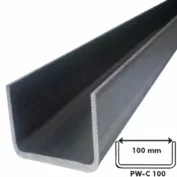
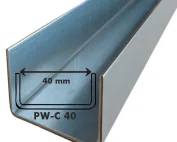
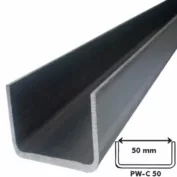
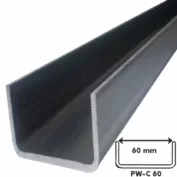
The overlapping arrangement of zed profiles requires the correct lengths and screws. A sigma solution may need different splice plates. Channels also have their own support details. The comparison should include all these parts, not just the weight of the long elements.
Access for installation and the number of operations matter. A connection with less steel may be more labour-intensive. Tolerances and the ability to fit the main structure must also be assessed. The cheapest component does not always make the cheapest finished connection.
Prefabrication can reduce labour costs
Exact lengths, hole patterns and markings help reduce preparation on site. It is worth comparing the scope covered by each offer. A part ready for installation is a different product from material requiring cutting and drilling. The difference should be visible in the cost estimate.
This does not mean that every part needs to be made as complicated as possible. Repetition can reduce the number of variants and make control easier. It is worth checking whether a small adjustment to the layout allows a simpler set to be used. Such a decision does, however, require the structural conditions to be confirmed again.
A simple calculation example shows the limitation of adding up metres. Ten sections of six metres and twelve sections of five metres both give sixty metres of material. However, the number of parts, ends and operations may differ. This is an example of a quantitative comparison, not a proposal to change the beam scheme.
Logistics and cladding complete the comparison
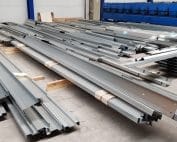
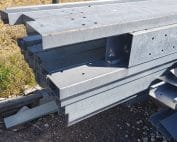
The length of the profiles affects transport, unloading and storage space. Dividing into shorter parts may change the number of connections. A wider flange, in turn, may make it easier to meet the panel fixing requirements. These consequences should be included together with the material price.
It is worth calculating the cost of a complete set under identical protection and documentation requirements. A price list shows how specific items are priced, but it does not replace such a comparison. The current offer must be related to the approved specification and the deadline. There is no basis for promising a fixed percentage saving for every hall.
Cold-formed profiles allow the geometry to be consciously matched to the task. The benefit arises when decisions on cross-section, spacing and connections are coordinated. Zeds, channels, sigmas and omegas become elements of a rational solution. The lowest weight alone does not have to be its best description.
7 branches. Materials closer to your project.