How coating and drainage protect gutter aprons from moisture
Sheet metal flashings
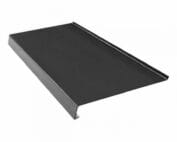
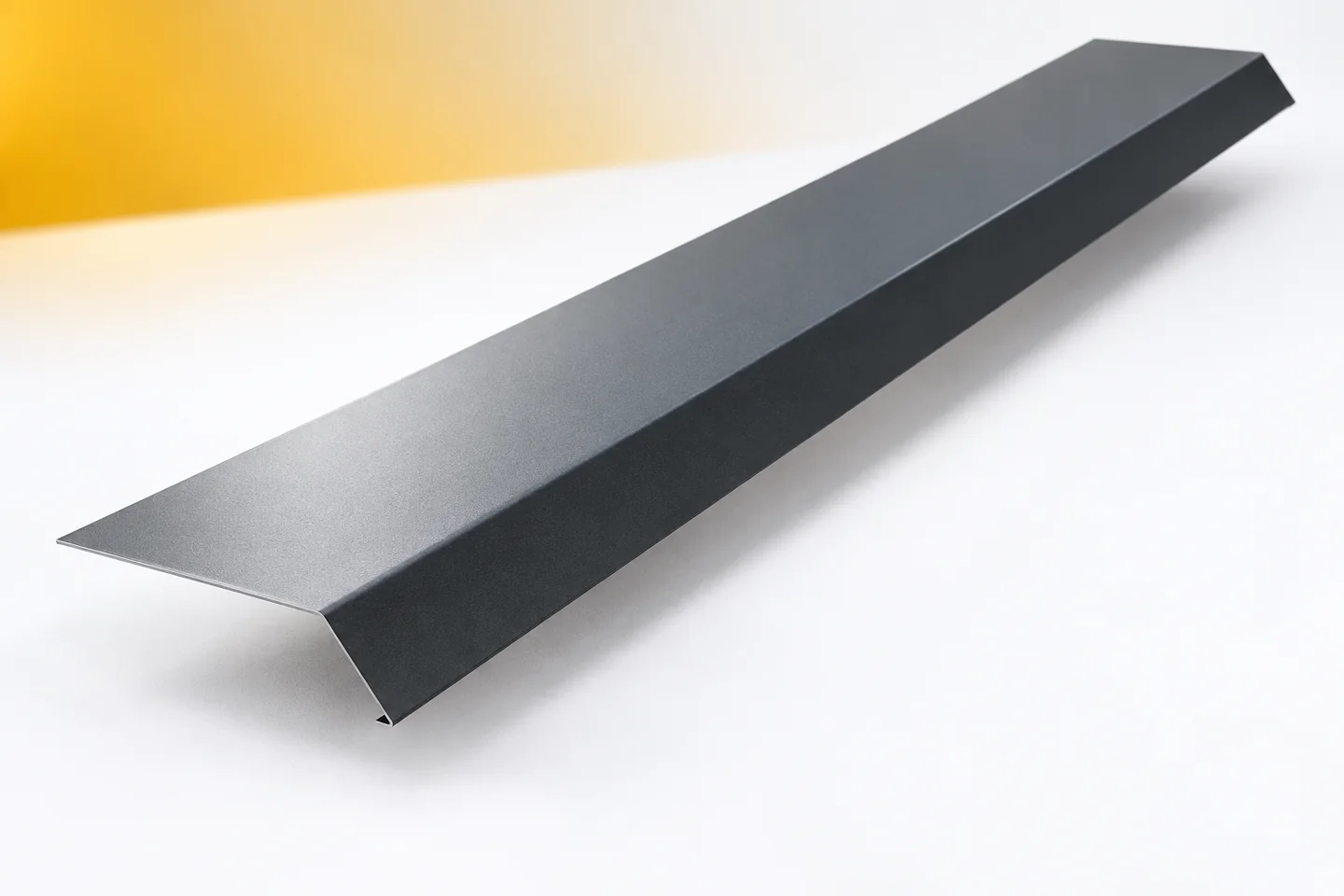
The gutter aprons (drip-edge flashings) work where water leaves the roof covering and enters the gutter. Their durability depends on both the material and unobstructed drainage. Even well-protected sheet metal will not solve the problem of standing water or accumulated debris. When choosing, it is therefore worth combining an assessment of the coating with an assessment of the entire eaves detail. This makes better use of the flashing’s advantages and reduces the places requiring later repairs. At the eaves, water runs off a larger roof area. The gutter apron should carry it away in a planned manner. The position of its end relative to the gutter is important. Choosing a more expensive coating alone will not fix incorrect positioning.
In this article
Regular wetting requires good detailing
During inspections, the points where the flashing meets adjacent elements must also be checked. Verge flashings and corners can locally alter the drainage path. If water gets behind the strip or collects at the joint, the cause must be established. Material and geometry must work together.
Metallic coatings protect steel in various ways
Galvanised and aluzinc sheets have metallic layers separating the steel from its surroundings. Their composition is not identical. When selecting, the specific specification and the service environment matter. Not all silver-coloured surfaces should be treated as the same material.
In colour-coated sheet, a corresponding system of organic layers is added. It provides an aesthetic finish and participates in protecting the surface. The coating should be selected for the conditions of use. Its colour alone is not sufficient to assess its suitability for a roof area regularly wetted by precipitation.
Contamination changes the operating conditions
Leaves, dust and material residues can accumulate at the gutter. They retain moisture and make it difficult to assess the surface. The gutter aprons should therefore be checked together with the drainage flow. Rain does not remove all contamination from this zone on its own.
After installation is complete, swarf and sheet offcuts must also be collected. They should not remain under the folds or at the laps. If other roofing work is carried out later, the cleanliness check should be repeated. The finished eave is often a place where waste from the upper part of the slope ends up.
The edge of the flashing is responsible for terminating the run-off
The shape of the end edge matters for how water is discharged. It should not be altered arbitrarily during installation. Folds and bends must be made in accordance with the adopted cross-section. Too tight a fit against the adjacent surface can change how the detail performs.
If the gutter apron conflicts with the gutter, first check the measurements and the alignment of the components. Repeated manual adjustments can worsen the condition of the coating. In the case of greater discrepancy, a revised drawing is needed. Bespoke flashings allow the geometry to be matched, but they must remain consistent with the drainage function.

The joint should preserve the direction of water flow
A long eaves usually requires several sections of flashing. The joints are made according to the appropriate installation solution. The overlaps and the intended seals must be maintained. They should not be shortened in order to use every centimetre of the ordered sheet metal.
The condition of the joint is also worth assessing after the gutter has been installed. Access to some places may then be limited. Therefore, part of the inspection should take place earlier. Particular attention is required at the ends near the verge flashings and at the points where the roof valley flashing meets the eaves.
Cutting and repair must protect the surface
The flashing is cut with a tool suitable for thin sheet metal. Hot cutting with an abrasive disc can damage the edge protection. Then the residues must be removed and the edge assessed in accordance with the material requirements. A single repair method cannot be assumed for all coatings.
A point defect on coloured sheet metal should not be covered with an arbitrary thick layer of paint. The preparation of the substrate and the compatibility of the product are important. If the surface is severely damaged, replacement of the section must be considered. The decision should follow from the condition of the component, not from its appearance from the ground alone.
Include eave maintenance in the building inspection
Gutter aprons should be inspected together with the gutters and the edge of the covering. The frequency of inspection should correspond to the environmental conditions and the material documentation. A building standing near trees may require different attention than one in open space. It is worth observing places of recurring soiling.
Ridge caps, starter profiles and chimney flashings also need inspection, but they work in different zones. Not all findings from the eaves should be transferred to the whole building without assessment. A well-kept sheet metal specification helps in choosing cleaning. The aim is to maintain the water path and the surfaces that conduct this water.
Questions and answers
Will a better coating solve the problem of standing water?
No. Geometry and drainage must be assessed first. The coating protects the material but does not remove the cause of pooling or incorrect positioning of the flashing.
Is it worth inspecting the gutter apron when cleaning the gutter?
Yes. It is a good moment to assess soiling, edges and connections, provided safe access to the eaves zone is ensured.
7 branches. Materials closer to your project.