Why vacuuming the gutters alone may leave them unready for winter
Gutters and flashings
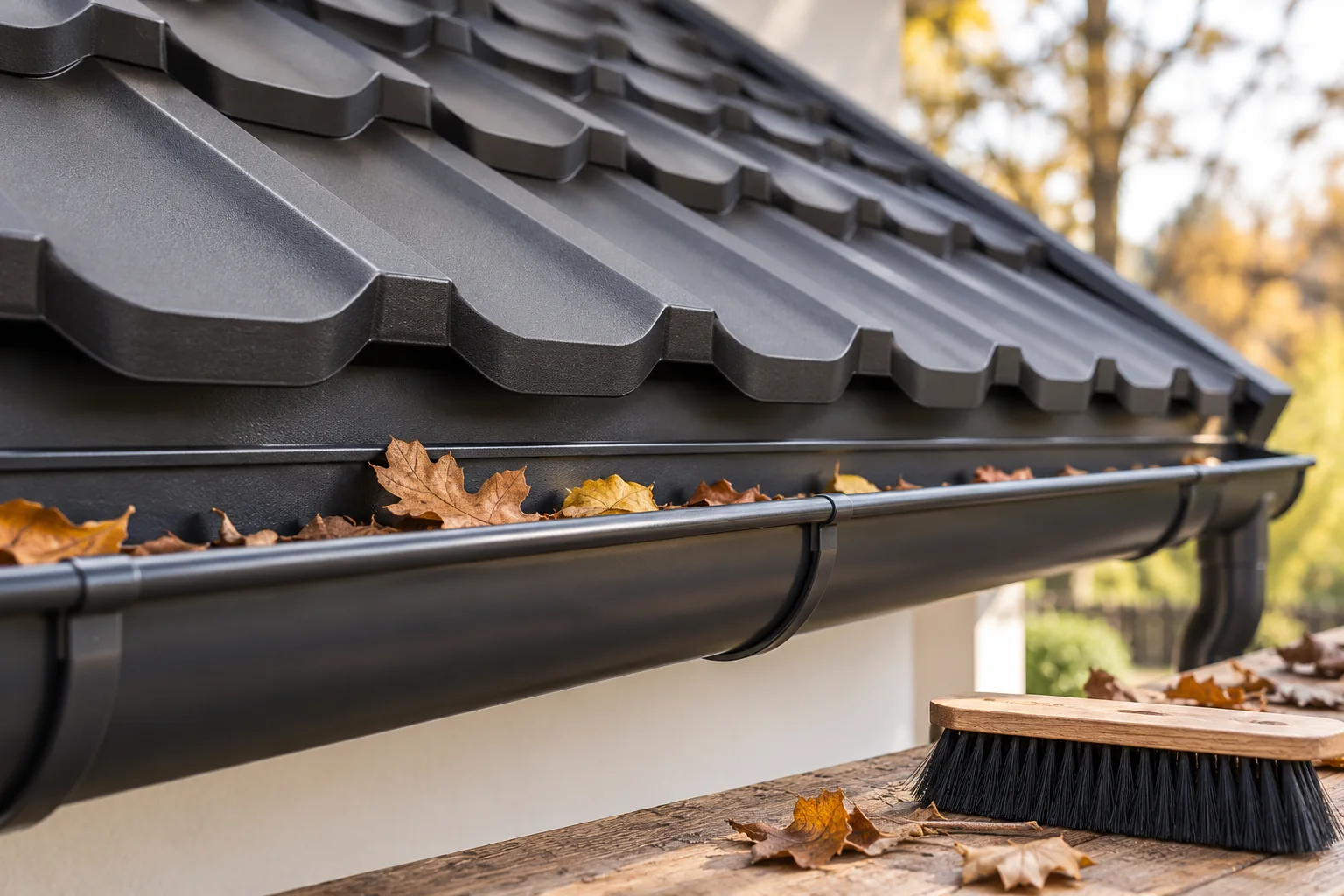
Vacuuming the gutters alone is usually not enough before winter, as it mainly removes loose leaves and does not confirm that the whole drainage system works. The owner should check sediment at the base and joints, the flow through outlets and downpipes, and the tightness of connections. Whether a vacuum suffices depends on the home’s surroundings and the actual condition of the system, so it is worth assessing what remains after cleaning. The inspection also covers fixings and drainage without standing water, so cleaning is only one of its stages.
What does a vacuum remove and what does it not confirm?
The effectiveness of vacuuming depends on the equipment, the nozzle and the type of soiling. Loose leaves can be collected, while adhered deposits remain on the bottom. The tool must be matched to the material and the shape of the gutter. It should not scratch the surface or load its edge.
After such a procedure it is still unknown whether the joints are tight and whether the downpipe is blocked. A gutter viewed from the ground may appear empty, although the outlet at the rainwater gully remains restricted. Cleaning is therefore one stage of an inspection, not its complete replacement.
Start with safe access
Work at the eaves takes place at height. If suitable access is lacking, it is better to commission a prepared team. Leaning out from a ladder and resting weight on the gutter can lead to an accident. The gutter is not a component designed to support a person.
Telescopic equipment can reduce the need to climb, but requires control of the workplace. Care must be taken with cables and with persons below. Removed waste must be collected. Throwing leaves and mud onto the passage under the house only moves the problem elsewhere.
Also remove sediment and debris at the connectors
After removing the leaves, the bottom of the gutter, the corners and the areas around the joints must be assessed. For coated steel, methods that do not damage the protection are used. Sharp metal scrapers can leave scratches. The cleaning method should correspond to the instructions of the specific system.
With plastic gutters, random solvents or excessive force should also be avoided. Old, deformed components may need replacing. Dirt must be distinguished from permanent surface damage. Intensive scrubbing alone does not always produce the right result.
Check the entire path through the downpipe
Leaves can collect at the outlet, bend or debris-collecting element. The downpipe may be blocked even though the upper part of the gutter is clean. If the system has an inspection opening or a leaf basket, these must be checked in accordance with the intended method of servicing.
After removing larger debris, the drainage can be checked with a controlled flow of water. The entire contents of the gutter should not be pushed into the downpipe. A blockage moved to a less accessible location can be more difficult to remove. The final outlet and the further route of rainwater discharge should also be inspected.

Does water remain in one section?
Stagnation may be associated with dirt, incorrect fall or deformation. The cause must be established before adjustment. Not every bracket allows arbitrary bending after installation. The repair should correspond to the construction of the specific system and the condition of the fascia board or other substrate.
It is worth assessing whether the gutter has been damaged by sliding snow or earlier work. A clear lowering of a section may indicate a fixing problem. Removing leaves will not repair this. Before winter, both patency and the correct position of components must be restored.
Joints require inspection after cleaning
On a washed surface, cracks, corrosion and traces of leakage are easier to see. Particular attention is paid to connectors, corners, end caps and outlets. In sealing systems, the problem may relate to the positioning or condition of the seal. A random sealant will not always be the right repair.
Components should retain the thermal movement provided for in the instructions. Rigidly bonding a joint that is meant to allow movement can create new stresses. A replaced section must fit the system. A similar profile does not guarantee compatibility of locks and seals.
Does a leaf guard remove the need for inspections?
Guards limit the entry of some debris, but they can become dirty themselves. Leaves, needles and fine sediment accumulate on their surface. Patency and fixing should be checked. It is not worth covering the gutter with a solution that makes later cleaning more difficult.
The frequency of servicing depends on the trees and surroundings. A single cleaning at the beginning of autumn may not be enough after leaf fall has ended. It is good to inspect the outlets also after strong wind. The schedule should result from conditions, not only from the date in the calendar.
What should be recorded after the work is completed?
It is worth recording the patency of each pipe, any ponding points and the repairs carried out. Photographs help compare the condition of the brackets and joints in the following season. If part of the system was inaccessible, it should be flagged for further inspection. The absence of a visible leak does not replace a visual inspection.
Before winter the system should be clean, stable and able to drain water. There is no need to paint a sound coating simply because of the season. Identified damage is repaired in accordance with the instructions. Vacuuming can be helpful, but it is only completed by an assessment of the entire drainage system.
7 branches. Materials closer to your project.