What does an eaves flashing do at the gutter?
Gutters and flashings
The over-gutter flashing is the trim that takes water from the roof slope and directs it into the gutter, but it works effectively only when matched to the specific eaves detail. Before ordering, check whether its profile suits the gutter height, the roof covering overhang and the membrane layout. Its cooperation with ventilation is also crucial, as is distinguishing it from the under-gutter flashing, which serves a different purpose. The article discusses these relationships and the consequences of incorrect selection and installation.
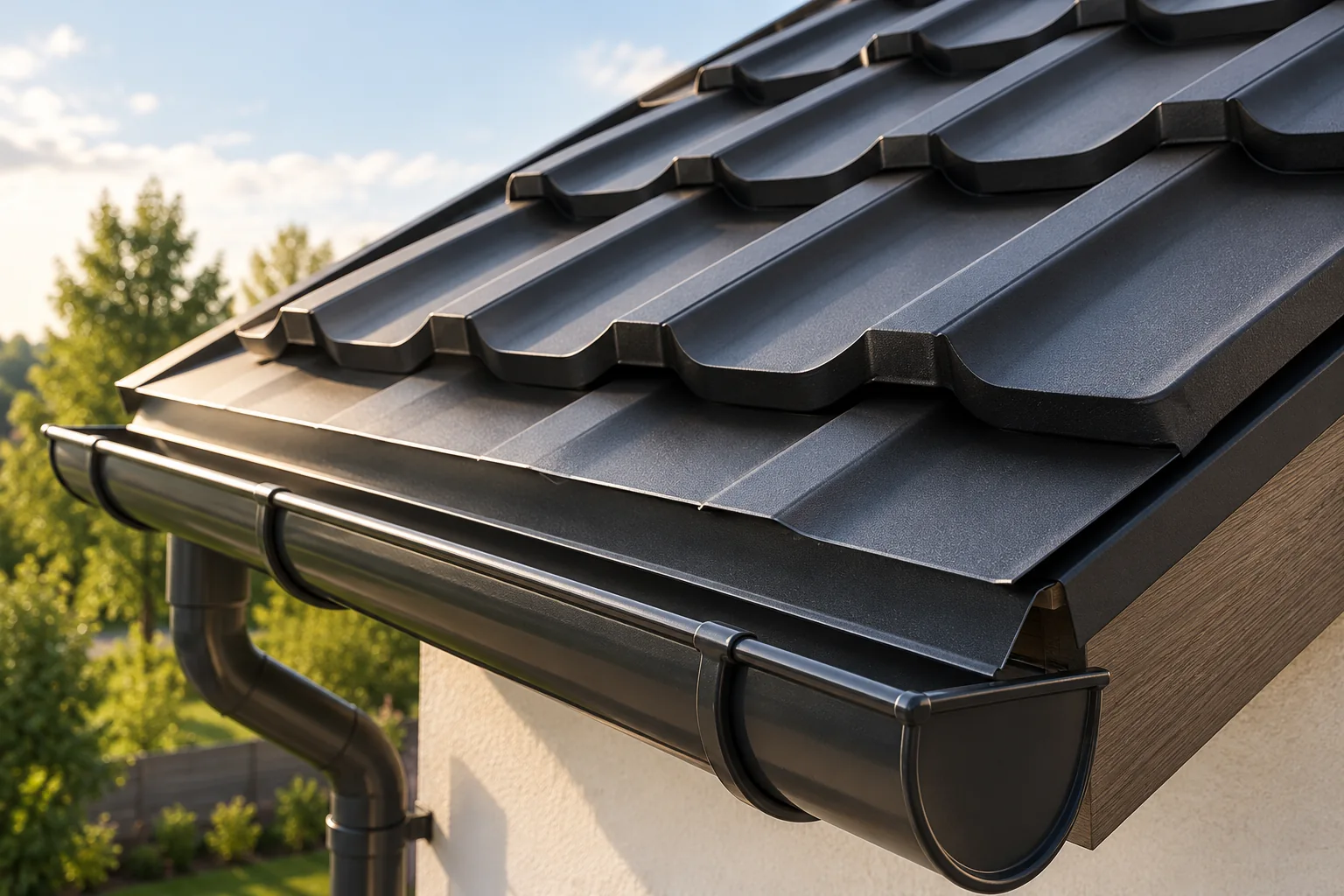
Where is the gutter apron located?
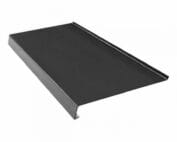
The flashing sits in the zone of the lower end of the roof slope. Its profile directs water in the planned direction and forms a drip edge. As a result, the runoff should not accidentally curl back under the covering. The exact run of the sheet depends on the eaves design, the type of substructure and the gutter setting.
There is no single dimension suitable for every roof. The gutter height, the thickness of the substrate and the projection of the covering change the geometry of the detail. The flashing is selected to suit the eaves cross-section. Ordering a “standard strip” alone without dimensions may mean it has to be reworked on site.
The lower edge should discharge drops at the intended point. Too close contact with another surface can change their path. When assessing the detail, therefore, not only the slope of the wide part of the sheet matters, but also the shape of the end. Accidental bending of the edge during installation can impair the performance of a correctly designed strip.
How does it differ from the under-gutter strip?
The under-gutter strip protects the front part of the eaves in the area below the gutter. The gutter apron helps direct water into the drainage. The names therefore refer to different tasks and positions. One element does not automatically replace the other, even if both are made of similar sheet.
The detailed design may also include separate flashings that drain water from the underlay. When ordering, therefore, it is worth using the cross-section drawing rather than the name alone. This makes it easier to determine which edges are to be visible and where laps and fixing are planned.
What happens to water under the roofing?
A small amount of water blown in at the details can get under the sheet. Condensation also forms. The task of a correctly executed underlay is to safely guide such moisture to the eaves. Its lower edge should not end accidentally on structural timber.
The method of connecting the membrane to the flashing must match the roof system. Support, overlap direction and adhesive materials are important. Water must flow over the layers, not under them. Do not leave a loose strip of membrane exposed to the sun or curling into a recess.

How to maintain ventilation at the eaves?
The eaves are often the air inlet under the covering. The flashing must not close this inlet in a system requiring ventilation. At the same time, the opening must be protected with a solution intended for the roof. A compromise is needed between protection against animals and debris and free airflow.
Completely filling all spaces with foam can prevent the roof slope from drying out. The mere presence of a membrane with low diffusion resistance will not fix the lack of air movement. The inlet at the eaves should work together with the ventilation channel and the outlet at the upper part of the roof.
How to choose the material and make the connections?
Select the flashing in terms of material, protection and colour. In a location permanently exposed to water, the compatibility of metals and coatings is important. Do not create random combinations from offcuts of sheet metal. Also check the recommendations for sealing joints and for the thermal movement of longer sections.
After cutting, remove swarf and sharp burrs in accordance with the material requirements. Fastenings should be located where the detail specifies. Piercing an unintended part of the drainage path can create a leak point. Sealant should complement a correct connection, not replace the geometry of the flashing.
What symptoms indicate an error?
Stains on the fascia board, a wet soffit or water running behind the gutter require an inspection of the eaves. The cause may be an incorrect strip, a membrane that is too short or a poorly positioned gutter. The same symptom is caused by the overflow of a blocked drainage system. A visible stain alone does not yet point to a single culprit.
The check is best started with the patency of the gutter and observation of where the water flows in. Then the connection of the covering to the flashing is assessed. On an old roof, local exposure of the detail may be necessary. Gluing on another strip without understanding the course of the layers often only moves the problem further.
What should be checked before closing the eaves?
Before installing the final elements, inspect the support of the membrane, the overlaps and the position of the lower edge of the flashing. Make sure that water has a continuous drainage path. Check the patency of the ventilation inlet and the conformity of the gutter height with the covering. These places may be difficult to inspect later.
Keep a photograph of the cross-section before it is covered. In the event of a future renovation, it will help establish how the eaves were built. In the order for flashings, describe the dimensions and the expected bends. A carefully fitted gutter apron is a small component, but effective water drainage depends on its cooperation with the rest of the roof.
7 branches. Materials closer to your project.