Preparing a metal roof for repainting
Renovation and maintenance
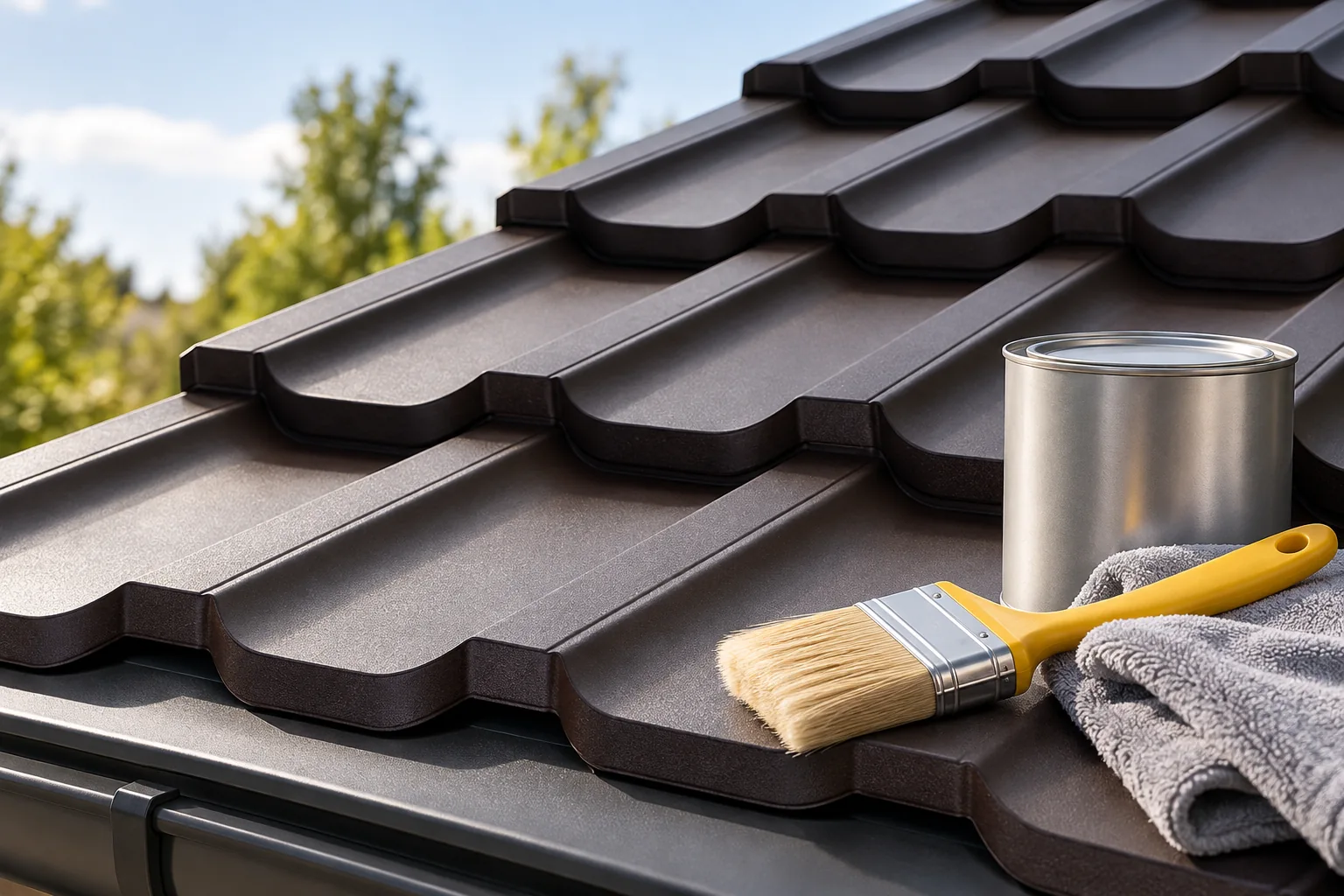
Painting a sheet-metal roof makes sense only when the metal is sound and the old coatings and causes of damage have been identified. This guide gives owners and contractors the criteria for judging whether a covering is suitable for renovation and the steps needed to prepare it. It is worth checking the degree of corrosion, coating adhesion and the condition of fixings, as well as the underside of the sheets, where rust will not disappear after painting. Removing the source of recurring damage before new paint protects the prepared substrate is equally decisive.
Is the roof suitable for renovation?
Examine the degree of corrosion, coating adhesion and condition of the fixings. If the sheet metal is perforated or damaged over a large area, painting may not be worthwhile. The underside of the sheets also requires assessment. Rust developing there does not disappear after renewing the surface visible from the yard.
Pay attention to lingering moisture, dust and leaks. Repeated damage to one place may indicate a technical cause. First repair the water drainage or flashing. New paint is to protect the prepared substrate, not mask a fault that will continue to damage the roof.
How to identify the old protection?
Look for an invoice, material data sheet or documentation of previous painting. Different coatings require different preparation and a suitable primer. Similar gloss does not mean the same chemistry. If the type of finish cannot be determined, the contractor should carry out a compatibility and adhesion test.
Do not choose paint solely by the description suitable for metal. The specific renovation system and the substrate to which it will be applied are assessed. Also check the approval for outdoor use and the application conditions. With an existing warranty, establish in advance how such a change affects its scope.
What must be removed from the surface?
Before painting, the roof is cleaned of dust, leaves, deposits and substances that impair adhesion. Greasy soiling may remain invisible after ordinary rinsing with water. The cleaning agent is selected for the coating and the subsequent paint system. Residues of the preparation must also be removed in accordance with its instructions.
The cleaning method must not force water under the laps. The equipment parameters and the direction of the jet require care. After cleaning, the surface must dry, including in hard-to-reach places. While doing so, check the gutters. Sediment washed from the roof slope should not form a new blockage in them.
How to prepare corrosion and detached fragments?
Loose coating and corrosion are removed to the degree required by the paint system. A further coat cannot be applied over flaking paint and expected to bond permanently. The boundaries of repairs should be carefully prepared. Exposed areas may require a different primer than the retained, well-adhering coating.
Aggressive sanding can destroy the metallic protection or overheat thin sheet metal. The method should be selected by the renovation contractor. Dust and filings must be collected before painting. Where there are many deep pits, it is worth reassessing whether the work is justified, rather than increasing the number of paint coats.

What weather does painting require?
Check the permissible air and substrate temperature and the humidity on the paint data sheet. Sun-exposed sheet metal can be significantly hotter than the air. Conversely, dew may form in the early morning and evening. A dry-looking roof from a distance does not guarantee that conditions are suitable for application.
Time without rain is also needed for drying and curing. The intervals between coats depend on the system instructions, not solely on the team’s pace of work. Applying the next coat too quickly can impair the result. Strong wind makes spraying difficult and increases the risk of soiling the surroundings.
What should be protected before work begins?
Cover windows, the façade and elements that are not to be painted. Determine how plants are protected and how water after washing is handled. Protect the photovoltaic installation with particular care if it is on the roof. Its dismantling and reinstallation require a suitable contractor and compliance with electrical safety.
Work on a slippery, sloping surface requires fall protection. Access to every section should be planned before painting begins. Do not rest heavy equipment on an arbitrary part of the sheet. The pressure can deform the profile and later become a place where water collects.
How to check the quote and accept the painting?
The quote should list the substrate preparation, the names of the paint system, the scope of repairs and the number of coats in accordance with the documentation. The price of spraying per metre alone is not enough. Establish how material consumption is monitored and the contractor’s warranty conditions. Ask for photos of the surface after preparation, before it disappears under the paint.
At acceptance, check the uniformity, the coverage of edges and the absence of contamination in the gutters. Do not judge durability solely by the intensity of the colour. Keep the data sheets of the materials used and the date of the work. They will facilitate later maintenance and the selection of touch-ups if the roof is locally damaged.
7 branches. Materials closer to your project.