How to choose a roofer for a complex roof
Construction and installation
You can recognise a roofer to whom a difficult roof can be entrusted by how they prepare and carry out the work, not by a photograph of the finished slope alone. Before deciding, check whether they can point to the instructions for the chosen covering and explain which drawings apply to your roof, and ask about projects with a similar geometry and type of covering. Ask also how they document the stages that will be covered and how they report problems with the substrate. Questions about details at the chimney, valley and eaves will tell you more than a general view of the building.
How do you check experience with similar projects?
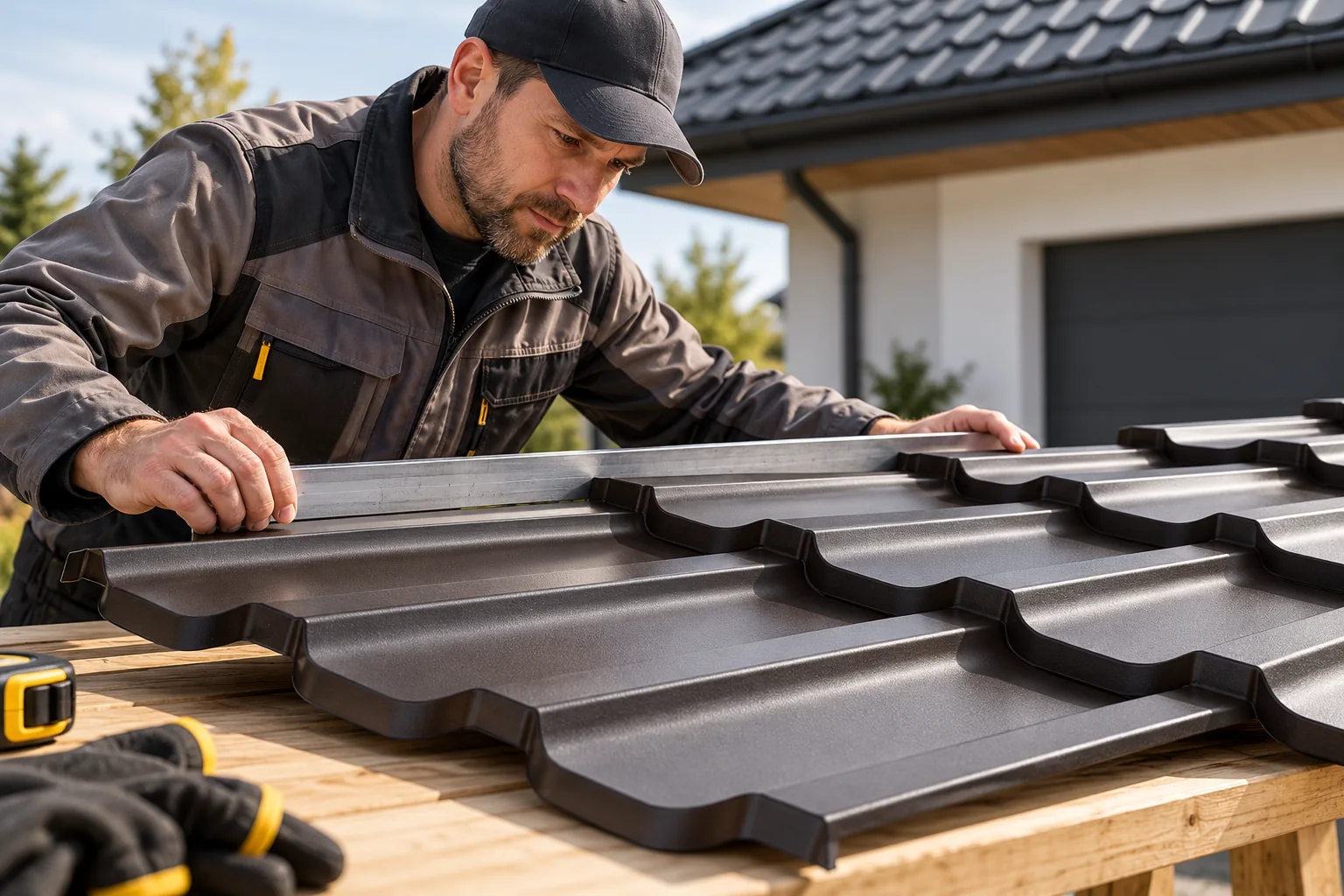
Ask about roofs with a similar geometry and type of covering. Installing a simple trapezoidal steel sheet on a garage is not the same as completing an extensive roof slope with dormers. Experience with tile-effect metal roofing does not, in turn, determine familiarity with insulated sandwich panels. Skills matching your investment are needed.
Ask to see details, not just a general view of the building. Pay attention to roof valleys, the eaves and connections at chimneys. Photos of the stages before covering are useful. They allow the approach to preparing the substrate and the layers that are not visible on the finished, aesthetic roof slope to be assessed.
How should the contractor talk about documentation?
A reliable roofer can point to the installation instructions for the selected covering and explain which drawings relate to the roof. They should not apply a single scheme to all products. Modules, cut sheets and trapezoidal steel sheets have different requirements. A similar appearance does not justify changing the overlaps or the screw fixing positions.
Any doubt concerning the structure should be referred to the designer. A good contractor distinguishes an installation decision from a change requiring calculations. They do not promise that more screws will fix every problem with support. The ability to recognise the limits of one’s own decision is an important part of professional work.
What does the way the substructure is prepared tell you?
Before laying the covering, the geometry and plane of the roof must be checked. An accurate eaves line helps maintain the correct alignment of subsequent rows. The batten spacing should correspond to the specific model. These activities are not visible later from the street, but they have a major influence on the result and durability.
Ask how the works will be inspected before covering. The contractor should have a method for checking and documenting important points. If they notice a discrepancy, they should report it before further installation. Attempting to hide a problem under a good-looking sheet shifts the cost of repair to later.

How do you recognise proper handling of the sheet metal?
Pay attention to transport, storage and handling of the material. Sheets should not be dragged over one another or exposed to unnecessary scratching. Storage must comply with the instructions. Even a good coating is not resistant to every method of handling on site.
Check the tools and tidiness after cutting. Suitable cold-cutting tools are used for coated steel sheets. An angle grinder can damage the protection through heat and sparks. Swarf must be removed before it starts to corrode on the surface. Care for such details is easy to notice during a site visit.
What details are worth asking about before signing the contract?
Ask for an explanation of the water path at the chimney, roof valley and eaves. Also ask about the inlet and outlet of the roof ventilation. The answer should relate to the actual roof layout. A general assurance that everything will be sealed does not replace the method of making the connections.
Discuss the fixing of snow guards and roof access. If you are planning photovoltaics, establish coordination with the installer. A well-prepared contractor checks these elements before installation. This means there is no need later to dismantle the finished roof surface to add missing support or correct an installation penetration.
How can the organisation and settlement of the works be assessed?
The quote should specify the scope, quantities and method of settling additional works. Establish responsibility for delivery, unloading and protection of the building. The schedule must take into account the readiness of the substrate and the weather. A promise to work regardless of conditions is not an advantage when installing at height.
Check how the workplace and access to the roof are secured. A chimney walkway does not replace all fall protection measures. The contractor should organise the work according to the risk. Tidiness, a predictable scope and clear arrangements help to assess their preparation just as well as the pace of laying the sheets.
What should remain after the works are completed?
Beyond the finished roof, acceptance, material documentation and usage information are needed. It is worth keeping photos of the connections and a record of agreed changes. Establish the method for reporting defects and the inspection requirements. The absence of a visible leak on the day of completion is not the only criterion of quality.
A good specialist can calmly explain the solutions used and indicate places requiring later inspection. They do not have to promise a roof with no maintenance at all. Much more useful is conformity with the design, careful workmanship and clear handover of the property. These are the features on which the choice of contractor can be based.
7 branches. Materials closer to your project.