How long can trapezoidal steel roofing last, and what affects its service life?
Renovation and maintenance
The durability of trapezoidal sheeting depends on the specific conditions on the roof, not on a single universal number of years. To realistically assess the expected service life, check the type and condition of the protective coating, the local environment (e.g. salinity or industrial pollution) and the quality of installation. Roof geometry and access for cleaning also matter, as areas that trap moisture age faster. Rather than relying on the profile name alone, analyse this set of factors – they determine the durability of the covering.
Why can’t a single service life be given?
A roof over a dry warehouse works under different conditions than the covering of a building with high internal humidity. The surroundings also matter, for example salinity or industrial pollution. The same profile name therefore does not mean identical exposure of the material.
The condition of the roof is also affected by its geometry and by access for cleaning. Places where leaves and water collect can age faster than an open roof slope. A forecast based only on sheet thickness ignores these relationships. It is better to assess the full set of conditions under which the covering will actually be used.
What protects the steel from corrosion?
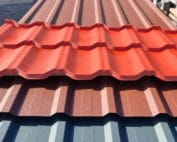
The steel core is protected by a metallic coating and, in many products, also by an organic layer. The type and parameters of this protection must be taken from the documentation. Colour does not indicate the composition of the entire protective system. Two graphite-coloured sheets can differ in resistance and maintenance requirements.
The coating is selected for the environment in which the roof is to perform. Proximity to the sea, emitted dust or aggressive substances requires a more careful assessment. Do not assume that the most expensive trade name solves every problem. Confirmation of the scope of application and knowledge of the material’s maintenance conditions are needed.
Does a higher profile mean longer durability?
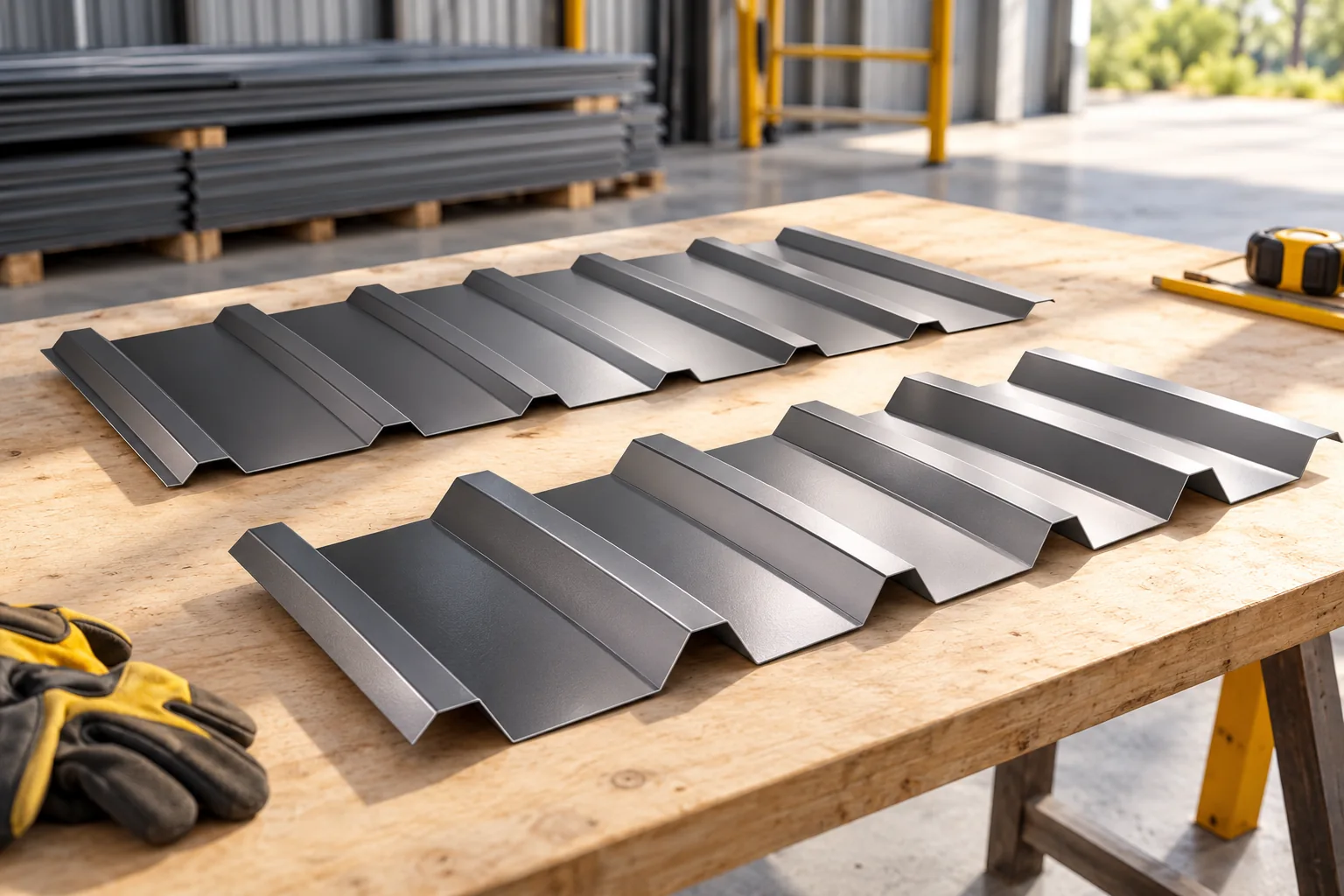
T35 has different geometric properties than T18. It may be the right choice for a specific arrangement of supports and loads. However, this does not automatically give better corrosion resistance. Profile geometry and surface protection answer different questions.
A sheet that is too weak or poorly supported can deform excessively. The connections and seals then work under unfavourable conditions. Conversely, a strong profile with a damaged coating remains exposed to corrosion. Durability therefore requires both correct structural design and protection of the steel.
How can installation shorten the life of the covering?
Cutting with an angle grinder damages the sheet’s protection through high temperature and sparks. Leftover swarf corrodes on the surface, creating further trouble spots. Damage from dragging sheets over one another also requires attention. A good coating will not undo mistakes made during work.
Correct fasteners and their compression matter. An over-tightened sealing washer may not function properly. An overly loose fixing will also not provide the expected connection. Screw layout should follow the design and instructions, particularly in wind-exposed edge zones.

What happens on the underside of the sheet?
Condensation can cause dampness even when the external covering remains sealed. Temperature, humidity and the air flow path need to be identified. Drips from below do not always mean a hole in the sheet. A wrong diagnosis leads to repairs that do not remove the cause.
Anti-condensation fleece can hold a limited amount of water. It must then dry out, which is why it requires adequate air exchange. It does not replace insulation or the correct layer build-up of a heated roof. Prolonged moisture requires a building-related solution, not just covering the wet surface.
Which inspections help maintain the roof?
Check the condition of the coating, flashings, fasteners and drainage in accordance with the user instructions. Remove leaves and contamination that retain moisture. Inspect roof valleys, areas around chimneys and shaded places with particular care. After strong wind, it is also worth checking the edges and any visible displacement of components.
Minor damage is repaired with material matching the coating and the recommended technology. Do not paint large areas with an arbitrary paint to hide the cause of the problem. Work at height should be carried out with appropriate protection. Photo documentation helps compare the condition of the covering during subsequent inspections.
How do you read the warranty and decide on a repair?
Check what the warranty covers and which events it includes. Conditions relating to the coating, corrosion or appearance may differ. Familiarise yourself with the maintenance obligations and the range of permitted environments. The number of years in an advertisement does not replace this information.
The actual condition of the roof determines repair or replacement. Local damage may require repairing a detail, while extensive problems require broader intervention. Also assess the substrate and the layers beneath the sheet. An honest diagnosis shows what can still serve, instead of assigning the entire covering an arbitrary end-of-durability date.
7 branches. Materials closer to your project.