How much does a sandwich panel cost and how do the different types compare?
Sandwich panels
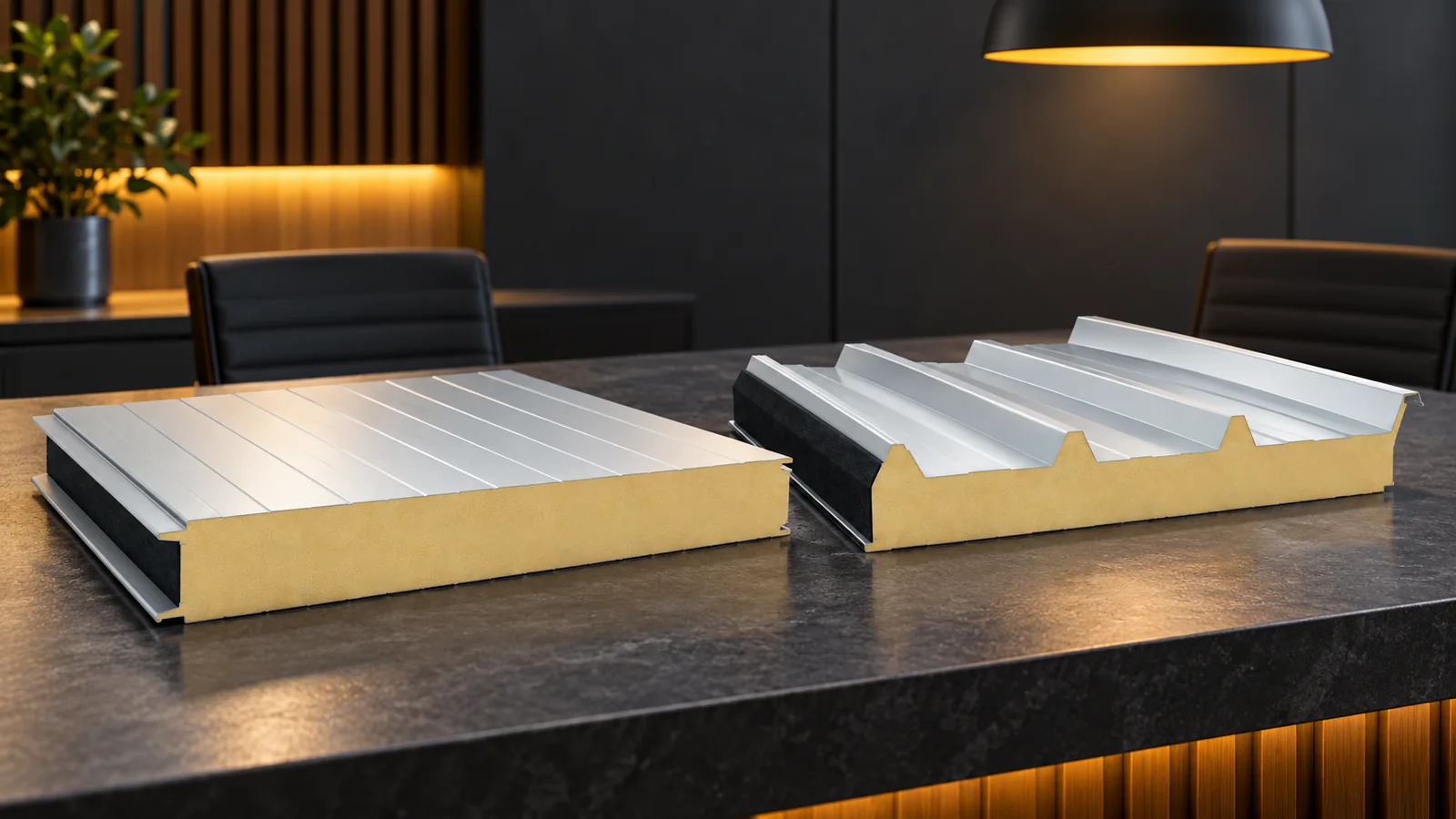
Oborniki panel is a colloquial name for a sandwich panel. It does not describe a single core, dimension or quality standard. That is why the question about its price needs clarification. First define the application, panel type and required parameters. Only then compare the price per square metre, the cost of accessories and delivery. This way you avoid comparing incomparable materials. In commercial practice, the name covers various panels with facings and an insulating core. You may find wall, roof and cold-storage panels. The core may be made of PIR, mineral wool or another material specified in the documentation. Each variant requires a separate assessment. The traditional name alone gives no information about the parameters.
What are you actually buying under the name Oborniki panel?
In commercial practice, the name covers various panels with facings and an insulating core. You may encounter wall, roof and cold-storage panels. The core may be made of PIR, mineral wool or another material specified in the documentation. Each variant requires a separate assessment. The traditional name alone gives no information about the parameters.
An insulated sandwich panel differs from a PIR insulation board alone. In a typical panel, steel facings work together with the core. PIR insulation in a thin laminate is a different product and does not replace a finished covering. This distinction is very important when comparing prices. Two similarly described square metres may refer to completely different parts of the building envelope.
Which features change the price the most?
In the request, specify the core, thickness, both facings and their coatings. Indicate the fixing method and the surface profile. Additional fire, hygiene or corrosion requirements may narrow the choice. A thickness of 100 mm is not enough for comparison. A panel with thinner steel sheets and a basic coating is not equivalent to a variant intended for demanding conditions.
Quantity, lengths, colour and deadline also matter. Producing a typical batch is different from a small order in an unusual variant. Stock material may be available sooner, but its lengths do not always fit. Do not assess an offer without listing the required pieces. It is often the cutting plan that shows whether a lower price per metre brings a real benefit.
How do you compare a wall panel and a roof panel?
A roof panel has a different external profile and joint design. Its selection covers slope, snow and behaviour between purlins. A wall panel is intended for vertical cladding in a specified installation arrangement. Similar price and thickness do not allow them to be used interchangeably. Always check the declared application before choosing the cheaper variant.
For the roof, add the ridge, eaves, drainage and penetrations. For the wall, add the plinth, corners and opening flashings. The differences arise from the function of the building envelope, not only from the panel price. If the offer covers a complete system, ask for a breakdown into items. It is then easier to check quantities and notice an element missing from another schedule.

How do you use a price list without drawing wrong conclusions?
Check the validity date, currency, tax and basis of settlement. A catalogue price list need not correspond to the final price of a specific order. It may include surcharges, minimums and logistical conditions. Do not transfer the price of a special decorative panel to ordinary wall panels. First check exactly which product the table item refers to.
Accessories may be sold by the roll. The catalogue dated 28 October 2026 listed a 30 m roll of 3 × 20 mm PES tape at €4.17 before VAT, equivalent to approximately €0.14 per metre. These figures apply to that specific catalogue item. Use the installation detail to determine the correct tape and quantity.
When is it worth considering second-grade material?
Second grade can reduce the budget where the defect is known and acceptable. However, the condition of the panels and the scope of their documentation must be established. It must not be automatically assumed that every such panel has the parameters of the full-value version. It would be equally wrong to assume that every batch is suitable only for demolition. The assessment concerns specific pieces and the application.
Check the compatibility of the locks, lengths and shades. Add wastage and the cost of any repairs agreed with the supplier. Where fire resistance or particular environmental conditions are required, appropriate proof of suitability is needed. A discount does not replace this data. If you do not know what you are really buying, a low price is insufficient information.
How should you prepare a request for a quote?
Provide the building dimensions, the type of partition and the conditions of use. Include a list of lengths, colours and quantities. Specify the delivery location and the equipment available for unloading. Ask for the price of the complete set with flashings, seals and fixings. If you do not have a cutting plan, state this explicitly. An incorrect list of lengths can cost more than the difference between quotes.
Make the final comparison for the same finished area of partition. Record the value of material, accessories, transport and installation. Also establish the date and the acceptance documents. Such a quote answers the question of the real cost of płyta obornicka in your construction. The amount per metre alone, without a specification, serves at most for initial orientation.
7 branches. Materials closer to your project.