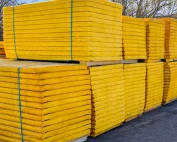
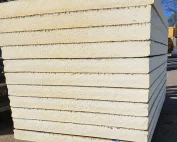
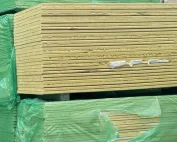
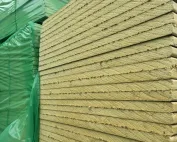
How do wall panels with enhanced mineral wool differ?
Sandwich panels
Panels with enhanced mineral wool can differ in core, facings, joint and scope of classification. There is no single common standard for the ‘better’ version. Higher wool density does not automatically guarantee lower U-value, better acoustics and greater fire resistance all at once. You need to establish which parameter matters in the given building, then compare the datasheets of specific products. The offering may concern better fire resistance, greater permissible span or a different surface finish. Sometimes the core construction changes, and sometimes the sheet thickness. The trade name alone does not explain the scope of improvement. You need to check what result is declared and under what conditions.
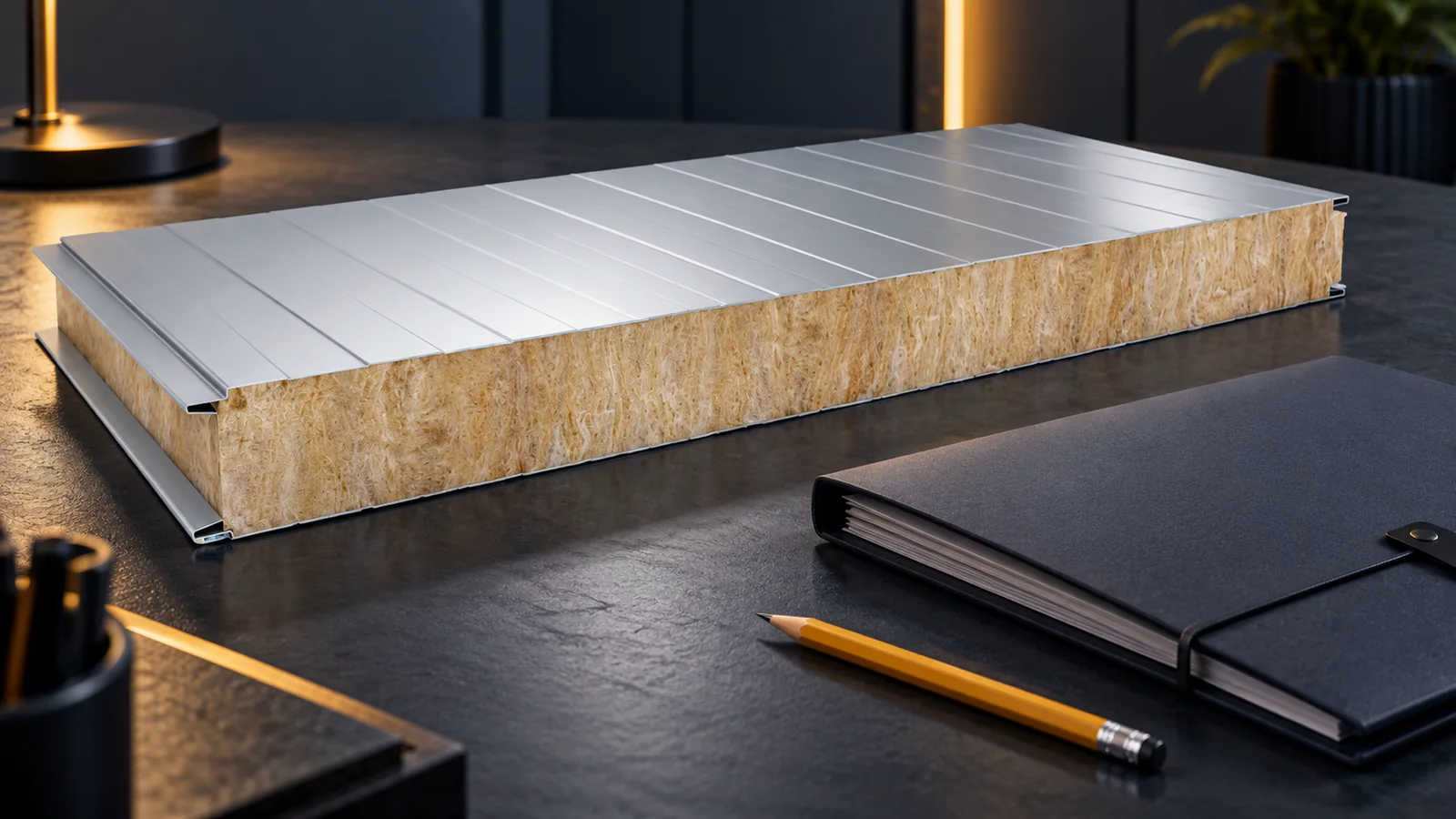
What can be behind enhanced properties?
The offer may concern better fire resistance, greater permissible span or a different surface finish. Sometimes the core construction changes, sometimes the sheet thickness. The trade name alone does not explain the scope of the improvement. It is necessary to check what result is declared and under what conditions.
It is worth asking for a comparison of two specific variants with the same function. The table should cover U, mass, fire classification, acoustics and load-bearing capacity. If one panel has different facings, this must be clearly stated. Otherwise it is difficult to assess whether the surcharge results from the core, thicker steel or the coating. A full description allows you to buy the actual benefit instead of just a marketing term.
Does higher wool density always help?
Density is one of the core parameters, but it is not a standalone assessment of quality. The arrangement of the lamellae, the properties of the fibres and the bond with the facings also influence the panel’s performance. In practice, there are cores with a single density and constructions combining two types of wool. They cannot be assessed solely by comparing a single number in kg/m³.
For an example system, 100 kg/m³ wool is used. Another uses 80 and 110 kg/m³ types in one core. Such solutions have separate data sheets and results. It does not follow that every panel with a higher average density will be warmer or provide better acoustic insulation for the hall. In these respects, U and acoustic indicators must be compared accordingly, not derived from density.
How to check the actual fire difference?
Compare the reaction to fire class and the fire resistance of the planned wall. Two products may have identical A2-s1,d0 but differ in EI range. The result is influenced not only by the core. The joint, seals, thickness and method of fixing also matter. A version with a higher class may require different execution details.
Check the range for the planned panel orientation and the actual support spacing. Do not compare the maximum class of one panel at a short span with the class of another for a much larger span. These are not the same conditions. If the standard variant meets the project requirements, the surcharge for a higher parameter should have a specific purpose. If it does not meet them, a lower price does not justify its use.

Can a stronger panel reduce the structure?
This may be possible in a specific project, but requires checking the load tables. The comparison covers the same facing thickness, support scheme, colour and load. Deflections are also to be checked. A greater permissible span in one case does not mean freedom to increase it in all walls.
Support and fixing widths must be taken into account. Sometimes the limiting factor is the connectors or fire conditions, not the panel itself. The economic benefit is calculated for the whole system: a more expensive material may reduce the number of purlins, but may also require different lifting equipment. The result should come from two calculated variants, not from a general assurance that a stiffer panel always lowers the cost of the hall.
How to compare insulation and acoustics?
For thermal performance, check the U-value from the relevant datasheet and the scope of corrections included. For acoustics, compare the same indicator and the method by which it was determined. Rw, RA1 and RA2 are not interchangeable figures. A calculated result should not be presented as a laboratory measurement. Such differences can change an apparently obvious ranking.
Example wall panels with mineral wool may have an Rw from 27 to over 30 dB. This is the range of various specific products, not a guarantee of the performance of every panel. A complete wall with doors and gaps will behave differently from a sample. If the problem is reverberation, a higher Rw does not necessarily solve the task. First, it must be established whether it concerns sound transmission or sound absorption inside.
When is the surcharge justified?
The surcharge makes sense when a change in a parameter solves a specific requirement or lowers the cost of the entire project. It may concern a higher EI class, a permitted support spacing or a coating for a demanding environment. It is not worth combining all these features into one general slogan “the best panel”. Often different variants have different strengths.
Prepare a short summary of requirements and note which variant meets them. Add the cost of the structure, fixings, transport and installation. Check the availability of lengths and the compatibility of accessories. In the order, provide exact parameters instead of just the name of the higher version. This way the surcharge will be linked to a property that can be verified in the documents and confirmed at delivery.
7 branches. Materials closer to your project.