Polish VAT on roofing materials and roof renovation work
Law and formalities
In Poland, if you buy roof sheets or insulation as materials, the seller will generally charge 23% VAT. A roof renovation may be treated differently when the contractor takes responsibility for both the materials and the work. To establish whether the 8% rate applies, check the type of building, its usable floor area and exactly what the contractor has agreed to deliver. Compare the final VAT-inclusive totals and the work included in each quotation. The Polish rules discussed here were checked on 1 November 2026.
When does 23% apply to the purchase of material?
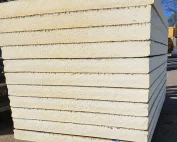
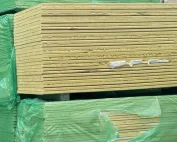
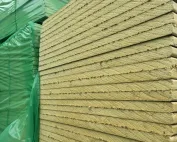
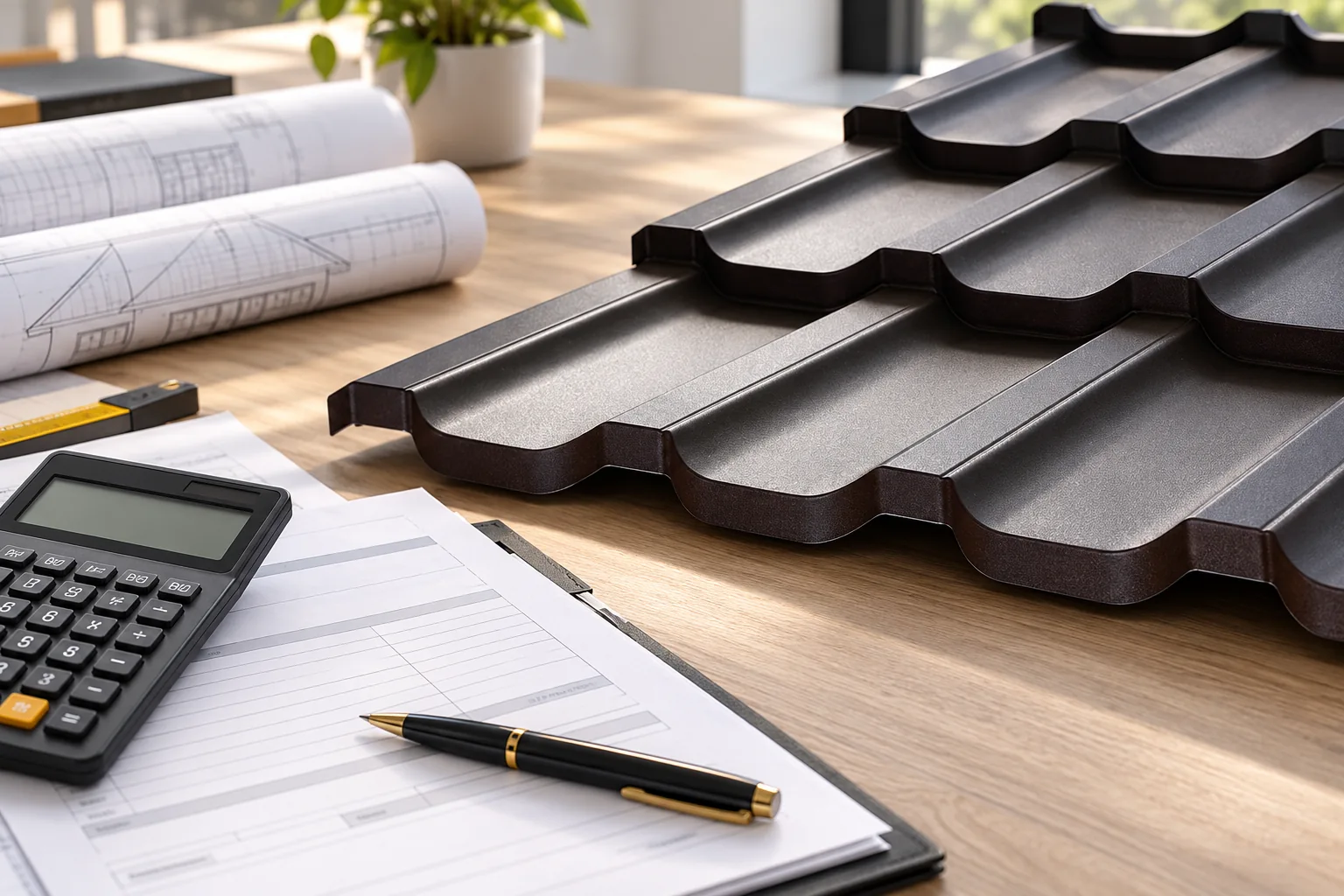
For ordinary sales of roofing materials, the standard VAT rate generally applies. This covers, for example, tile-effect metal roofing sheets, T18, T35 and PIR boards purchased as goods. The intended use of the material for one’s own home does not in itself change the sales rate. Nor does the fact of who later carries out the installation determine it.
Check whether the quoted price includes Polish VAT. For example, €23.14 before tax comes to €28.46 including VAT at 23%. Overlooking the difference can make a price list appear cheaper than it is. Use the same basis throughout the project estimate and avoid adding VAT a second time to prices that already include it.
Which services may benefit from 8%?
The reduced rate may cover, among other things, construction, renovation, modernisation, thermal modernisation or reconstruction of a building covered by the social housing programme. Both the type of activity and the classification of the building count together. Renovating the roof of a residential house is therefore assessed differently from merely delivering sheets to a warehouse.
Not every structure located at a house is part of construction covered by the preference. A detached garage, an outbuilding or a company building requires its own assessment. Likewise, the term “renovation” in the contract does not determine the application of 8%. What matters is what the contractor actually does and which building the works concern.
Does material with installation always mean 8%?
No. It must be established whether there is one actual supply concerning renovation or construction, or a separate sale of goods and a separate service. The number of items on the invoice alone is not the only criterion. The content of the contract, the contractor’s responsibility and the economic sense of the agreed works are relevant.
When the investor buys sheet metal from a wholesaler and another company carries out the installation, these are separate transactions. The rate for the service does not automatically change the VAT on goods purchased earlier. Installation should not be artificially added to the supply merely to obtain a lower rate. The documents should correspond to the actual scope of the supply.

What do the 300 and 150 m² limits mean?
For single-family residential buildings, the Act sets a limit of 300 m² of usable floor area, and for residential units, 150 m². This is not the roof slope area. Therefore, the number of square metres of purchased steel sheet is not used for the assessment. The area and qualification of the relevant building or unit must be established.
When the limit is exceeded, the reduced rate applies in the statutory proportion to the relevant part of the tax base. For an example house with a usable floor area of 400 m², the share resulting from the 300 m² limit is 75%. However, this does not mean that every service is automatically settled in this way. The other conditions for the preference must first be met.
How should the scope of works be documented?
The contract should describe the building, the type of works and the contractor’s responsibility. It is worth stating whether it includes the supply of materials, dismantling, substrate preparation and the installation of the new covering. Documents confirming the purpose and the building area are helpful. The investor’s declaration should be consistent with the actual state.
The invoice must reflect the service performed. The name “comprehensive service” will not resolve discrepancies between the document and the supply. If the scope of works changes, the settlement must be reassessed. This applies in particular where part of the materials or works relating to a non-residential building have been excluded from a single contract.
Why compare the full gross price?
Two quotations can differ in the price before VAT, the tax rate and the responsibilities each contractor takes on. Buying materials and arranging installation separately may cost less than a single contract. Compare the final price for equivalent work, including delivery, unloading, flashings, waste and any repairs to the supporting surface.
Subtracting 8 from 23 gives a difference of 15 percentage points in the VAT rate. That is not a saving of 15% of the total price at the 23% rate. On the same net amount of €2,314.50, the total is €2,499.66 at 8% and €2,846.84 at 23%. This example illustrates the arithmetic. Whether the lower rate applies depends on the contract and the work.
What should be done when the classification is unclear?
Before signing, give the person handling the VAT calculation a full description of the work. An unusual building use, a non-residential section or a combination of different works may call for closer examination. Depending on the question, it may be appropriate to obtain a tax decision, such as binding rate information from the Polish tax authority.
A tax interpretation issued to another contractor does not automatically cover your project. Check which facts it addresses and whom it protects. As the customer, you need a clear VAT-inclusive price and a correct tax calculation. Resolve any uncertainty before the materials arrive to avoid having to correct invoices after the roof is finished.
7 branches. Materials closer to your project.