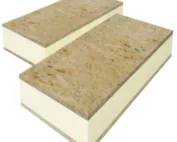
Understanding a SIP panel cross-section with a polyurethane core
SIP panels and insulation
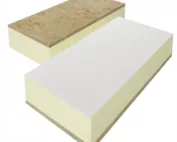
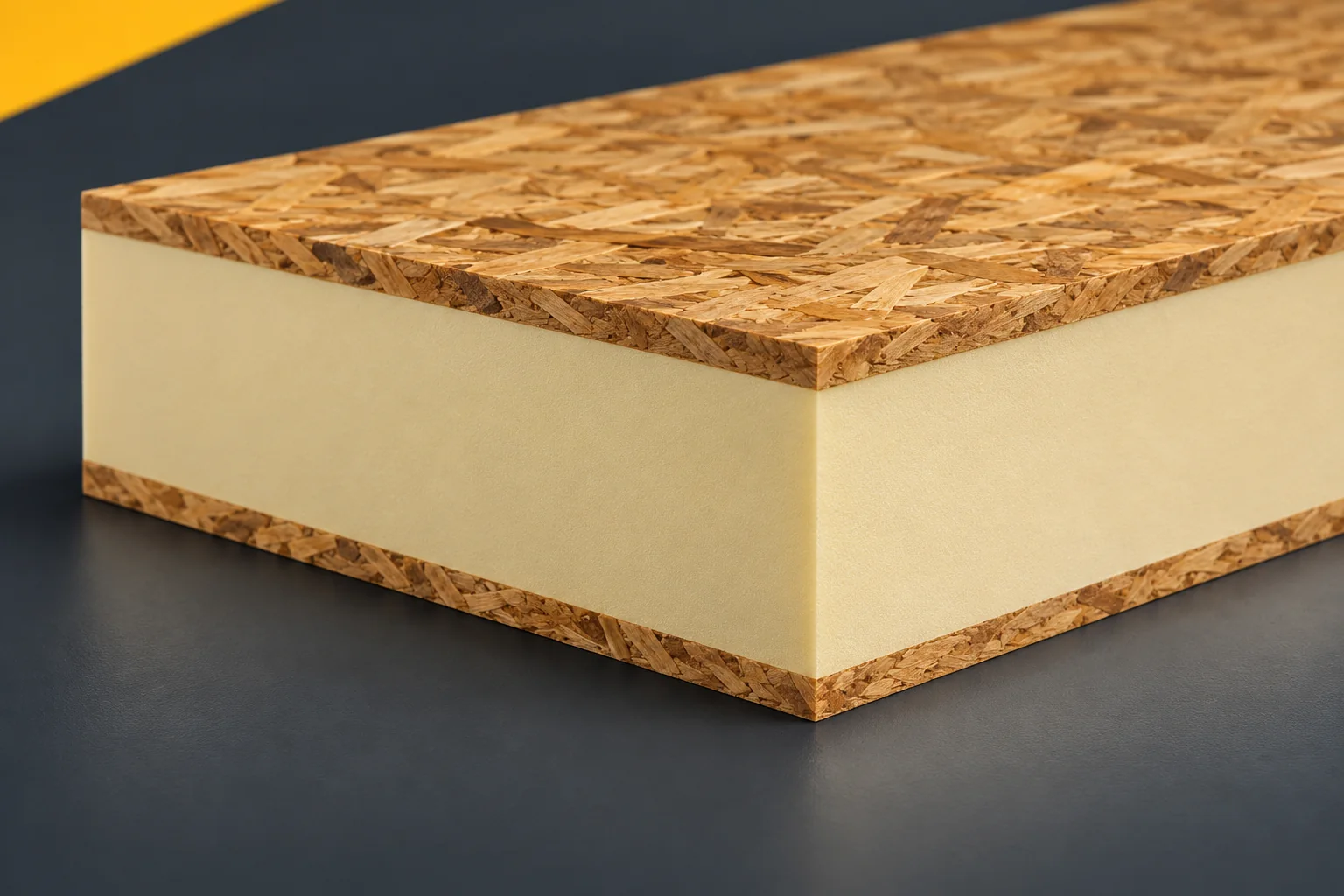
In a photograph, a SIP panel often looks like a thick layer of foam between two wood-based boards. This simple picture does not show all the differences between products. The full name structural insulated panel means structural insulating panel. In offers we also find the English term SIP Panels. For polyurethane versions, it is necessary to establish the type of core, the way the layers are joined and the function of the facings. Only then can it be assessed whether the product being viewed corresponds to the task envisaged in the building. The drawing should indicate the material and thickness of the facings on both sides and the thickness of the core. It is worth checking whether the stated dimension refers to the whole panel or only to the insulation. The difference may matter when selecting fixings and connections with other elements.
In this article
Start with a description of each layer
A short description of “120 mm board” is often insufficient at this point.
The panel cross-section must then be supplemented by the layers installed on site. These include, for example, the interior lining, the supporting substructure or the façade. The factory-made product and the finished wall have different thicknesses. When checking the space in a room or the width of a reveal, the dimension of the complete construction, in accordance with the design, must be used.
For example, a 100 mm core and two 8 mm facings give a total of 116 mm before taking account of the other thin layers. Describing such a product as a panel with 116 mm of insulation would be a mistake. This simple calculation brings order to the order description. It also helps to select the details for openings and to avoid comparing boards whose similar overall thickness conceals a different proportion of core.
The facings participate in the structural behaviour of the element
In a structural SIP, the facings carry specific forces and act together with the core. Their material, parameters and bonding are important. The name OSB alone does not describe all the properties of the board. The documentation should specify the variant used in the given panel. Assessing the colour or the size of the visible chips is not sufficient.
A thicker facing may change the properties of the element, but a permissible load should not be derived from this on one’s own. Data are needed for the specific product and support arrangement. Different conditions apply to a vertically loaded wall and different ones to a panel in a roof slope. The drawing is a starting point for checking data; it does not replace calculations.
It is worth identifying the PUR and PIR core in the documents
Both materials belong to the family of rigid polyurethane insulations. PIR has a modified chemical structure and distinct properties. The lambda value depends on the specific solution. When selecting, the data from the documentation should not be replaced by a commonly repeated figure for the entire group of foams.
The colour of the core also does not determine its parameters. The colour may depend on the composition and the manufacturing process. SIP panels with PUR or PIR may look similar, although they have different declarations. In the order, it is good to state the full material designation and the required properties. This makes it easier to compare the label of the delivered board with the offer later.
The thin bonding layer has an important job
A durable bond between the facings and the core allows them to act together as a composite element. The way it is made depends on the production technology. Some products contain additional layers of laminate and adhesive. A technical drawing may show them enlarged, although in reality they are very thin.
Photographs should not be treated as proof of a particular type of bonding. The relevant description is found in the product documentation. On acceptance, attention should be paid to debonding, blisters or edge damage. Their significance is assessed by the supplier with the involvement of the designer, where the structure is affected. Ad-hoc on-site re-bonding of the facing requires an agreed procedure.
The laminate at the core does not form an additional air layer
In the PIR composite section, gas-tight multilayer facings containing aluminium are used. OSB boards may be bonded to them by an adhesive layer. Such an arrangement must be distinguished from an exposed reflective surface at a gap. Layers in direct contact do not form an air void merely because one of them is shiny.
The laminate is also significant for water vapour transmission. When designing the building envelope, the actual arrangement must be taken into account, including board joints and service penetrations. The continuity of thin layers can be difficult to assess once the wall is closed. Therefore, the method of joining them should be specified in advance and checked during installation.
The edge tells you about the joint, but not about everything
Panels may have straight edges or solutions prepared for a specific system connector. The existence of a tongue and groove should not be assumed without confirmation. Even a similarly appearing core rebate may have a different purpose. The joint drawing must always be checked together with the complementary elements and fasteners.
The connection should provide the functions required in the design. These may include transferring forces, airtightness and continuity of insulation. A timber reinforcement used for load-bearing reasons changes the local heat flow. The mere sight of continuous foam in the middle of the board does not mean that the whole wall will be free from thermal bridges.
Distinguish the structural SIP from the composite for thermal insulation
A PIR board with one or two OSB facings may be intended for insulating an existing structure. The cross-section alone does not prove that it can replace a load-bearing wall. The documentation should be consulted for the intended use and the properties relevant to the planned application. In this way, products serving the same function are compared.
An EPS core with a higher lambda value requires a greater thickness than a comparable PIR with a lower lambda value to provide the same thermal resistance. This is one of the features that can be read and calculated from the materials. Structure, moisture, acoustics and fire require separate assessment. A well-described SIP panel cross-section helps to ask the right questions before purchase.
7 branches. Materials closer to your project.