Choosing a roof covering for your home: what to compare before ordering
Choosing a covering
The choice of roof covering depends primarily on the roof pitch, the load-bearing capacity of the structure and the intended use of the house. Before buying, compare the project requirements with the parameters of the specific product, including the minimum pitch, permissible loads and details at the eaves and ridge. Check whether a lighter material still requires the roof truss to be assessed by a structural engineer. Only after these determinations should you choose the pattern and colour, bearing in mind that metal roof tiles, trapezoidal sheeting and sandwich panels serve different functions.
What limits the choice right from the start?
The first filter is the roof pitch. The minimum slope stated in the product data sheet may depend on the length of the sheets and how they are joined. The requirements of one model do not automatically apply to other coverings. Also check the details at the eaves, ridge and roof penetrations.
The second filter is the load-bearing capacity of the structure. A lighter material may facilitate renovation, but it does not confirm that the roof structure is in good condition. Snow, wind and equipment loads must still be taken into account. The choice of covering should be consistent with the structural engineer’s assessment, especially when the roof layout or the scope of its use changes.
When should you consider cut tile-effect metal roofing?
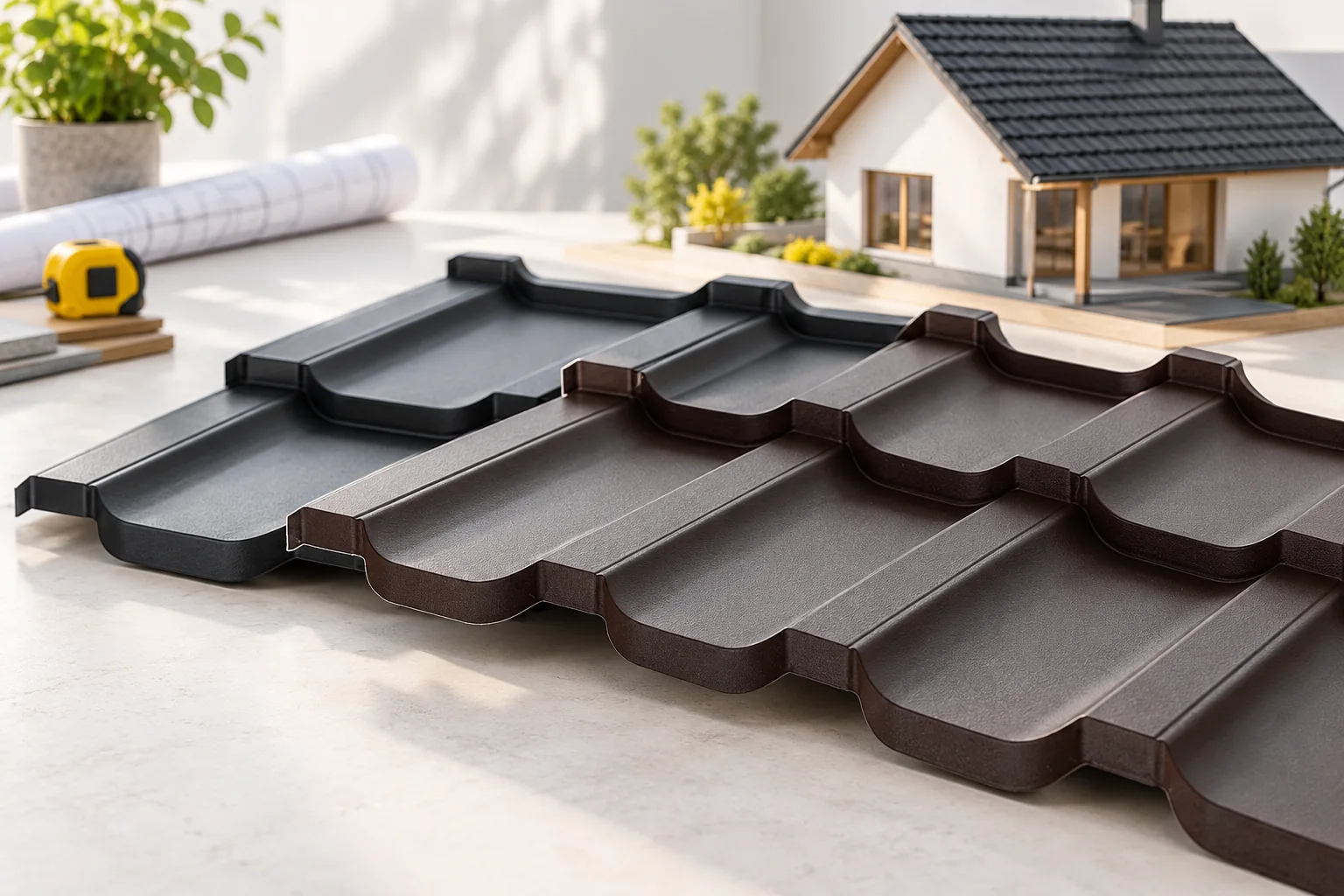
Sheets cut to size fit well on simple, regular roof slopes. Their length can be matched to the measurement, reducing the number of transverse joints. Before ordering, however, the diagonals and the eaves line must be checked. A dimensional error on a long sheet is harder to correct than adjusting a single module.
Long elements require appropriate transport and handling. They should not sag during unloading or slide over other sheets. On a roof with many valleys, some material will be cut off. In such cases, profitability is determined by the cutting plan, not solely by the price per square metre.
When is modular tile-effect metal roofing more convenient?
Small sheets are easier to transport and to pass up onto the roof. They also make it easier to plan the covering at roof slope breaks. A repeatable format helps organise installation and any replacement of a single section. The prerequisite is that the module geometry is consistent and the substructure is correctly prepared.
Not every module has the same usable area and the same joining method. Compare the instructions, the required accessories and the batten spacing. Also check whether subsequently ordered sheets will match in shade. A colour code does not guarantee an identical appearance across different batches and different coatings.

Will T18 or T35 work on a house?
Trapezoidal steel sheet can be a deliberate aesthetic choice for a modern house. T18 gives a finer rhythm, while T35 gives a more pronounced profile pattern. Both designations describe product families. The application is determined by the parameters of the selected sheet, the support arrangement and the sealing requirements.
A single steel sheet does not provide insulation for the loft. The other layers of the building envelope are needed, including thermal insulation and proper moisture control. An anti-condensation fleece can reduce dripping of condensate under suitable conditions. However, it does not replace a complete solution for heated rooms.
Where do insulated sandwich roof panels fit in?
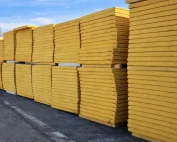
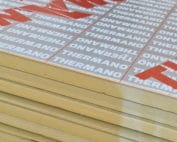
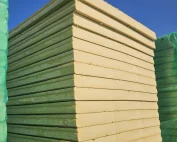
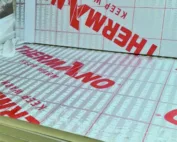
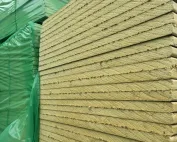
An insulated sandwich panel combines facings with an insulating core. It is sometimes used in buildings with a simple form where rapid roof closure and a defined level of insulation matter. In a house, its use requires consideration of the appearance from below, edge details, acoustics and the routing of services.
Do not select a panel solely on the basis of core thickness. Check the thermal transmittance of the specific product and the range of permitted spans. Fire classifications and connection details are also important. A wall panel does not become a roof panel simply by being laid at an angle.
How to compare durability and comfort?
For steel sheets, the core, metallic protection and organic coating matter. An environment by a busy road, near industry or on the coast may require different protection. Gloss or matt describe the appearance but are not sufficient to assess resistance. Read the coating documentation and the conditions of use.
Rain noise depends on the entire roof. Insulation, gaps, fastening and the loft finish change how sound is perceived inside. The same applies to temperature in summer. The colour of the sheet alone does not determine the comfort of the rooms. An assessment of insulation, ventilation and protection against excessive solar radiation is needed.
How to finalise the choice without random compromises?
Prepare two or three variants permitted for your roof. Price each one together with flashings, insulation, drainage and installation. Allow for future inspections and access to the chimney and services. Such a comparison shows the real difference in cost and scope of work.
Finally, look at a larger sample of the material outdoors. A small swatch does not show the rhythm of the profiles on the roof slope. Choose a covering whose appearance suits the building and whose technical requirements are clearly defined. Aesthetics and correct workmanship should follow from the same decision.
7 branches. Materials closer to your project.