Specifying PIR boards in construction drawings and material schedules
PIR insulation
PIR boards in a design require a description that leads to an unambiguous order and acceptance. The material abbreviation and the thickness alone are usually not enough. Characteristics relevant to the given building element are needed. A well-prepared specification also makes it possible to assess a substitute without guessing the designer’s intention. In practice, it is worth separating three questions. What is the core made of? What parameters does the finished board have? How should it be installed? Only the answers to the whole set allow the solution to be assessed. Insulation with polyurethane is not a single technology with identical installation on every surface. In the name of the material item, separate the type of core from the form of the product. Polyurethane foam is a broader term than a factory-made PIR board with a specified facing.
In this article
The PIR core and the meaning of the name
The specification should make it possible to reject a material that meets only part of this description. It is not about multiplying trade names. It is about recording the function and characteristics that can later be verified in the documents of the specific product delivered to the construction site.
The facing changes the way it is used
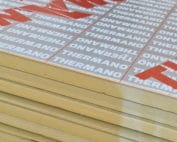
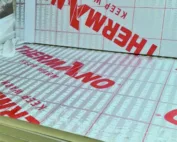
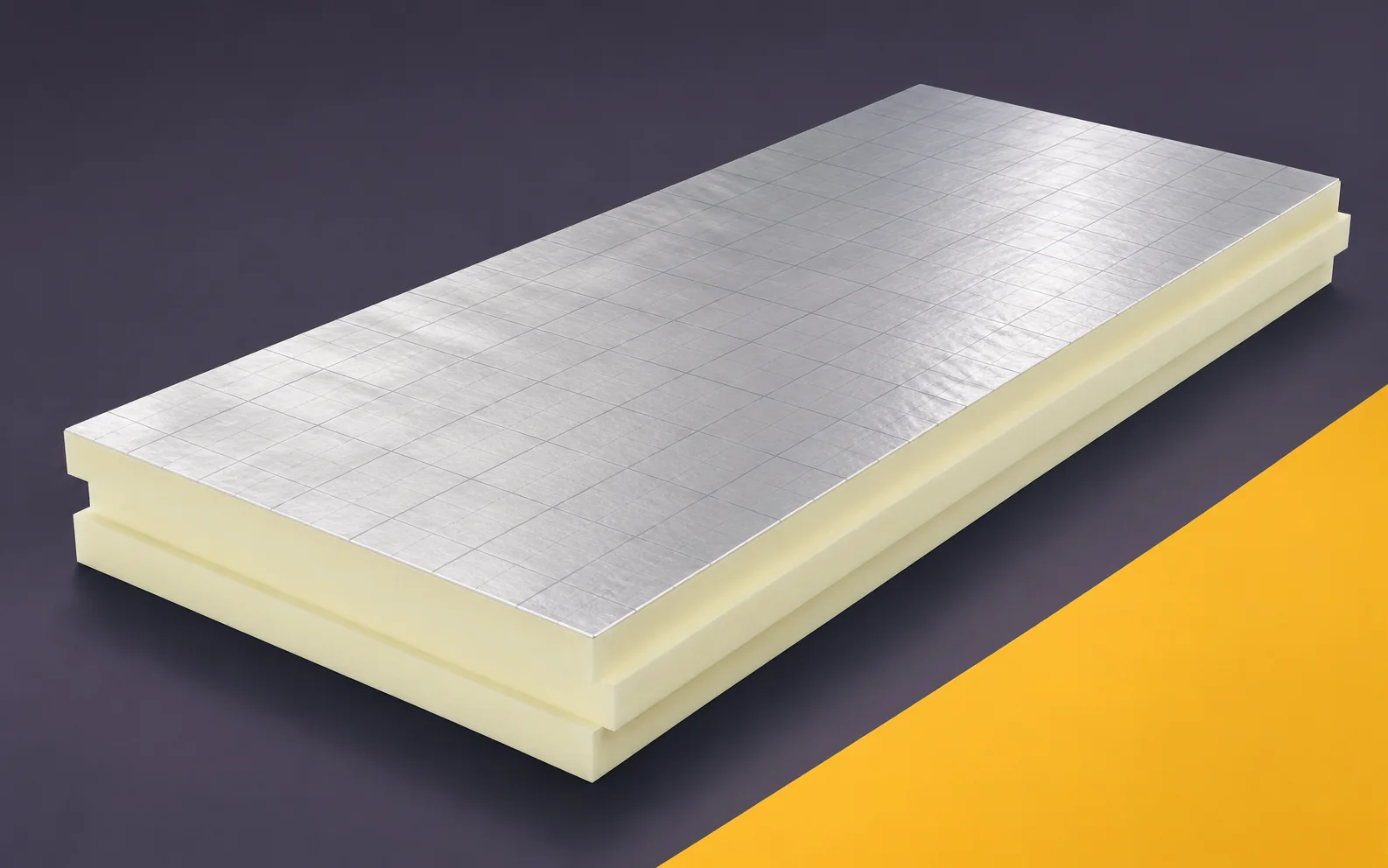
The type of facing is one of the first points to check. There are surfaces intended for specific roof systems and products for other building elements. Composite boards may additionally contain a finishing layer. In such a case, the total thickness does not have to mean the thickness of the PIR itself.
It is worth describing the facing in relation to the adjacent layer. The adjective aluminium alone does not always explain the structure of the laminate or the bonding conditions. If a specific material compatibility is important, indicate it in the system documentation. For a composite product, distinguish between the thickness of the core and that of the entire element. Without this, two seemingly identical entries in the cost estimate may relate to different quantities of insulation and a different method of finishing.
Why a smaller thickness may be sufficient
The most important thermal advantage of PIR becomes apparent when space is lacking. The same required resistance can sometimes be achieved with a smaller thickness than with another insulator. Calculations for the selected products must be compared. A general statement about insulation that is twice as thin is sometimes untrue.
The design thermal objective should be recorded so that it is not confused with a single lambda value. The same conductivity at a different thickness gives a different thermal resistance. The U-value requirement, by contrast, covers the entire building element. It is good practice to state the basis of calculation and the method for assessing any substitution. This prevents the supplier from presenting compliance with a single parameter as proof of equivalence for the complete variant.
Application follows from the specific product
Before purchase, check whether the manufacturer intends the specific application. The assessment also includes loads, the method of fixing and the conditions of contact with moisture. A suitable solution may require a specific board variant. The PIR core alone does not justify extending its intended use.
The place of application should appear at the material item or in the associated drawing. A board intended under screed does not have to meet the same requirements as a board under waterproofing. It is worth stating the relevant loads and moisture conditions. The polyurethane insulation is then given a clearly defined function. The person assessing the offer can check whether the declared properties relate to the correct application and not merely to a similar product group.
The edge helps, but does not replace care
The edge joint is not a structural joint that carries all loads. Its role is defined by the manufacturer’s solution. In insulation, correct fitting of the elements and continuity of the layer are important. Excessive gaps or damaged edges require assessment before covering.
The edge should be recorded in accordance with its actual profile. The general word milling can mean various solutions and lead to misunderstandings. A drawing will be helpful for the connection to an existing supply. It is also worth indicating how the layers are to be arranged and the rules for cut pieces. The specification of the factory edge alone does not describe all the joints that will occur at the perimeter, openings and installation elements.
Parameters worth checking alongside lambda
The documents should make it possible to identify the exact variant and thickness. An order should not be based on a photo of a similar board from the internet. Check the declaration of performance, the data sheet and the installation instructions. If NPD appears in a document, this must not be treated as confirmation of the required characteristic.
The list of required documents should correspond to the scope of the assessment. The declaration of performance states the characteristics of the product, while the installation instructions help to assess how it is to be installed. The classification of a specific system relates to the conditions stated in that document. These levels should not be mixed in a single item. For a replacement, the easiest approach is to go through the same list of questions that was used during the original selection of the solution.
Recording the decision in the documentation
In the design, the entry PIR 120 mm may be too general. If the facing, the edge or a specific compressive strength matters, this must be indicated. Otherwise, different offers may formally correspond to a single entry even though they are not functionally equivalent.
A good specification can be checked with a simple test: can a person not involved in the design use it to compare two offers? Polyurethane boards should be described through the required properties and their context within the building element. Polyurethane insulation must not remain the only piece of information about the technology. Add traceable documents and rules for changes. This limits disputes at delivery and helps preserve the original thermal, mechanical and installation objectives.
7 branches. Materials closer to your project.