Roof pitch, water run-off and the choice of covering
Selection of covering
The choice of roofing is determined not only by the roof pitch but also by how water drains and how sheets are joined. Before buying, check the permissible slope for the specific product and roof layout, and distinguish degrees from percentages. Pay attention to lap lengths, sealing and drainage, especially on shallower slopes. Remember that the material name alone does not guarantee the performance of the whole system — installation instructions and execution details are key.
Degrees and percentages mean different things
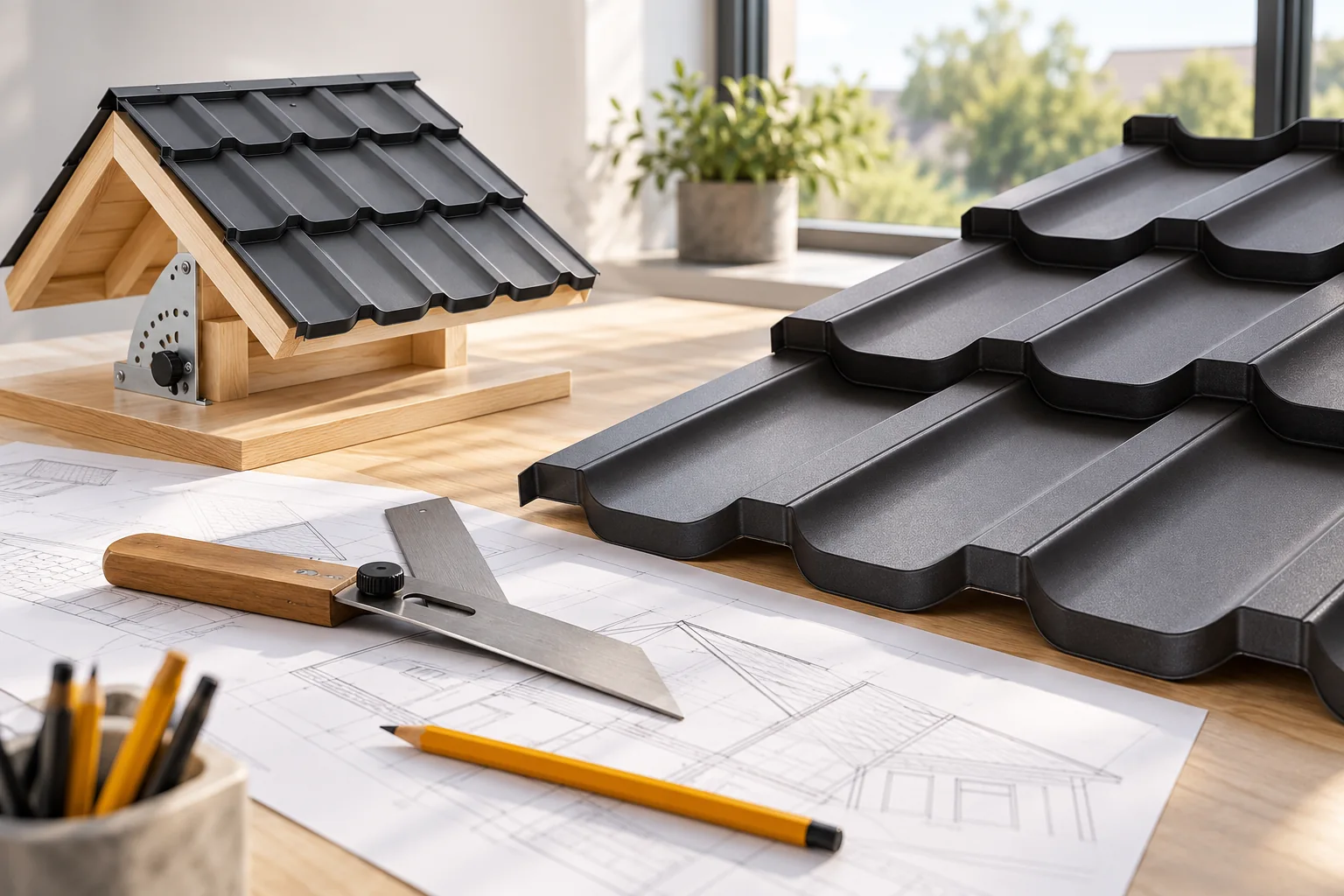
The angle in degrees describes the position of the roof slope relative to the horizontal. The slope in percent is the ratio of the height difference to the horizontal distance. For example, a rise of 50 cm over a 5 m section means a slope of 10%. Lengths are not measured along the diagonal of the roof.
A slope of 10% corresponds to about 5.7°, not 10°. Only at an angle of 45° does the slope amount to 100%. Confusing the units can lead to ordering a non-permitted covering. Therefore the drawing, the quote and the instructions should contain an unambiguous unit.
Why does slope matter for water?
On a gentler slope, water drains more slowly and acts on the joints for longer. The importance of overlap lengths, the sealing method and drainage increases. Wind can additionally press water into the gaps. The material name alone does not determine the resistance of the entire system.
The roof must also be analysed near chimneys, roof valleys and service penetrations. A local obstruction to drainage can be more important than the angle of the main part of the slope. A correct slope will not fix poorly made flashings or a blocked drain.
T18 and T35: check the exact variant
The profile designation alone is not sufficient to determine the minimum roof angle. The geometry of the sheet, the roof version, the joints and the installation guidelines are significant. Two products with a similar corrugation height can have different conditions of use.
Before purchase, it must be established whether a single sheet will cover the entire roof slope length. Lengthwise joining creates an additional transverse lap. Its execution and permissible pitch must be checked in the documentation for the specific system. T35 does not remove this obligation simply because it has a higher profile.
Tile-effect metal roofing must comply with the installation instructions
Cut-to-size and modular tile-effect metal roofing have formed steps and defined connections. Water should flow through them as intended. The minimum pitch of one model should not be attributed to all tile-effect metal roofing.
When changing the covering, the batten spacing and the termination at the eaves and ridge must also be checked. These elements interact with the sheet geometry. Selection based solely on colour and price may only reveal a problem after the material has been unloaded.

Insulated sandwich panel: continuous run or joint?
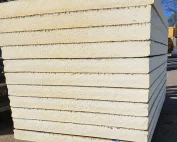
For insulated roof sandwich panels, manufacturers specify conditions that depend, among other things, on the transverse joints. Skylights and other openings may also be relevant. There is no single minimum pitch value suitable for all panels with a PIR core.
The documentation should be read together with the roof slope drawing. Panel length, drainage direction and the method of sealing the joints must be taken into account. A wall panel does not become a roof panel by being laid at a steeper angle. Their function and the design of the outer cladding differ.
A flat roof also needs drainage
The term flat roof does not mean a surface without slope. Water must be directed to the outlets or the drainage edge. The slope may result from the structure or from a suitably designed shaping layer. Its layout should cover the entire catchment area.
PIR boards may form part of the insulation of such a roof, but they do not themselves constitute the waterproofing. A proper waterproof layer and carefully detailed penetrations are required. Ponding water should not be regarded as normal merely because of the roof’s name.
Slope does not replace a structural check
Snow, wind and other loads are taken into account when selecting sections and fixings. A steep roof alone does not guarantee that snow will not accumulate. Obstacles, changes in roof slope and adjacent parts of the building alter the local conditions.
Changing the angle affects the geometry and structural behaviour. It requires assessment by a designer, as does changing the method of supporting the covering. An incorrect slope should not be corrected by ad hoc packing of random elements under battens or purlins.
How to prepare data for material selection?
The angle with its unit, the length and width of the roof slope, and a drawing of all the bends are required. In an existing building, it is worth checking the actual geometry. Deflection or unevenness of the substrate can create local sections with a lower pitch than in the design.
The quote should specify the particular roofing variant and the correct installation instructions. It is also worth confirming the arrangement of laps, seals and accessories. This allows materials approved for the given roof to be compared, rather than merely similar-looking sheets.
If the selected product does not meet the requirements for the existing pitch, the design solution or the material must be changed. Additional sealing mass does not provide grounds for disregarding the instructions. The supplier should confirm the conditions of use before ordering, particularly for an unusually shallow slope.
7 branches. Materials closer to your project.