IDELCO SIP in building design: system scope and documentation
PIR insulation
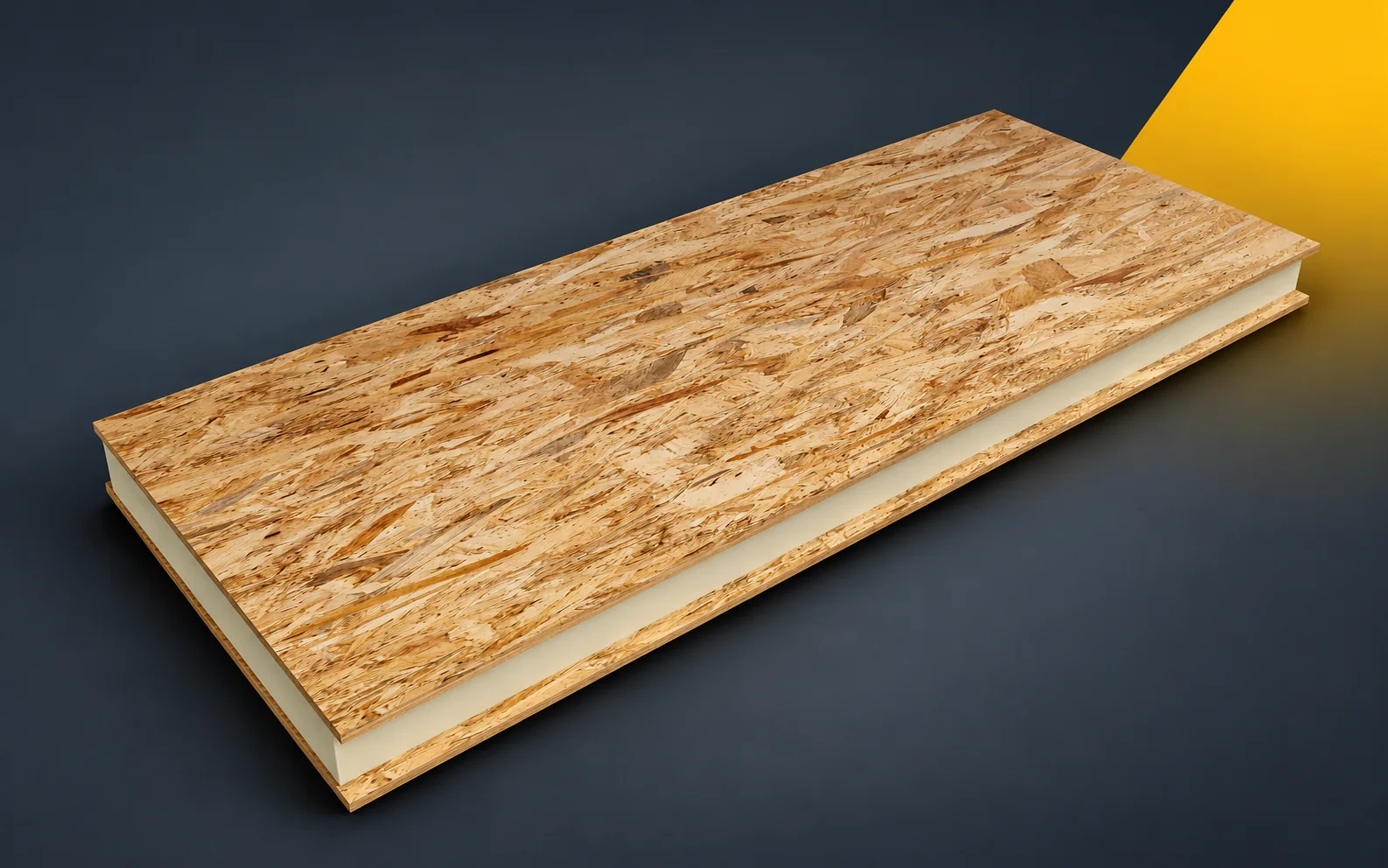
In the IDELCO α-therm SIP documentation, parameters must be assigned to the exact panel configuration. The lambda of the core does not replace the U-value of the building element, and the CS of an ordinary board does not determine the load-bearing capacity of the system. The specification needs the thickness, facings, supports and connection data. IDELCO offers both PIR insulation boards and the α-therm SIP solution in the Smartbuild system. These are two different categories of components. The terms “polyurethane boards” and “polyurethane foam” are broader than the exact designation of the PIR product. In the description of the application of PIR boards, the distinction between IDELCO insulation boards and α-therm SIP panels of the Smartbuild system must be clearly stated. The description of the function should make it possible to assign to the core and facings of α-therm SIP their actual function in the structure.
In this article
PIR boards versus structural SIP panel
A short material line item does not settle the selection, because a structural panel and a thin laminated board do not perform the same scope of work. Functional criteria should lead to the element category that matches the task of the designed building. The documentation needs a cross-section showing the load-bearing elements and the role of the thermal insulation layer, together with an indication of where it is to be used.
Core lambda and panel U-value
The core lambda is not compared with the U-value of the finished panel: lambda describes heat conduction within the material, whereas U relates to the entire building component. The calculation summary should explain the comparison of the core lambda with the U-value result of the complete SIP panel.
In the calculations, the lambda of the material and the U-value of the SIP panel remain within their respective scopes; joints and supports can change the result for the entire building component compared with the panel field alone. Verification of the solution serves to assess the building’s insulation performance without mixing material and structural parameters. The data of the selected panel together with the assessment of joints and geometry allow a substitute to be checked later according to the same assumptions.
Polyurethane insulation in a prefabricated building envelope
Prefabrication requires an installation plan and a check of the substrate tolerances, because the elements must reach their intended positions and the joints must be made in accordance with the design. The detailed design should therefore indicate the planned openings and the routing of services in the α-therm SIP panels.
The construction drawing allows openings and changes in the SIP panels to be agreed before the prefabricated elements are produced; any cutting or damage to the facing can affect structural performance, so this should not be left to the installation crew. The adopted geometry is to enable installation in accordance with the design, without treating the panel like ordinary cut PIR. For inspection of the works, provide the numbering of elements, the dimensions of openings and the substrate tolerances, and arrange an inspection before covering.
Airtightness and transfer of forces at the connection
The airtightness of the panel joints is just as important as the insulation in their core, which is why corners, junctions at the foundation, openings and the connection to the roof require a planned solution. In the analysis of the building envelope conditions, the junction of the SIP panel with the foundation and the connection at the corner must be taken into account.
The selection of protective measures requires coordinating sealing, protection against water and load transfer at the SIP junction. The model and detail must take into account that prefabrication does not remove the need for correct execution of the perimeter of each element. The material set is to combine structural and thermal functions in a single clear detail, and the specification is to describe the course of the seals, fixings and finish layers at the junction while preserving the separate functions of the protective layers.
Load-bearing capacity and classification of the actual configuration
No permissible spans or load-bearing capacities of SIP panels are attributed to the IDELCO boards in the laminate, and the fire classification of the complete wall is not derived from the name of the core. The performance requirements separate the load-bearing capacity and the fire classification of the actual SIP panel system.
Compliance is assessed on the data for the selected thickness, facings and support of the SIP panels; the properties of an ordinary PIR board do not prove the load-bearing capacity of a prefabricated wall, so the scope of the documents is not extended automatically. The design data confirm the requirements for the complete solution, not for the core alone. When approving the product, check the system documentation, the scope of the assessments, the connection configuration adopted and conformity with the design.
Polyurethane insulation versus the price of a complete SIP system
An offer for SIP is treated as an offer for part of the building system: check whether it covers the design of the elements, fasteners, seals, transport and installation. The purchase conditions clarify the scope of the offer for α-therm SIP, i.e. part of the building structure.
In the material procedure, compare the design, transport, fasteners and installation of the SIP system with an equivalent scope; a single matching feature does not conclude the analysis, because the price per metre of the thermal insulation alone is not equivalent to the price of a finished panel. Compile the variants that provide the same completed function of the building envelope. In the delivery agreement, state the list of supplied elements and the work remaining after installation of the system.
A case worth considering
In the α-therm SIP design, the U-value must be assigned to a specific panel configuration: the facings, the core thickness and the support conditions. A value from a general offer is not a result for any thickness and connection, and the CS data of an ordinary PIR board do not replace the assessment of the load-bearing capacity of the SIP panel. Only an element defined in this way allows both the thermal and the structural requirements to be related to it at the same time.
7 branches. Materials closer to your project.