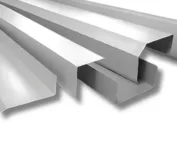
Looking after valley flashings exposed to run-off and debris
Sheet metal flashings
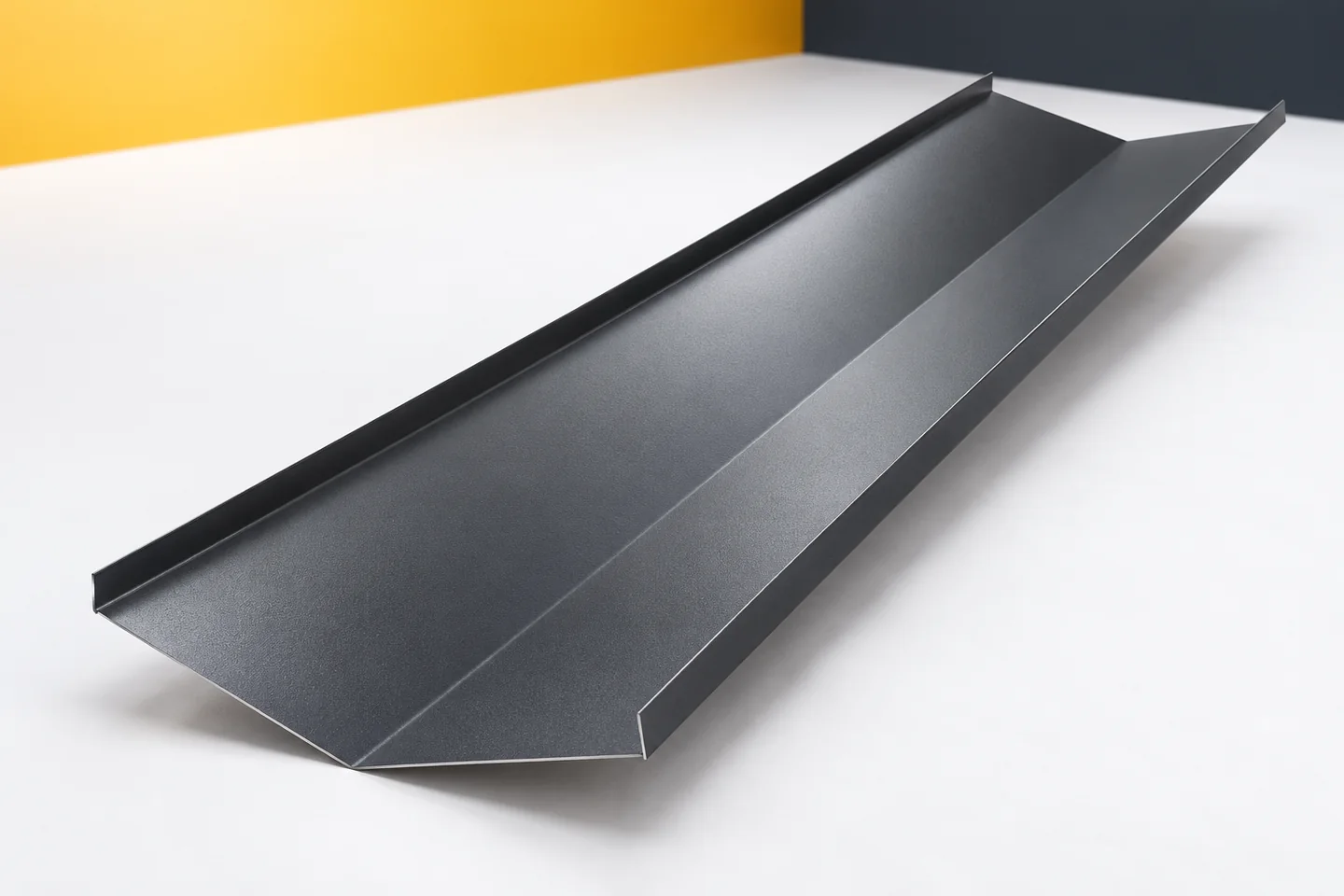
A roof valley collects water from two adjoining roof slopes. Contaminants are carried there along with it. That is why the condition of this flashing should be assessed differently from an incidental section of a flat roof surface. What matters is free drainage, protection of the sheet metal and the quality of the joints. A well-chosen material helps maintain durability, but it requires proper workmanship and the removal of what the rain alone will not wash away. Leaves, small twigs and dust can accumulate along the valley line. Their presence impedes drainage and changes the conditions on the surface. It is worth observing where deposits appear regularly. Such a place requires assessment during an inspection, even if the rest of the roof looks clean.
In this article
Accumulated dirt can trap moisture
It should not be assumed that heavier rain will solve every problem. Debris can collect at the junction of the flashings or at the outlet. If the obstruction recurs after cleaning, the geometry needs to be examined. Maintenance and the correct shape of the roof valley should complement each other.
The type of sheet metal does not replace drainage
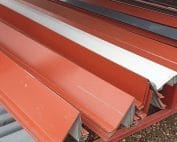
Roof valleys are made from materials selected to suit the roof solution. Galvanised, aluzinc and coated steel sheets have different protective systems. Each requires the correct specification and conditions of use. The material name alone cannot be taken as approval for permanent accumulation of dirt.
The coating protects the surface, but it does not remove an obstruction in the path of the water. When selecting, access for later inspection should also be taken into account. A location that is difficult to clean may require a particularly careful solution. Buying more expensive steel sheet alone is not the answer to a detail that cannot be maintained.
After installation, remove residues from the entire roof
Swarf and offcuts can get into the roof valley from work carried out at higher levels. It must be checked after cutting of the covering and installation of the flashings has been completed. An inspection at the time the roof valley is laid is not sufficient if further teams work afterwards. Waste should be collected before the roof is handed over.
This also applies to work on ridge caps, verge flashings and chimney flashings. Even a small metal fragment can remain in a place that is difficult to see. Cleaning is carried out in such a way as not to scratch the coating. Sweeping sharp waste across the surface is not the correct way to remove it.
Inspect the edges and the joints between sections
The wide part of the roof valley is only one area to check. The folds, the junctions with the covering and the connections between successive sections are also important. It should be checked whether the shape has been accidentally deformed. A scratch hidden near the edge can be difficult to spot from a distance.
The bends intended in the detail should not be straightened by hand. They may perform an important function in conjunction with the roof slope. If the edge impedes drainage, the workmanship should be compared with the drawing. The solution is to clarify the discrepancy, not to arbitrarily change the profile on site.

Check the outlet together with the eaves
The roof valley discharges water to the next drainage element. The gutter aprons and the gutter should allow the designed drainage path to be maintained. Sediment accumulation is easily overlooked at this point. It is therefore worth inspecting both the end of the roof valley itself and the part directly below it.
Non-standard flashings at the outlet must match the specific geometry. An accidentally added strip can create an obstacle. Not every visible opening should be sealed without understanding the function of the detail. First it must be established where the water should leave the roof.
Match the cleaning method to the coating
The surface is cleaned using the method specified for the sheet metal used. Soft tools and a suitable agent reduce the risk of damage. Random strong chemicals should not be used for every stain. Overly aggressive cleaning can worsen the condition of the coating instead of restoring its appearance.
Once a scratch or detachment has been identified, an assessment of the repair is needed. Washing alone does not restore the protective layer. Information about the material should be kept in order to select the correct procedure. In the case of larger damage, the extent of replacement must be considered, taking into account how adjacent sections are connected.
Set an inspection plan for the whole property
The frequency of inspections should be linked to the surroundings and material recommendations. Proximity to trees or ongoing works may increase the need for inspection. Access to the valley flashing should be safely organised. Accidental flashings should not be stepped on as if they were walking surfaces.
The starter profiles are checked at the plinth, and the other elements according to their position. The valley flashing deserves separate attention because of the concentrated runoff. Documenting changes helps determine whether the problem is growing or has been resolved. A well-maintained detail remains clear, free-flowing and easier to assess during subsequent inspections.
Questions and answers
Will rain alone clean every roof valley?
No. Leaves and other debris can remain at the edges, joints or outlet. The roof valley requires inspection and removal of accumulated debris.
Does a soiled roof valley need to be replaced straight away?
No. First, the condition of the coating and the cause of the soiling must be established. Cleaning, repair and replacement correspond to different situations.
7 branches. Materials closer to your project.