Keeping the chimney flashing watertight on a metal roof
Gutters and flashings
The watertightness of a chimney flashing depends above all on correctly shaping the detail, not on the sealant alone. It is worth checking whether each of the three critical points — the ridge side, the sides and the junction with the chimney surface — directs water in the right direction and allows for the relative movement of roof and chimney. These issues, together with the choice of materials and fixings, are covered below, with attention to how a particular solution affects the durability of the whole junction.
Why is a leak at the chimney so likely?
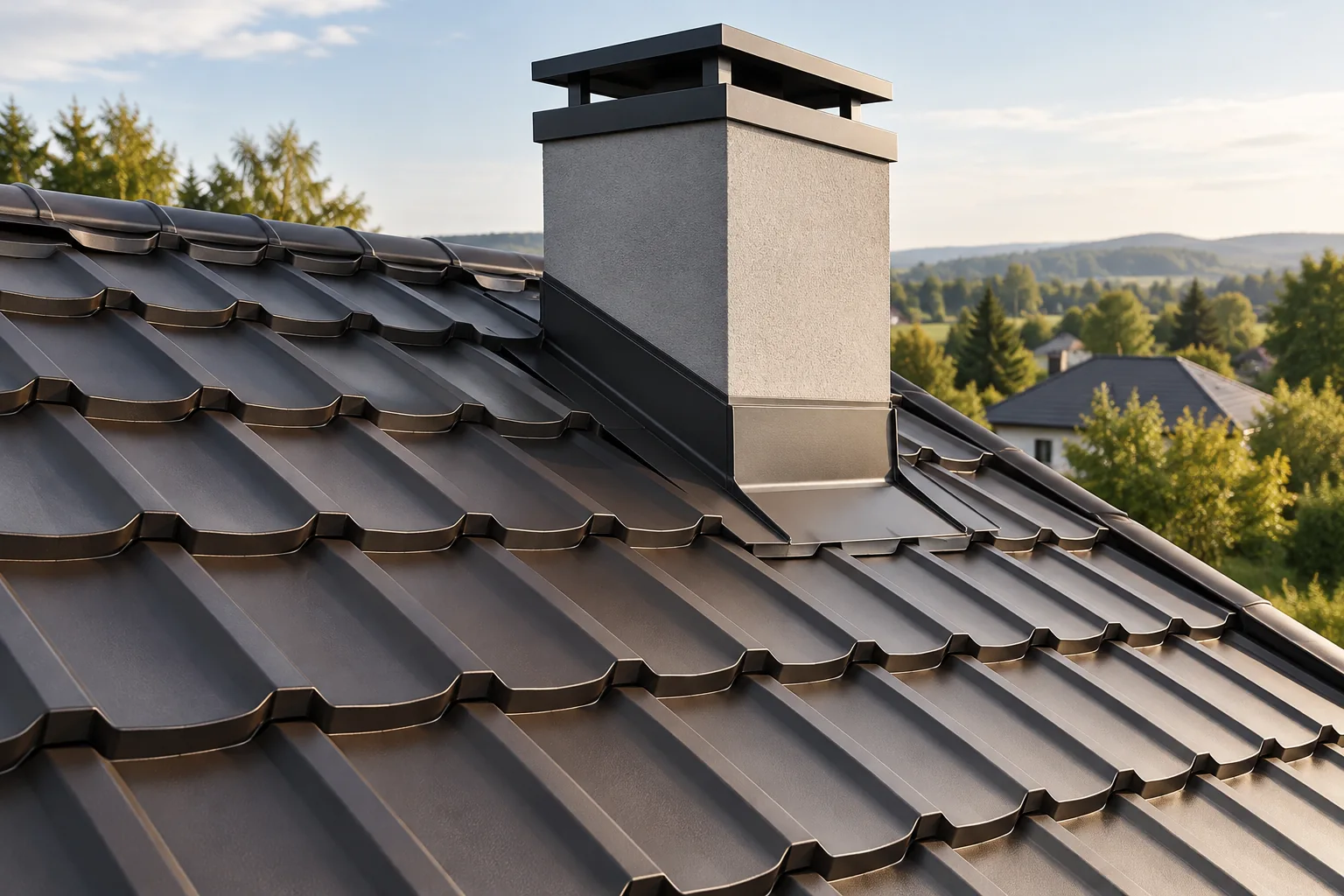
The chimney interrupts the continuity of the roof slope. Water flowing from above must bypass it and return to the covering. In addition, the roof and the chimney may react differently to temperature and loads. A rigid connection made at random can crack or detach from the substrate. Tightness must therefore be resolved for the entire perimeter.
A stain in the attic does not always indicate the exact point of water ingress. It may migrate through layers and structural elements. Before repair, the condition of the chimney itself must also be inspected. A damaged surface or a leak higher up will not be eliminated by adding sealant at the bottom of the flashing.
What parts make up the flashing?
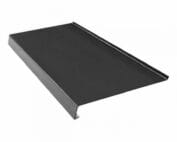
The detail covers the lower side, the sides and the part facing the ridge. Each fragment must direct water in the correct direction. Depending on the solution, elements securing the contact with the chimney and allowing movement are added. There is no single strip width suitable for all chimneys and coverings.
The actual profile of the tile-effect metal roofing or trapezoidal steel sheet is important. The flashing should align with it according to the instructions, without accidental open channels. An element intended for one pressing does not necessarily fit another. Therefore dimensions and shape are prepared for the specific location, not only according to the chimney width.
What should be done with water on the ridge side?
Behind the chimney, runoff from the higher part of the slope collects. The detail should take over this stream and direct it to the sides without ponding. With a greater width of the obstacle or difficult geometry, additional shaping of the drainage may be needed. The solution results from the design and the conditions of the specific roof.
The underlay layer must also be taken care of. Water on the membrane must not end its path at an unsealed cut around the chimney. The connection of this layer is made according to the relevant detail. The flashing visible on the outside does not replace the correct finishing of the materials located under the covering.

How do you connect the steel sheet to the chimney surface?
The joint should protect against water running down the wall and allow for anticipated movement. The method of termination depends on the chimney construction and the material of its surface. Do not cut or drill into system components without first identifying them. The detail must also remain compliant with the chimney documentation.
Sealant may be part of a specific solution, but it should not carry the entire task on its own. Its selection requires compatibility with the substrate and the temperature range. A sealant applied over dust or loose render will not provide lasting contact. The substrate must first be prepared and the flashing components correctly fixed.
What materials and tools should be used?
The flashing metal should suit the environmental conditions and work with the covering. Pay attention to the coating, material compatibility and edge protection. A colour similar to the roof surface is not the only criterion. Accidental contact between different materials may require additional isolating solutions or different fasteners.
Cut using a method approved for coated steel sheet. Sparks from an angle grinder can damage the surface even beyond the work area. After installation, remove swarf and filings. Fastenings should not create holes in the water flow zone unless this is provided for in the specific detail and sealing method.
What should be checked when replacing only the covering?
New steel sheet may have a different height and geometry from the previous material. The old flashing will not always fit it. Check the position relative to the new battens and insulation. Adding an over-rafter layer may raise the roof level and thus change the entire detail around the chimney.
Do not leave the old flashing solely because it looks good from a distance. Assess the coating, laps, fastenings and substrate. If repair requires dismantling adjacent sheets, it is worth planning together with the roof surface renovation. Later intervention may mean additional costs and the risk of damaging the new covering.
How to maintain tightness after the work is completed?
Check the location during roof inspections. Remove leaves and debris that trap water on the ridge side. Look for detachment, corrosion and cracks at the junction with the chimney. Work requiring access to the roof should be carried out with suitable access and fall protection.
If a leak appears, first determine its source. Additional layers of random sealant hinder assessment and do not correct faulty drainage. A lasting repair may require replacing part of the flashing or improving the substrate. A well-executed detail can be inspected and maintained without annually masking the same defect.
7 branches. Materials closer to your project.