Metal fence pickets: how they work and when to choose them
Facades and fences
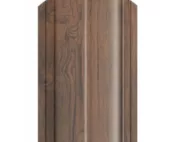
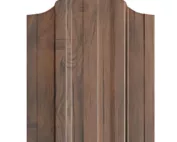
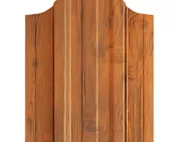
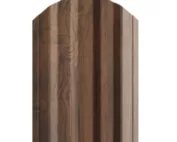
Metal fence pickets are profiled infill elements for fence bays, available in various widths and profile depths. Before buying, check whether the chosen profile suits the existing structure and the desired gap, not just the façade colour. By examining a real sample, you can assess the surface on the street and garden sides and the finish of the edges. Bear in mind that a similar front appearance does not guarantee identical installation requirements. The decision on a double-sided layout or denser spacing should account for wind loads and fixing to the rails.
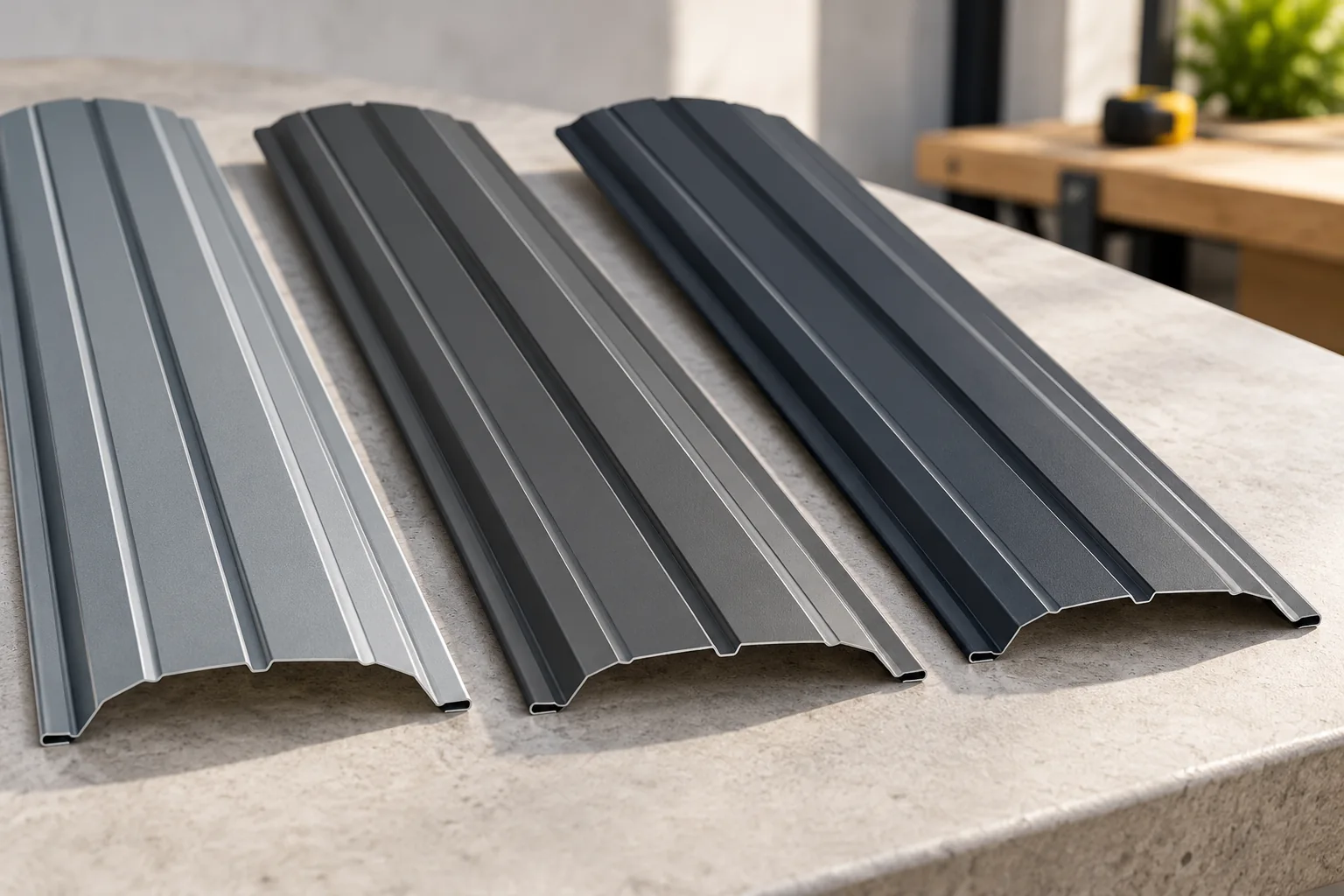
How is a metal fence picket constructed?
It is usually a formed element made of protected steel sheet. The pressings give it its shape and affect its rigidity. Individual products differ in width, profile depth and the way the sides are finished. A similar appearance at the front does not mean identical installation requirements.
The ends of the element and the edges are also important. They should be made in accordance with the product design, without accidental sharp fragments. When purchasing, examine a real sample, not just a visualisation of the bay. Check its surface from the street side and the garden side. Both will be visible during everyday use of the property.
What does profiling provide instead of a flat strip?
The cross-sectional shape affects the behaviour of the element between the fixing points. However, the spacing of the rails should not be selected solely on the basis of how rigid it feels in the hand. Recommendations for the specific picket and fence height are needed. The loads and the method of fixing to the structure also matter.
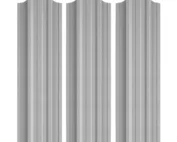
Some profiles create a distinct shadow and a strong vertical rhythm. Others look more subtle. This is an aesthetic feature that is best assessed on several arranged elements. The width of the picket alone does not allow the entire effect to be predicted. The gap, the depth of the pressing and the direction of light on the fence face also matter.
How do you calculate the number of elements in a bay?
You need the clear width between the posts, the width of the picket and the planned gaps. Also determine the clearance at both ends of the bay. Simply dividing the width by the sum of the element and the gap gives only a preliminary result. The final layout must be rounded and drawn out with equal spacings.
For example, ten pickets 10 cm wide take up a total of 100 cm. Nine gaps of 4 cm add 36 cm. In addition, there are clearances at the posts. This is only an illustration of the calculation, not the recommended geometry of a specific product. In a real project, use its working dimension and installation requirements.
Does a double-sided arrangement provide full privacy?
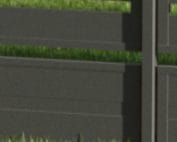
In certain systems, the pickets can be arranged on both sides of the rails with an offset. This limits visibility between the elements, but the effect depends on the distance between the planes and the viewing angle. You should not promise complete screening based on the word double-sided alone. It is worth viewing a sample bay.
Such an arrangement increases the number of elements and fixings. It also changes the wind conditions acting on the fence. The structure must match the chosen infill. If you are replacing an existing mesh with dense cladding, check the posts and foundations. Fixing the pickets will not compensate for insufficient support of the entire bay.

How to choose the coating and colour?
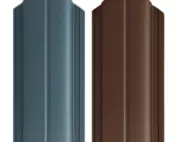
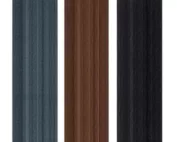
Compare the type of surface protection, the material thickness and the conditions of use. The colour may be available in several coatings with different parameters. Matt is not automatically better than gloss. You need data for the specific product and maintenance rules, especially near a road or in an industrial environment.
Pay attention to shade consistency between the pickets, the gate and the flashings. Different substrates and textures may reflect light differently despite a similar colour designation. View samples outdoors. It is worth keeping information about the ordered batch so that a spare part or touch-up can be matched more easily later.
What mistakes should be avoided during installation?
Use fasteners intended for the rail material and the specific element. Do not press the sheet so hard that the profile deforms. Before fixing a whole row, establish the level and a repeatable spacing. Small differences at a single picket can produce a visible error on the other side of the bay.
For cutting, use tools approved for coated sheet. Sparks and filings from an angle grinder can also damage adjacent elements. Remove drilling residue and protect areas requiring repair according to the instructions. Do not place new pickets directly on wet ground, where the surface can easily become dirty and scratched.
When does this type of fencing make the most sense?
Pickets are worth considering when you want a regular appearance and the ability to choose the gaps. They suit many simple gates and light façades. They do not require an identical arrangement on every section. The part by the garden may have different needs from the part by the driveway, if the design maintains consistent proportions.
When purchasing, calculate the complete set, not just the infill pieces. The cost also includes rails, posts, fixings and substrate preparation. Allow for periodic washing and checking for damage. A well-chosen picket should suit the structure and the way it is used as well as it suits the roof colour.
7 branches. Materials closer to your project.