What should you check on a metal roof after winter?
Repair and maintenance
After winter, first establish which roof elements genuinely need attention and which merely require tidying. Begin the inspection from the ground and any accessible attic, and leave access to the roof surface to a prepared team. The cause of changes is key: a ceiling mark, a loose flashing and a rusty spot may have different origins. Walk around the building, check the eaves, gutters and visible covering edges, and photographs taken from the same positions will help distinguish a new fault from a feature present since installation. Remember that the absence of observed damage does not confirm the soundness of an unseen roof section.
Where to start without going onto the roof slope?
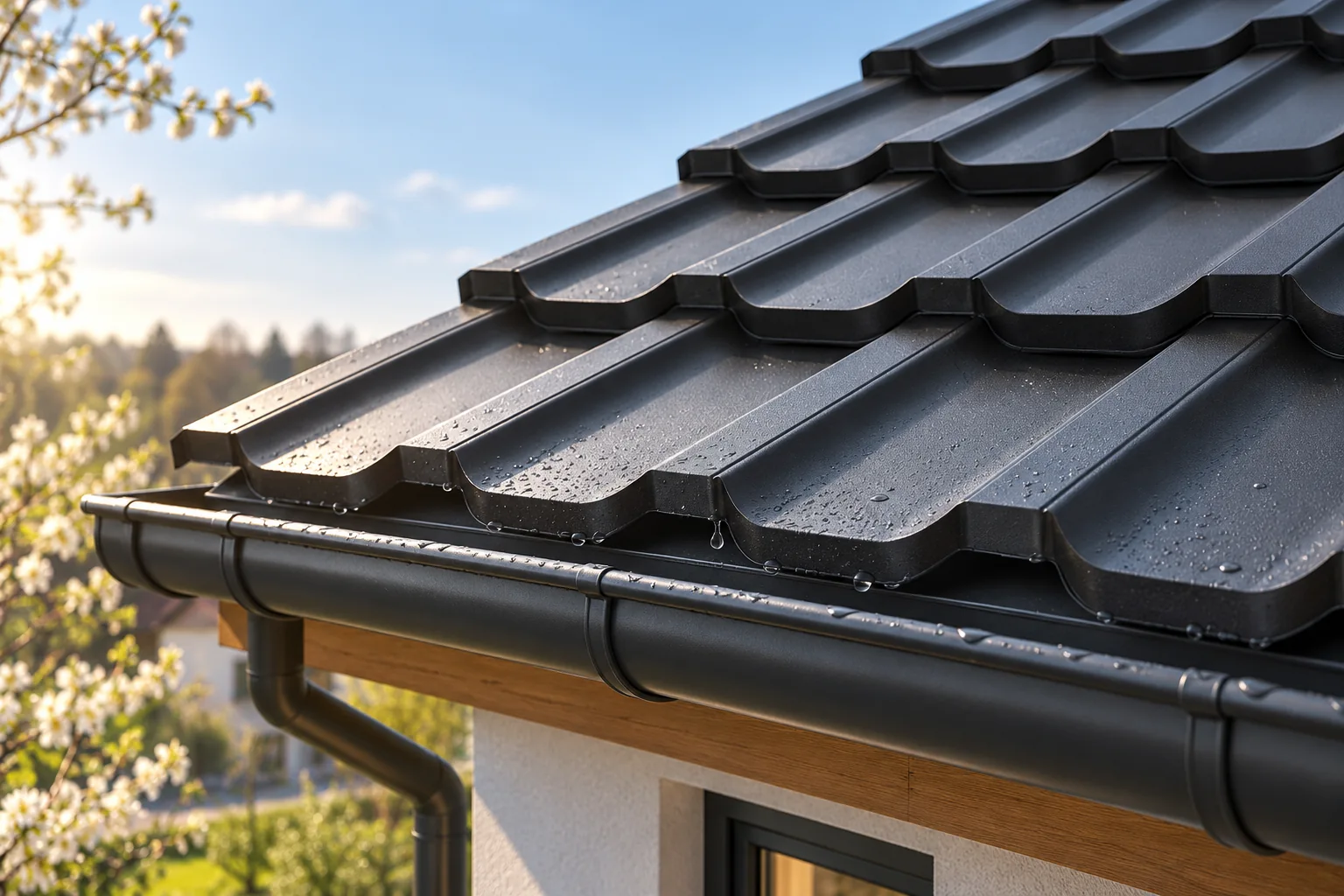
Walk around the building and inspect the eaves, gutters and visible edges of the covering. Look for deformation, displaced elements and staining on the façade. Photographs taken from the same positions as before are helpful. They make it possible to distinguish a new change from a feature that has been present since installation.
If part of the roof is not visible, the absence of noticed damage does not confirm that it is sound. Further inspection must be planned with safe access. Do not lean the ladder against the gutter just to look higher up. Ice or a wet surface may remain hazardous even when the snow has already disappeared from the surroundings of the house.
How to read marks in the attic?
Stains, dampness and a musty smell require clarification. It is worth noting when they were noticed and whether they intensify after rain, thaw or temperature changes. The location of the stain need not be directly beneath the leak. Water can travel through layers and structural elements.
A leak must be distinguished from condensation. Widely distributed dampness may have a different cause than a punctual trace at the chimney. The visible sheet above the stain should not be sealed immediately. The assessment proceeds from the symptom to the actual path of the water, taking into account the ventilation and air tightness of the roof.
Which flashings require particular attention?
The connections at the chimney, windows, ridge, roof valleys and side edges are important. Snow and wind can reveal previous weaknesses at these points. The inspection covers stability, deformation and the condition of the connections. The mere presence of flashings does not confirm the correct performance of hidden layers.
Not every gap visible from a distance is a defect. Some solutions are intended to ensure air flow or allow the material to move. Therefore, randomly filling all gaps with sealant may worsen the situation. The repair should correspond to the detail documentation and the established cause of the leak.

What to check on fixings and accessories?
During a professional inspection, the fasteners and the condition of the seals are assessed. It must not be assumed that every screw requires additional tightening. Excessive pressure can damage the washer or the sheet surface. The way each fastener is seated should be checked, rather than carrying out the same action across the whole roof.
Snow guards, steps and walkways require a separate check. Their fixings and support are important. If an element is loose or deformed, it should not be used until it has been assessed. In the case of a photovoltaic installation, the penetrations and connections associated with its mounting must also be taken into account.
How should you assess the gutters after the thaw?
Gutters and outlets should be clear. Collected leaves, branches and other debris can cause water to overflow. Look out for disconnected sections, deformation and damp patches below the joints. With a concealed system, checking the accessible service points is important.
The cause of overflow is not always down to debris. Errors in the fall, the position of the outlet or the sizing are possible. If the problem recurs despite cleaning, a broader assessment is needed. Adding sealant to a joint will not solve a situation in which the water has no correct drainage path.
What should be done about dirt and rusty spots?
First, it must be established whether the deposit comes from swarf, foreign contamination or damage to the coating. Rusty spots do not always mean corrosion of the entire sheet. The method of cleaning and repair is selected according to the surface and the product recommendations. Aggressive scrubbing can enlarge the damage.
Cleaning uses agents and tools approved for the given coating. The parameters of a pressure washer from another product should not be transferred, nor should the jet be directed under the laps. Paint repairs require proper preparation of the area. An occasional paint of a similar colour is no substitute for a larger renovation.
How should the inspection be closed with a specific list of works?
The report should indicate the location, the symptom, the probable cause and the method of further checking. Photos should be marked so that the same zone can be returned to. Separate defects requiring a quick response from maintenance activities. This will make it easier to agree the scope of the repair and the subsequent acceptance.
Keep the documents and information on the materials used. If a warranty is in effect, check the reporting procedure and agreement of works before repair. A spring inspection is most worthwhile when it ends with the causes being removed, not just the appearance improved. A further check will show whether the problem has actually been resolved.
7 branches. Materials closer to your project.