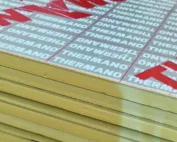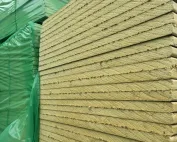
When is laminate-faced board suitable for a damp livestock building?
Sandwich panels
A board with an internal laminate facing can be a good solution in a damp livestock building if its documentation covers the intended conditions. The choice depends on the type of livestock, contact with chemicals and the cleaning method. Fixings, flashings and ventilation must also be assessed. A more resistant surface does not eliminate leaks or excess vapour. The best result comes from matching the whole envelope to actual service conditions. Before purchase, describe the temperature and humidity in a typical use cycle. Include areas above the animals, near channels and close to ventilation equipment. Conditions need not be the same throughout the building. How long the surface stays wet also matters for durability.
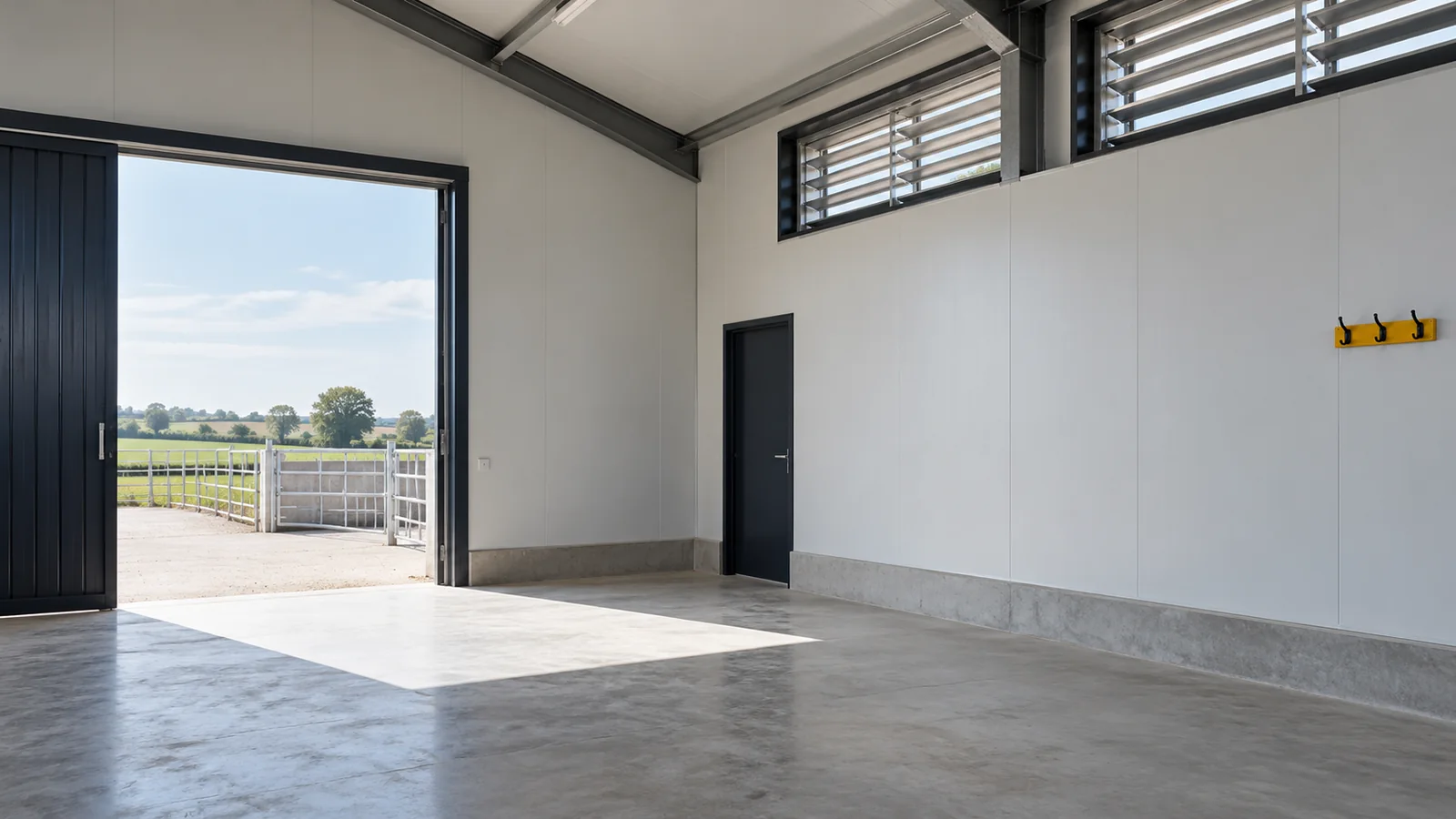
How do you identify the conditions the facing will work in?
Before purchase, describe the temperature and humidity in a typical usage cycle. Include areas above the animals, near channels and close to ventilation equipment. Conditions need not be uniform throughout the building. For durability, how long the surface remains wet also matters. Brief cleaning and constant condensation are different types of exposure.
Record the agents used during cleaning and their concentrations in line with the planned technology. Do not assume that a declaration of ammonia resistance covers every detergent. If the livestock farming or the way the building is managed changes, it is worth repeating the assessment. The panel should be selected for the current conditions, not only for the room name used many years earlier.
When does laminate make a sensible alternative to sheet metal?
A non-metallic facing can reduce the problem specific to corrosion of a steel surface. This is important where a standard coating does not suit the environment. However, it does not mean that the laminate is indestructible. Its chemical and mechanical resistance and the cleaning conditions must be checked. The right product and the documented scope of application are what count.
It is worth comparing it with a steel panel fitted with a coating intended for demanding conditions. There is no basis for assuming in advance that one material is better in every agricultural building. The availability of details, the possibility of repair and the method of installation also influence the choice. Assess complete solutions with the required thermal insulation and load-bearing capacity, not two surfaces viewed on small samples.
Does a more resistant facing eliminate the moisture problem?
No. Moisture can also condense on a non-metallic surface if the temperature and vapour conditions favour condensation. Therefore, proper thermal insulation, tight connections and ventilation are needed. The use of laminate alone does not replace calculating the panel thickness or ensuring air exchange appropriate to the livestock farming.
If droplets occur in an existing building, first determine their origin. A leak at a skylight requires a different repair than condensation over a large roof area. Water can also travel along the structure and drip far from the source. New facing should not cover an unidentified problem. Otherwise, moisture will remain in the detail or reach the exposed core edge.

Which roof parts require separate protection?
Fasteners and flashings are often still made of metal. Their protection must be matched to the environment, regardless of the type of the large panel surface. Also check sealants and the points where installations pass through. If an auxiliary component corrodes or loses tightness, the laminate alone will not protect the entire connection.
Details at the eaves, ridge and wall junction matter. They should protect the core and allow water to drain away. Large ventilation openings require a structural solution. A heavy unit must not be supported on the panel simply because its surface appears rigid. Load-bearing capacity, fixings and fire classification are verified for the specific variant with laminate, without copying data from a standard panel in two steel sheets.
How should cleaning and condition checks be planned?
Use methods approved for the cladding and all joint materials. This applies to water temperature, pressure, nozzle distance and chemicals. Do not direct an aggressive jet at joints without checking the instructions. After washing, the surface and details should be able to dry. Regular cleaning must not involve damaging coatings and seals.
During inspection, look for changes in the surface, cracks, detachment and leaks. Pay attention to areas that remain permanently damp. Also check metal accessories and fixings. Minor damage must be repaired using a method suited to the material. An incidental metal paint is not automatically a repair product for laminate. Establish the availability of a suitable solution before purchasing the panels.
How should the decision be made before ordering?
Provide the supplier with a description of the conditions and ask for written confirmation of the suitability of the selected variant. Check the current data sheet, fire documents, load tables and instructions. Older promotional material does not confirm today’s availability of the product and does not replace the delivery documentation. Establish lengths, accessories and unloading rules.
Compare the total cost and conditions of use with an alternative panel in suitably protected steel cladding. Include cleaning, repairs and access for inspection. Laminate makes sense when its properties match the specific exposures and the entire roof can be correctly installed. It should not be bought solely as a general promise of resistance to everything that may occur in a livestock building.
7 branches. Materials closer to your project.