PIR or XPS for a flat roof? How to choose insulation for the layer build-up
PIR insulation
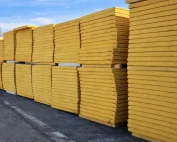
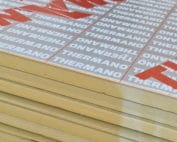
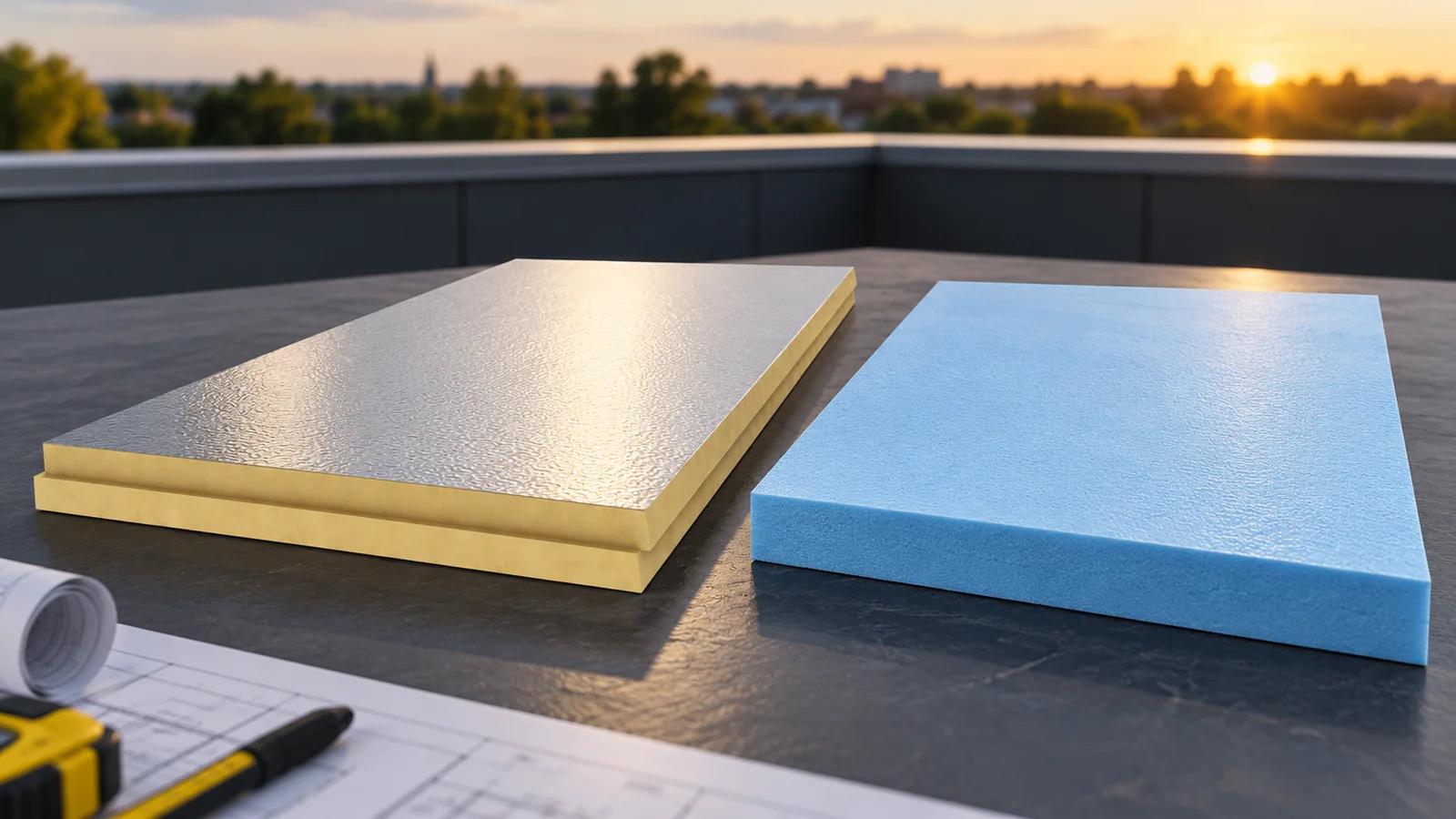
PIR and XPS can be used on flat roofs, but they do not perform the same role in every build-up. PIR allows the layer thickness to be reduced. XPS can be advantageous where the insulation is exposed to water and high loads. First, the sequence of layers and the way the roof is used must be established. Only then should a specific board, its parameters and its cost be compared. In a traditional roof, the thermal insulation is located beneath the waterproofing layer. In such a build-up, PIR can be installed on a suitably prepared substrate together with the specified vapour control. Above it, waterproofing matched to the entire system is applied.
Does the insulation lie beneath or above the waterproofing?
In a traditional roof, the thermal insulation sits beneath the water-protecting layer. In such an arrangement, PIR can be installed on a suitably prepared substrate together with the specified vapour control. Above it, waterproofing matched to the whole system is applied.
In an inverted roof, the thermal insulation sits above the waterproofing. These are different operating conditions, especially with regard to water and temperature fluctuations. Plates must not simply be swapped without checking the approved application. Selected XPS boards are intended for such arrangements. Standard PIR with aluminium lamination does not become their substitute merely because it has low water absorption.
When does thinner PIR make roof installation easier?
Limited height at the parapet, door threshold or outlets can determine the choice of insulation. For an example PIR with λ = 0.022, a 100 mm layer gives a resistance of approximately 4.55 m²K/W. With λ = 0.034, such resistance requires approximately 155 mm of material. This compares the layers alone, without the influence of water, fasteners and the rest of the construction.
The saved space can help preserve the height of details. It does not, however, release you from checking falls and drainage. On a flat roof, water must have a drainage path. The choice of thickness should not leave outlets higher than the surrounding layer. In thermal modernisation, the entire geometry must be considered, not only the section at the middle of the slope.
How to compare load resistance?
In PIR documentation, for example CS(10)150 or CS(10)200 is found. For selected XPS boards, values of 300 kPa and higher occur. This does not create an automatic ranking of all products. The parameter describes behaviour in a specific test, not the permissible permanent load of the finished roof.
Creep, point loads and load-distributing layers must be taken into account. Terrace supports, technical equipment or a green roof change the conditions. A heavy element placed on a small foot may require a separate solution. 150 kPa should not be converted into a promise of freely placing several tonnes per square metre of roof. The structure and all layers must be verified together.

Does low water absorption mean waterproof?
No. The water absorption of the material and the tightness of the covering are different properties. An insulation board does not replace waterproofing. In a traditional roof, a leak can enter through joints or damaged flashings, even if the core itself absorbs little water. In an inverted arrangement, the water conditions must be included in the calculations.
It is worth comparing the type of water absorption test and the declared values for the given product. The condition of the facings, edges and joints also matters. Do not treat one general phrase “moisture resistant” as permission for any exposure. Boards left on site require protection from weather conditions in accordance with the instructions.
How to verify compatibility with the membrane and fire?
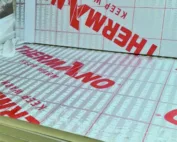
The PIR facing, adhesive and waterproofing must form an approved system. Changing one component may affect adhesion or classification. Not every bituminous membrane and not every method of fixing it is suitable directly for every board. The requirements should be known before purchasing the material.
Fire is assessed in the same way. The reaction-to-fire class of the insulation is not the fire resistance class of the entire roof. The assessment of external fire exposure also has its own scope. The result from one layer build-up must not be transferred to another. Neither PIR nor XPS should be described as non-combustible solely on the basis of use in a tested roof.
How to make the choice for a specific building?
Prepare a description of the roof: substrate, layer build-up, target thermal performance, loads and available height. Add information about the terrace, vegetation or equipment. Ask for a comparison of complete solutions, covering fixings, falls, waterproofing and details.
PIR has a strong argument where thin insulation is needed in a suitable build-up. XPS may win in applications requiring different resistance to water or pressure. The price of a single square metre of board does not settle this choice. The cheapest material loses its advantage if it forces costly rework or does not suit the intended use of the roof.
When renovating, do not omit the existing covering. It must be established whether it can be retained, whether it contains water and whether it provides a suitable substrate. Additional layers change the load and the roof level at flashings. A wet old build-up is not worth enclosing without a diagnosis. The saving from retaining the layers only makes sense once their condition and compatibility with the new solution have been confirmed.
7 branches. Materials closer to your project.